

How AI Predicts Your Solar Panel Output Before the Sun Even Rises
Imagine knowing exactly how much energy your solar panels will generate tomorrow, next week, or even next month. PV (photovoltaic) forecasting uses artificial intelligence and weather data to predict your solar energy production with remarkable accuracy, transforming how you manage electricity costs and maximize your renewable energy investment.
This technology analyzes patterns in sunlight intensity, cloud coverage, temperature fluctuations, and historical panel performance to create precise energy predictions. For homeowners, this means you can schedule high-energy activities like running your dishwasher or charging your electric vehicle during peak solar production hours, slashing grid dependence. Commercial property managers use these forecasts to negotiate better energy contracts and reduce operational expenses by thousands of dollars annually.
Modern solar management systems integrate PV forecasting directly into their platforms, making this once-complex technology accessible to everyday users. The system learns your specific installation’s behavior, accounting for factors like panel orientation, shading patterns, and local weather trends to deliver personalized predictions.
The financial impact is substantial. Studies show that homes equipped with accurate PV forecasting reduce energy waste by up to 30% and improve battery storage efficiency significantly. You’re not just generating clean energy anymore—you’re intelligently orchestrating when and how you use it, turning your solar panels from passive electricity generators into active participants in your household’s energy strategy.
What Is PV Forecasting and Why Should You Care?
Imagine waking up each morning knowing exactly how much solar energy your panels will generate that day. That’s the power of PV forecasting, and it’s transforming how homeowners and businesses manage their solar investments.
PV forecasting, short for photovoltaic forecasting, uses advanced technology to predict how much electricity your solar panels will produce in the coming hours, days, or even weeks. Think of it as a weather forecast, but specifically designed for your solar energy system. By analyzing factors like cloud cover, temperature, seasonal patterns, and historical performance data, these systems create accurate predictions of your solar output.
Here’s why this matters for your wallet and the planet. When you know how much solar energy you’ll generate, you can make smarter decisions about when to use electricity. Planning to run your dishwasher or charge your electric vehicle? PV forecasting helps you schedule these activities during peak solar production times, maximizing the clean energy you use from your own roof instead of pulling from the grid.
For commercial property managers, the benefits multiply. Accurate forecasting allows you to optimize energy storage systems, reduce demand charges, and potentially sell excess energy back to the grid at the most profitable times. One warehouse owner in California shared how PV forecasting helped them reduce their monthly energy costs by 35 percent simply by better aligning their operational schedules with their solar production forecasts.
The environmental impact extends beyond your property too. When thousands of solar users optimize their energy consumption through forecasting, it reduces strain on the electrical grid and decreases reliance on fossil fuel backup power plants. You’re not just saving money, you’re contributing to a cleaner, more efficient energy system for everyone.
Best of all, modern PV forecasting systems increasingly use artificial intelligence to continuously improve their accuracy, learning from your specific location and panel performance over time.
How AI Makes Solar Forecasting Smarter Than Ever
The Technology Behind AI-Driven Predictions
At the heart of PV forecasting lies a fascinating blend of technologies working together to predict your solar energy production with impressive accuracy. Think of it as having a weather-smart assistant that understands exactly how sunshine translates into power for your home.
The process starts with data collection from multiple sources. Weather satellites orbiting Earth capture cloud patterns and atmospheric conditions across vast regions, while ground-based sensors measure real-time temperature, humidity, and solar radiation right in your area. Advanced cloud tracking systems monitor how weather systems move and evolve, providing minute-by-minute updates that directly impact your panels’ performance.
This wealth of information feeds into machine learning algorithms, which are essentially computer programs that learn from experience. These algorithms analyze years of historical weather data alongside actual solar production records, identifying patterns that humans might miss. For instance, they learn how a particular cloud formation at a specific time of year affects energy output in your location.
Neural networks take this even further by mimicking how the human brain processes information. These interconnected layers of digital neurons can recognize complex relationships between dozens of variables simultaneously, from sun angle and panel temperature to seasonal variations and local weather quirks. The result? Predictions that become more accurate over time as the system continuously learns from new data.
What makes this technology truly remarkable is its accessibility. Modern PV forecasting systems package all this computational power into user-friendly dashboards that anyone can understand, transforming complex algorithms into actionable insights for your solar investment.
Real-Time Adjustments That Save You Money
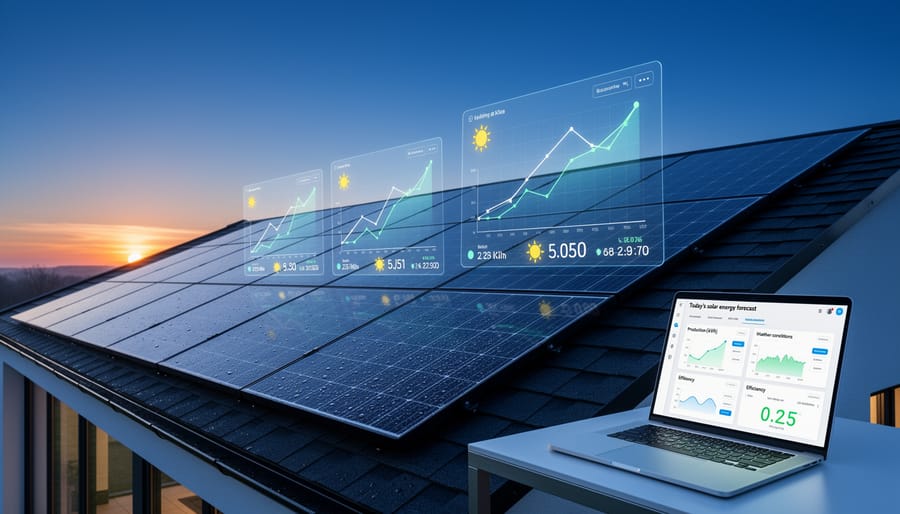
The beauty of modern AI-powered PV forecasting lies in its ability to continuously learn and adjust throughout the day. Unlike traditional weather predictions that remain static, these intelligent systems analyze real-time cloud movements, temperature changes, and actual energy production to refine predictions every few minutes. This means your system can make smarter decisions about when to charge your battery storage, when to use stored energy, or when it’s best to draw from the grid.
For example, if the AI notices unexpected cloud coverage rolling in earlier than predicted, it can immediately signal your solar energy monitoring system to adjust battery charging strategies. This prevents situations where you might sell energy to the grid at a lower rate when you could have stored it for peak-hour usage instead. Many homeowners report saving 15-25% on their energy bills simply by allowing their AI system to optimize these micro-decisions automatically. The system works quietly in the background, constantly fine-tuning to ensure you’re getting maximum value from every ray of sunshine.
Practical Benefits for Your Home or Business
Better Battery Storage Management
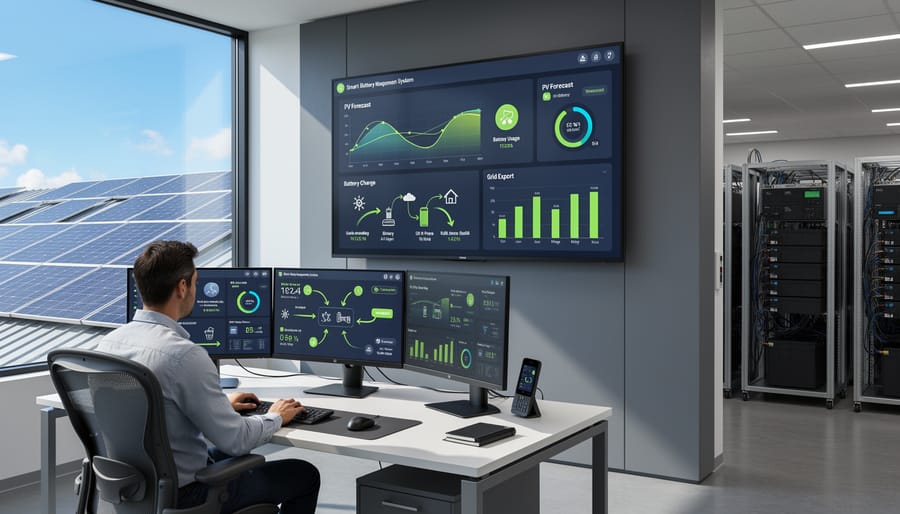
One of the smartest advantages of PV forecasting is helping you make better decisions about your battery storage. Think of it like having a weather-savvy financial advisor for your energy. When your system predicts sunny conditions ahead, you’ll know whether to store excess energy in your battery or sell it back to the grid at premium rates during peak demand hours.
Here’s how it works in practice: If forecasts show cloudy weather approaching tomorrow, your system might recommend charging your battery today while production is high. Conversely, if several sunny days are predicted, you might choose to use solar power directly or sell surplus energy now, saving battery capacity for genuinely needed backup power.
This intelligent approach extends your battery’s lifespan by reducing unnecessary charge cycles while maximizing solar energy efficiency. Commercial property managers especially benefit from this capability, using forecasts to strategically store energy during off-peak electricity pricing and discharge during expensive peak hours. The result is reduced strain on your storage system, lower electricity bills, and a faster return on your solar investment.
Smarter Energy Consumption Planning
Once you have accurate PV forecasts, you can time your energy-intensive activities to coincide with peak solar production, maximizing your self-consumption and minimizing grid dependence. This is where smart energy management strategies truly shine.
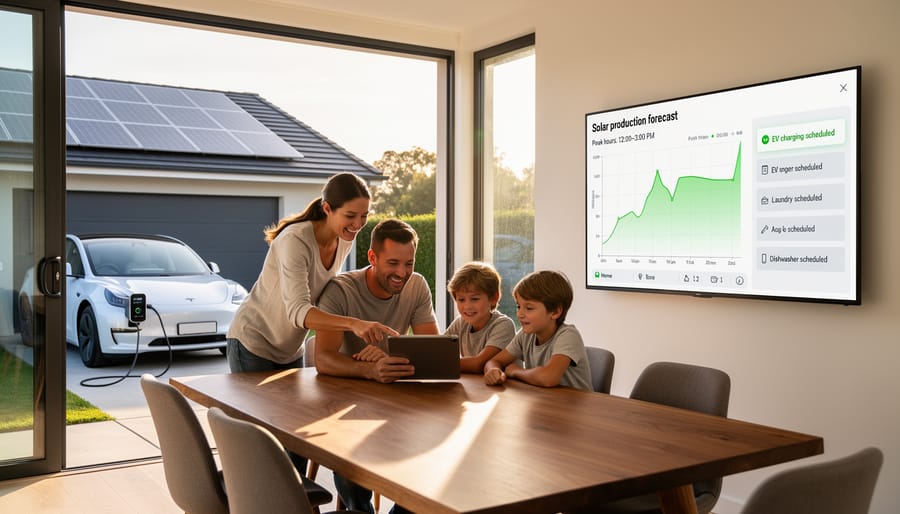
Start by identifying your home’s biggest energy consumers. Washing machines, dryers, dishwashers, electric vehicle chargers, and pool pumps typically top the list. Instead of running these appliances whenever convenient, shift them to midday hours when your forecast predicts strong solar output. Most modern EVs and smart appliances allow you to schedule operation times through their apps, making this adjustment effortless.
For example, if your PV forecast shows sunny conditions tomorrow between 11 AM and 3 PM, schedule your EV charging session and laundry loads during that window. You’ll be using clean energy you generated yourself rather than drawing from the grid. Some advanced energy management systems can automate this process entirely, communicating with your appliances and adjusting their operation based on real-time solar forecasts. This approach not only reduces your electricity bills but also maximizes your return on your solar investment while supporting a more sustainable lifestyle.
Maximizing Grid Sell-Back Revenue
One of the most exciting benefits of PV forecasting is its ability to help you maximize revenue from excess energy. When your solar panels produce more electricity than you need, that surplus gets sold back to the grid. However, energy prices fluctuate throughout the day, and this is where accurate production forecasts become your financial ally.
By knowing in advance when your system will generate peak power, you can strategically time energy-intensive activities for periods when your panels are producing less, saving your highest-output energy for sell-back during premium pricing hours. Many utility companies offer time-of-use rates that pay more for electricity during peak demand periods, typically late afternoon and early evening.
Smart forecasting systems can automatically communicate with your inverter and battery storage, holding excess energy generated during midday sun for release to the grid when rates are highest. Homeowners using this approach report increasing their annual sell-back revenue by 15-30% compared to standard net metering without strategic timing.
For commercial property managers, these savings scale significantly. A warehouse that shifts operations like HVAC cycling or equipment charging based on production forecasts can turn their solar investment into a meaningful revenue stream while still meeting operational needs efficiently.
Getting Started with PV Forecasting Systems
Free and Paid Forecasting Tools Available Now
Getting started with PV forecasting is easier than you might think, thanks to a growing collection of user-friendly tools designed for both residential and commercial applications. Whether you’re looking for basic predictions or advanced analytics, there’s likely a solution that fits your needs and budget.
Solcast stands out as one of the most sophisticated platforms available, offering detailed solar irradiance forecasts using satellite data and machine learning algorithms. While their professional tier serves large-scale operations, they also provide accessible options for smaller installations. The platform delivers hourly predictions up to seven days ahead, helping you plan energy usage with remarkable accuracy.
For homeowners seeking community-driven insights, PVOutput offers a free platform where solar users worldwide share their system data. By comparing your setup with similar installations in your area, you can get realistic production forecasts and benchmark your performance. It’s like having thousands of solar neighbors helping you understand what to expect from your panels.
Many modern inverter systems now come with built-in forecasting capabilities. Brands like SolarEdge and Enphase integrate weather data directly into their monitoring apps, providing next-day predictions without requiring additional software. This seamless integration makes forecasting accessible to everyone, regardless of technical expertise.
Open-source options like pvlib python cater to tech enthusiasts who enjoy customizing their forecasting models, while weather services such as Solargis offer specialized solar radiation data for more precise predictions. The key is choosing a tool that matches your comfort level with technology and your specific monitoring goals.
What You Need to Get Accurate Forecasts
Getting accurate PV forecasts isn’t as complicated as you might think. The good news is that most modern solar installations already have the basics in place, and if you’re considering going solar, these components are becoming standard.
At the heart of accurate forecasting is a smart PV systems setup with internet-connected monitoring equipment. Your solar inverter plays a crucial role here. Many newer inverters come with built-in monitoring capabilities that track real-time production data and communicate with forecasting platforms. If your system is more than a few years old, don’t worry. You can often add a monitoring device that connects to your existing setup.
The key hardware requirements include a compatible smart inverter or monitoring gateway, a stable internet connection (even basic broadband works fine), and sensors that track your system’s output. Some advanced setups also benefit from local weather sensors, though many forecasting services pull weather data from regional stations to keep things simple and affordable.
System setup is straightforward. Most forecasting platforms connect to your inverter’s monitoring portal through a simple app or web interface. You’ll provide basic information about your installation like panel orientation, tilt angle, and total system size. The forecasting software uses this data alongside weather predictions and historical performance to generate your personalized forecasts. Within a few days of operation, the system learns your specific patterns and accuracy improves significantly.
Real Stories: How Homeowners Are Using Forecasting
The real impact of PV forecasting becomes clear when you hear from people already using it. Take Sarah Mitchell, a homeowner in California who installed solar panels two years ago. After implementing a forecasting system last year, she reduced her monthly electricity bills by an additional 35%. “I thought just having solar was enough,” Sarah shares, “but the forecasting tool helped me shift my heavy appliances like the dishwasher and laundry to times when my panels would generate the most power. It’s like having a personal energy advisor.”
Commercial properties are seeing even more dramatic results. The Riverside Shopping Center in Arizona partnered with their utility company using forecasting data to better manage their 200-kilowatt system. Property manager James Chen reports saving over $18,000 annually. “We can now schedule our HVAC systems, lighting, and equipment maintenance around our solar production peaks. The forecasting accuracy has been remarkable, usually within 10% of actual generation.”
Small business owner Maria Rodriguez installed panels on her bakery last spring. With forecasting, she runs her industrial ovens during peak solar hours. “My energy costs dropped 40% compared to my old schedule,” she explains. “The system sends me a morning report showing expected solar generation, so I plan my baking accordingly. It’s changed how I run my business.”
Even renters are benefiting. Tom Bradley doesn’t own his apartment building but convinced his landlord to install a forecasting system for their shared solar array. Residents now receive credits when they use power during high-generation periods. “Everyone in the building is more conscious about energy use now. We’ve created a little community around maximizing our solar potential.”
The world of PV forecasting isn’t just for large-scale solar farms or tech experts anymore. This technology has become remarkably accessible, empowering everyday homeowners and business owners to unlock the full potential of their solar investments. Whether you’re managing a commercial property or simply want to maximize your home’s energy independence, forecasting tools are now within your reach and easier to use than ever before.
The benefits speak for themselves: reduced energy bills, smarter battery usage, and the confidence that comes from knowing exactly what your solar system will produce. You’ll stop second-guessing your energy decisions and start making informed choices that save money while reducing your carbon footprint.
Taking that first step toward implementing PV forecasting might feel daunting, but remember that these systems are designed with you in mind. Many platforms offer user-friendly interfaces, automated updates, and support resources to guide you along the way. The technology continues to improve, becoming more accurate and affordable each year.
Your solar investment deserves this level of optimization. By embracing PV forecasting, you’re not just adopting another piece of technology—you’re joining a community of forward-thinking individuals who understand that renewable energy, paired with smart predictions, represents the most practical and cost-effective path toward energy independence.


