How Solar Energy Research Is Transforming Home Power Today
Solar energy stands at the forefront of our clean energy revolution, offering homeowners and businesses a powerful way to slash electricity bills while fighting climate change. Recent research shows solar panel efficiency has jumped to over 23% in residential systems, making 2024 the most promising year yet for solar adoption. With installation costs dropping by 70% over the past decade and new federal tax incentives covering up to 30% of system costs, solar power has transformed from a luxury into a smart investment for the average homeowner.
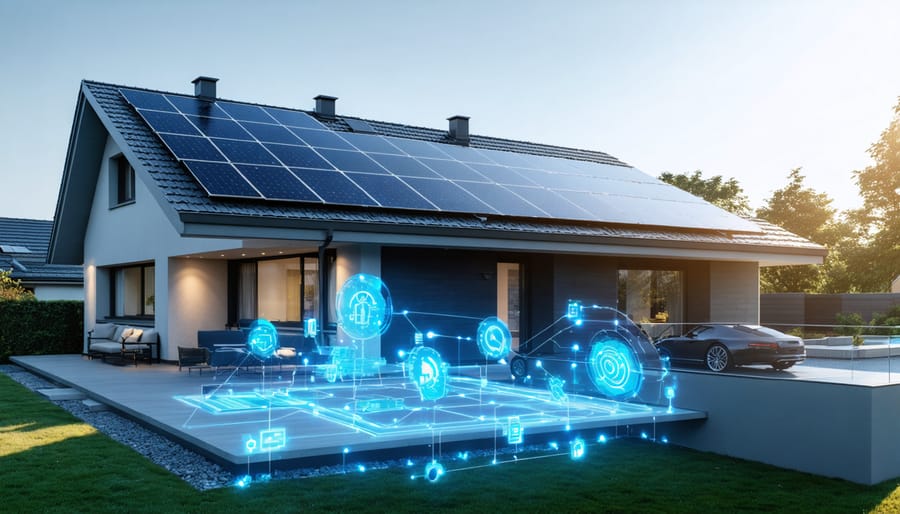
Today’s solar technology combines advanced photovoltaic cells, smart monitoring systems, and improved energy storage solutions to deliver reliable power generation in virtually any climate. Whether you’re considering rooftop panels for your home or exploring commercial solar installations, understanding the latest research and innovations can help you make informed decisions about harnessing the sun’s endless energy.
This guide explores cutting-edge solar research, breaks down the latest technological breakthroughs, and provides practical insights for implementing solar solutions in your property. From high-efficiency panels to innovative storage systems, we’ll examine how recent advances make solar more accessible and cost-effective than ever before.
Current Solar Technology Breakthroughs
High-Efficiency Solar Panels
Recent breakthroughs in solar energy efficiency have pushed modern panels to new heights, with top-tier models now achieving conversion rates of up to 23% in residential applications. These advanced panels use innovative materials and designs to capture more sunlight and convert it into usable electricity.
Multi-junction cells, which layer different photovoltaic materials, are leading the charge in efficiency improvements. These panels can capture a broader spectrum of sunlight, making them particularly effective even in less-than-ideal conditions. For homeowners, this means more power generation in a smaller space.
Bifacial solar panels represent another exciting development. These two-sided panels capture both direct sunlight and reflected light from the ground, increasing energy production by up to 30% compared to traditional panels. They’re especially effective when installed over light-colored surfaces or in snow-prone areas.
Perovskite solar cells are showing tremendous promise in laboratory testing, with some achieving efficiency rates above 29%. While not yet widely available for home installation, these cells could revolutionize the industry within the next few years by offering higher efficiency at lower production costs.
The best part? These efficiency improvements directly translate to lower energy bills and faster return on investment for property owners. Many homeowners report breaking even on their solar investment in just 5-7 years, thanks to these advanced technologies.
Smart Solar Storage Solutions
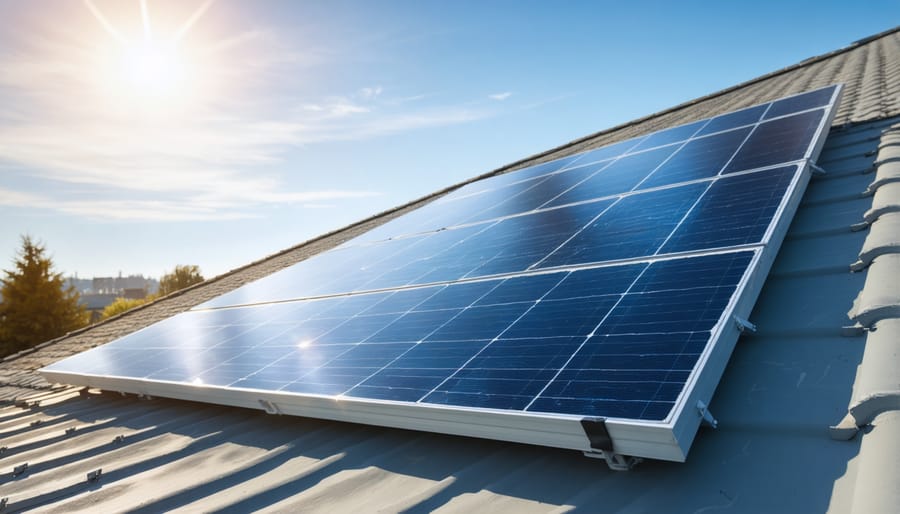
Modern solar storage solutions have revolutionized how we harness and use solar energy. At the heart of these systems are advanced lithium-ion batteries, which have become increasingly affordable and efficient. These batteries can store excess energy generated during sunny days for use during nighttime or cloudy periods, making solar systems more reliable and practical for everyday use.
Smart energy management systems work alongside these batteries to optimize energy usage. Using artificial intelligence and real-time monitoring, these systems can predict energy consumption patterns and automatically adjust storage and distribution accordingly. For example, they might store more energy when weather forecasts predict cloudy days ahead or release stored power during peak utility rate hours to maximize cost savings.
The latest storage solutions also feature modular designs, allowing homeowners to start with a basic setup and expand capacity as needed. Most modern systems come with user-friendly apps that provide real-time monitoring of energy production, storage levels, and consumption patterns. This transparency helps users make informed decisions about their energy usage and system optimization.
For maximum efficiency, many homeowners are now combining solar storage with smart home devices. These integrated systems can automatically run high-energy appliances during peak solar production hours and reserve stored energy for essential needs during off-peak times. The result is a more sustainable and cost-effective home energy solution that provides peace of mind and reduced utility bills.
Cost-Benefit Analysis of Modern Solar Systems
Initial Investment vs. Long-term Savings
The decision to invest in solar energy often comes down to understanding the financial implications. While the upfront costs may seem substantial, the long-term savings typically outweigh the initial investment. Currently, the average residential solar system costs between $15,000 to $25,000 before incentives, depending on system size and location.
However, federal tax credits can reduce this cost by 30%, and many states offer additional incentives, rebates, and grants. Local utility companies might also provide special programs or discounts, making the initial investment more manageable.
Let’s break down the savings: A typical household can save $100-200 monthly on electricity bills immediately after installation. This translates to approximately $1,200-2,400 annually. Most solar panels come with 25-year warranties, potentially saving homeowners $30,000-60,000 over the system’s lifetime.
The payback period – the time it takes to recover your initial investment through energy savings – usually ranges from 5 to 8 years. After this point, your solar system essentially generates free electricity for your home. Additionally, properties with solar installations typically see a 4-6% increase in resale value.
Commercial properties often experience even more dramatic savings due to their higher energy consumption. Many businesses recover their investment within 3-5 years and benefit from accelerated depreciation tax benefits.
Remember that energy prices historically trend upward, making solar savings even more valuable over time. When combined with battery storage systems, the potential for savings increases as you can store excess energy for use during peak rate periods.
Available Incentives and Rebates
Making the switch to solar energy is more affordable than ever, thanks to numerous financial incentives and support programs available at federal, state, and local levels. The federal government offers the Solar Investment Tax Credit (ITC), which allows you to deduct 30% of your solar installation costs from your federal taxes. This significant incentive is available through 2032 and applies to both residential and commercial installations.
Many states offer additional tax credits, rebates, and grants. For example, some states provide performance-based incentives that pay you for the electricity your system generates, while others offer upfront rebates that reduce your initial installation costs. Property tax exemptions are also common, ensuring your property taxes won’t increase despite the added value of your solar system.
Local utilities often provide their own incentive programs, including net metering arrangements that credit you for excess energy your system produces. Some utilities also offer special solar-friendly rate plans or cash rebates for installing energy-efficient systems.
Solar Renewable Energy Credits (SRECs) present another opportunity to earn money from your solar installation. These credits can be sold to utility companies, providing an additional revenue stream for system owners.
Don’t forget to check for special financing programs, such as Property Assessed Clean Energy (PACE) financing or solar-specific loans with favorable terms. Many local credit unions and banks now offer green energy loans with competitive interest rates.
Remember that incentives and rebates can change frequently, so it’s wise to consult with local solar installers or energy efficiency experts who stay current with available programs in your area.
Practical Implementation Steps
Assessing Your Home’s Solar Potential
Before installing solar panels, it’s crucial to evaluate your solar potential to ensure you’ll get the maximum benefit from your investment. Start by examining your roof’s orientation – south-facing roofs in the Northern Hemisphere typically receive the most sunlight throughout the day. The ideal roof angle is between 30-45 degrees, though solar panels can be installed successfully on various pitch angles.
Consider your roof’s condition and available space. You’ll need about 100 square feet of roof space for every 1 kilowatt of solar panel capacity. Make sure your roof is in good condition, as solar panels typically last 25-30 years, and you won’t want to remove them for roof repairs.
Check for potential shade issues from nearby trees, buildings, or other structures. Even partial shade can significantly reduce solar panel efficiency. Many homeowners find it helpful to track sun exposure throughout different seasons using smartphone apps or solar assessment tools.
Local weather patterns also play a crucial role. While solar panels work even in cloudy conditions, your location’s average sunny days will impact overall energy production. Consider using the National Renewable Energy Laboratory’s solar resource maps or consulting local solar installers for specific data about your area.
Don’t forget to review local regulations and HOA requirements. Some neighborhoods have specific guidelines about solar panel installation. Many areas offer solar access laws that protect your right to install solar panels, but it’s essential to understand these regulations before proceeding.
Finding Qualified Installers
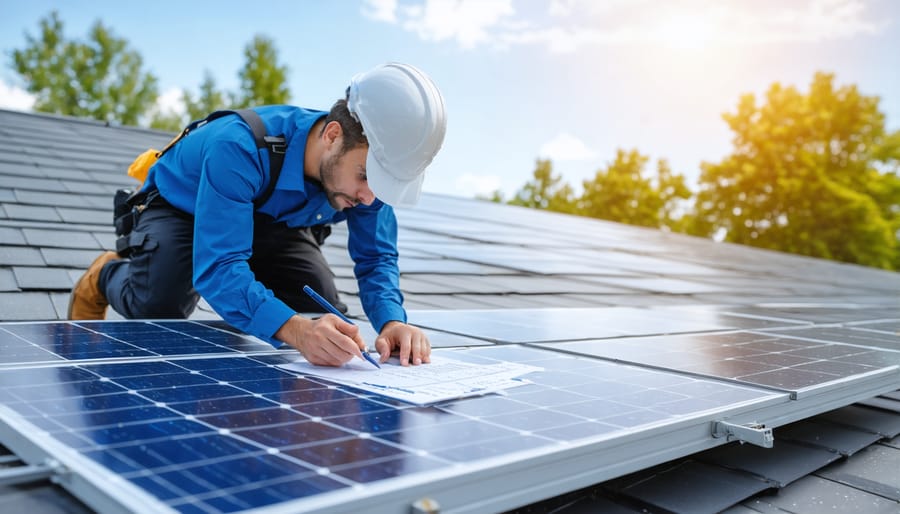
Finding the right solar installer is crucial for a successful solar energy project. Start by checking certification credentials – look for NABCEP (North American Board of Certified Energy Practitioners) certified professionals, as this is the gold standard in solar installation certification.
Create a shortlist of potential installers by gathering recommendations from neighbors with solar installations, checking online review platforms, and consulting local solar energy associations. Always verify that installers are licensed, bonded, and insured in your state.
When evaluating installers, request detailed proposals from at least three companies. Each proposal should include:
– System size and specifications
– Expected energy production
– Total costs and financing options
– Installation timeline
– Warranty information
– Maintenance requirements
Don’t hesitate to ask for references from recent customers and photos of completed installations. A reputable installer will gladly provide these. Schedule in-person consultations to assess their professionalism and knowledge. During these meetings, ask about their experience with your specific roof type and local building codes.
Pay attention to how well they communicate and whether they take time to understand your energy needs. Quality installers will perform a thorough site assessment and explain their recommendations in clear, understandable terms.
Consider the company’s longevity in the business and their track record of successful installations. While price is important, it shouldn’t be the only factor – focus on value, quality of equipment, and long-term reliability. Remember that the cheapest option isn’t always the best when it comes to a long-term investment like solar panels.
Maintenance and Monitoring Considerations
Regular monitoring and maintenance are essential for getting the most out of your solar energy system. While solar panels are generally low-maintenance, following a consistent care routine ensures optimal performance and longevity. Maintaining solar panel performance typically involves quarterly visual inspections and annual professional check-ups.
Key maintenance tasks include keeping panels clean from dust, leaves, and bird droppings, which can reduce efficiency. In most climates, rain naturally cleans the panels, but areas with heavy pollution or dust might require occasional gentle cleaning with water and a soft brush. It’s important to trim nearby trees to prevent shading and ensure proper airflow around the panels.
Modern solar systems come with monitoring apps that track energy production in real-time. These tools help you spot potential issues early by alerting you to unexpected drops in performance. Keep an eye on your monthly energy production trends and compare them with previous years’ data to identify any concerning patterns.
For snow-prone regions, consider installing panels at an angle that allows snow to slide off naturally. During winter months, avoid using metal tools to remove snow as they can damage the panels. Remember to check the inverter’s indicator lights regularly and ensure proper ventilation around all system components.
Solar energy has proven itself as a game-changing solution for our energy needs, offering both environmental benefits and significant cost savings. Throughout our exploration of solar technology, we’ve seen how research continues to drive innovation, making solar panels more efficient and affordable than ever before. From improved photovoltaic cells to advanced energy storage solutions, the solar industry is constantly evolving to meet growing energy demands.
The benefits are clear: reduced carbon footprint, lower utility bills, and increased property value. Homeowners who’ve made the switch consistently report satisfaction with their decision, often seeing return on investment sooner than expected. Commercial properties are experiencing similar success, with many businesses achieving substantial reductions in operational costs.
As we look to the future, solar energy’s role in combating climate change becomes increasingly vital. With installation costs continuing to decline and government incentives making adoption more accessible, there’s never been a better time to consider solar power for your property.
Whether you’re a homeowner looking to reduce your environmental impact or a business owner seeking to cut operational costs, solar energy offers a practical and sustainable solution. By joining the growing community of solar adopters, you’re not just investing in your property – you’re investing in our planet’s future. Take the first step today by consulting with solar professionals and discovering how this revolutionary technology can benefit you.