


Solar-Powered Heat That Works When Disaster Strikes: Emergency Shelter Solutions That Save Lives
Transform emergency shelters into sustainable havens with solar-powered heating systems that work even during power outages. When traditional heating fails, these innovative solutions can mean the difference between comfort and crisis for vulnerable populations seeking refuge.
Solar heating shelters combine cutting-edge thermal technology with practical emergency management, offering a reliable warmth source that doesn’t depend on the grid. By harnessing the sun’s energy through evacuated tubes and thermal storage systems, these facilities maintain comfortable temperatures while reducing operational costs by up to 70%.
For shelter operators and facility managers, implementing solar heating isn’t just about environmental responsibility – it’s about ensuring continuous care during critical situations. Modern solar heating systems can integrate seamlessly with existing infrastructure, providing supplemental or primary heating through efficient heat exchangers and smart distribution networks.
Whether you’re upgrading an existing emergency shelter or planning a new facility, solar heating technology offers a dependable, cost-effective solution that aligns with both humanitarian needs and sustainability goals. The initial investment typically pays for itself within 3-5 years through reduced energy costs and increased operational reliability.
Why Solar Heating Makes Perfect Sense for Emergency Shelters
Energy Independence When Grid Power Fails
When severe weather or natural disasters strike, traditional power grids often fail, leaving communities vulnerable to heating emergencies. Solar heating systems provide a reliable backup solution, ensuring your shelter maintains comfortable temperatures even during extended blackouts. Unlike conventional heating systems that depend entirely on the electrical grid, solar power during grid failures continues to function, harvesting energy from the sun to keep your space warm.
Modern solar heating installations typically include battery storage systems, allowing excess energy collected during daylight hours to be used at night or during periods of limited sunlight. This independence from the grid becomes crucial during emergency situations, when reliable heating can make the difference between comfort and crisis.
Many shelter operators have reported successful operations during power outages lasting several days, thanks to their solar heating systems. These systems require minimal maintenance and can operate autonomously, providing peace of mind when traditional infrastructure becomes unreliable. By incorporating solar heating into your shelter’s design, you’re not just choosing an eco-friendly option – you’re investing in a dependable heating solution that works when you need it most.

Cost-Effective Operation for Long-Term Relief
Operating a heating shelter efficiently can lead to significant cost savings while providing essential services to those in need. By implementing solar-powered heating systems, organizations can reduce their dependency on traditional energy sources and cut operational expenses by up to 70% over five years.
The initial investment in solar heating technology typically pays for itself within 2-3 years through reduced utility bills and maintenance costs. Smart thermostats and automated climate control systems help optimize energy usage, ensuring heat is distributed only when and where needed. This targeted approach can save an additional 15-25% on energy costs.
Regular maintenance schedules and proper insulation further enhance cost-effectiveness. Simple measures like sealing drafts and scheduling annual system checks prevent energy waste and expensive repairs. Many organizations report saving $5,000-$8,000 annually through these preventive measures.
Government incentives and tax credits for renewable energy installations can offset initial costs by 30% or more. Additionally, partnerships with local energy providers often result in reduced rates for emergency shelters using sustainable heating solutions. These combined savings allow organizations to allocate more resources to essential services and long-term facility improvements.
Essential Solar Heating Technologies for Emergency Shelters
Passive Solar Design Features
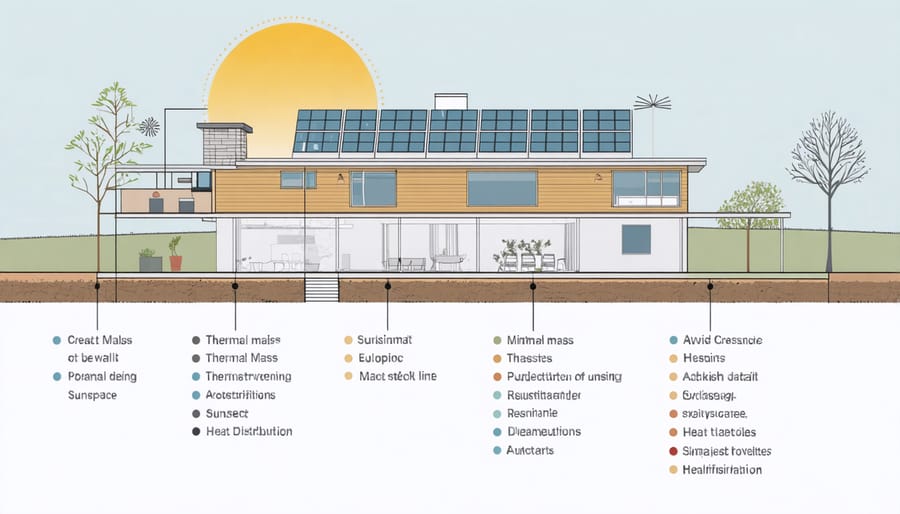
Passive solar design features work with nature to create comfortable indoor temperatures while minimizing energy costs. These architectural elements strategically use the sun’s energy for heating during winter months while preventing overheating in summer.
Large, south-facing windows are the cornerstone of passive solar design, allowing maximum sunlight penetration during winter when the sun is lower in the sky. These windows should be double or triple-paned for optimal insulation. Thermal mass materials like concrete floors, brick walls, or water-filled containers absorb heat during the day and release it slowly at night, maintaining steady indoor temperatures.
Proper roof overhangs or awnings protect against excessive summer heat while allowing winter sun to enter. Light-colored interior surfaces help reflect and distribute solar heat throughout the space. Strategic placement of deciduous trees provides natural shade during summer while allowing sunlight through bare branches in winter.
Insulation plays a crucial role in passive solar design. Well-insulated walls, floors, and ceilings prevent heat loss and maintain consistent temperatures. Air-tight construction with controlled ventilation ensures heated air stays inside where it’s needed.
Consider incorporating a sunroom or greenhouse space that can act as a solar collector, warming adjacent living areas through natural convection. These buffer zones create additional usable space while contributing to the overall heating strategy of the shelter.
Active Solar Heating Systems
Active solar heating systems harness the sun’s energy through specialized collectors mounted on roofs or walls, converting sunlight into usable heat for shelters. These systems consist of two main components: solar thermal collectors and heat distribution mechanisms.
The most common type of collector is the flat-plate collector, which features a dark-colored absorber plate under glass or plastic covering. As sunlight passes through the covering, it heats the absorber plate, which then transfers heat to fluid circulating through attached tubes. This heated fluid, typically water or a freeze-resistant solution, moves through the system to warm your living space.
For more efficient heat collection, evacuated tube collectors use rows of glass tubes containing absorber plates in a vacuum. While more expensive, these collectors perform better in cold climates and can generate higher temperatures.
The heat distribution system works by circulating the warmed fluid through radiators, underfloor heating pipes, or air handlers. Some systems include thermal storage tanks, allowing excess heat collected during sunny days to be used during cloudy periods or at night.
Installing an active solar heating system can reduce heating costs by 40-80% annually. While the initial investment may seem substantial, many users report breaking even within 5-7 years through energy savings. Modern systems come with smart controllers that optimize performance based on weather conditions and heating demands, ensuring maximum efficiency.
Remember to regularly maintain your collectors by keeping them clean and checking for proper fluid levels to ensure optimal performance.
Hybrid Solutions for 24/7 Reliability
To achieve true 24/7 reliability in heating shelters, combining multiple energy sources and storage solutions is essential. Modern hybrid systems typically integrate solar thermal technology with solar battery backup systems and conventional power sources, ensuring continuous operation regardless of weather conditions or grid status.
The key to a robust hybrid solution lies in smart energy management. During sunny days, solar thermal collectors generate heat while photovoltaic panels produce electricity, storing excess energy for later use. This stored energy becomes crucial during nighttime or cloudy periods when solar collection is minimal.
Backup options typically include:
– Thermal storage tanks that retain heat for 12-24 hours
– Advanced battery systems storing electrical energy
– Propane or natural gas backup heaters
– Grid connection for supplementary power
These components work together seamlessly through automated controllers that monitor energy levels and weather conditions. The system automatically switches between sources based on availability and demand, maintaining optimal temperature levels while maximizing efficiency.
For emergency shelters, this redundancy is particularly vital. Having multiple heating options ensures that even during extended power outages or severe weather events, occupants remain warm and comfortable. The initial investment in hybrid systems typically pays off through reduced operating costs and enhanced reliability during critical situations.
Real-World Implementation Success Stories
Disaster Response Centers That Got It Right
During Hurricane Sandy in 2012, the Red Cross shelter in Atlantic City showcased the power of solar heating preparedness. Their rooftop solar thermal system, combined with battery storage, maintained comfortable temperatures for over 300 evacuees when the power grid failed. The shelter’s success inspired similar installations across the Eastern Seaboard.
In California’s 2020 wildfire season, the Sacramento Emergency Response Center demonstrated exceptional foresight with their hybrid solar heating setup. When smoke blocked conventional solar panels, their evacuated tube collectors continued functioning, providing warmth for displaced families. The center served over 500 people while reducing their carbon footprint and operating costs.
The Alpine Rescue Station in Colorado stands as another brilliant example. Their passive solar design, featuring south-facing windows and thermal mass walls, keeps the facility warm even during extreme weather events. During the 2019 winter storms, the station operated entirely off-grid for nine days, sheltering stranded motorists and maintaining consistent indoor temperatures without traditional heating.
Portland’s Community Emergency Hub took innovation further by implementing a ground-source heat pump system backed by solar power. During the 2021 ice storms, this combination provided reliable heating for 200 residents while neighboring facilities struggled with power outages. The hub’s success has become a model for sustainable emergency preparedness nationwide.
Lessons Learned from the Field
Emergency management professionals have shared valuable insights from their experiences operating heating shelters during crisis situations. One recurring lesson is the importance of having multiple backup heating sources. Even with reliable solar heating systems, professionals recommend maintaining traditional heating methods as contingency options.
Proper staff training has proven crucial for optimal shelter operation. Experienced managers emphasize the need for regular drills and updates on emergency protocols, ensuring all team members can efficiently operate heating equipment and respond to various scenarios.
Space optimization has emerged as another critical factor. Shelter operators have found success in creating designated zones with different temperature requirements, allowing for more efficient heat distribution and energy usage. This approach helps accommodate varying needs of shelter occupants while maximizing available resources.
Communication with shelter occupants has also proven essential. Clear signage and regular updates about heating schedules and temperature management help maintain order and reduce anxiety among those seeking refuge. Many facilities now implement feedback systems to better understand and address occupants’ comfort needs.
Maintenance schedules must be strictly followed, with equipment inspections conducted before and after each emergency deployment. This proactive approach has helped facilities avoid critical system failures during crucial times. Additionally, establishing relationships with local HVAC professionals and maintaining an inventory of essential replacement parts has proven invaluable during extended shelter operations.
Setting Up Your Emergency Shelter’s Solar Heating System
Essential Planning Steps
Before embarking on a heating shelter project, proper planning is essential for optimal performance and safety. Start by assessing your shelter’s specific heating requirements, including the space dimensions, insulation levels, and average occupancy. This initial evaluation helps determine the appropriate heating system capacity and energy needs.
Next, conduct a detailed site assessment to identify the best location for your emergency solar system installation. Consider factors such as solar exposure, surrounding obstacles that might cast shadows, and structural integrity of the mounting surface.
Create a comprehensive budget that accounts for equipment costs, installation expenses, and potential maintenance requirements. Remember to factor in backup heating solutions for periods of limited sunlight. It’s also crucial to research local building codes and obtain necessary permits before beginning installation.
Develop a timeline that includes key milestones and accounts for potential weather-related delays. Consider scheduling installation during warmer months to ensure comfortable working conditions and optimal testing opportunities.
Finally, establish partnerships with qualified contractors and suppliers early in the planning process. Their expertise can help refine your plans and ensure all components are compatible and properly sized for your specific needs. Don’t forget to create a maintenance schedule and emergency response plan to keep your heating shelter running efficiently year-round.

Maintenance and Emergency Protocols
Regular maintenance is crucial for keeping your heating shelter system operating efficiently and safely. Schedule monthly inspections of all heating components, including solar panels, thermal storage units, and ventilation systems. Keep detailed maintenance logs and set up reminder systems for routine checks.
Essential maintenance tasks include cleaning solar panels to maintain optimal efficiency, checking insulation integrity, and maintaining backup power systems to ensure reliability during emergencies. Inspect weather seals and repair any damage promptly to prevent heat loss.
For emergency situations, establish clear protocols and post them in visible locations. Keep an emergency contact list updated and easily accessible. Include procedures for:
– Power outages: Activate backup systems and monitor battery levels
– System malfunctions: Safe shutdown procedures and alternative heating plans
– Weather emergencies: Additional insulation deployment and occupant safety measures
Stock essential supplies like emergency blankets, portable heaters, and basic repair tools. Train all facility staff on emergency procedures and conduct periodic drills. Remember to update your emergency protocols annually and after any significant system modifications or incidents.
Create a network of reliable service providers and keep their contact information readily available. Consider establishing maintenance contracts with certified professionals for complex repairs and annual system assessments.
Solar heating in emergency shelters represents a crucial innovation in humanitarian response and disaster preparedness. By harnessing the sun’s energy, we can provide reliable warmth to those in need while reducing environmental impact and operational costs. The evidence clearly shows that implementing solar heating solutions in shelters not only saves lives during emergencies but also creates more sustainable and resilient communities.
As we face increasing climate challenges and natural disasters, the time to act is now. Whether you’re a shelter operator, facility manager, or concerned citizen, consider supporting or implementing solar heating systems in your local emergency shelters. Together, we can build a network of energy-efficient, environmentally friendly shelters that serve our communities when they need it most. The investment in solar heating technology today ensures a warmer, safer tomorrow for everyone.


