


Solar-Powered MEDEVAC: Life-Saving Emergency Response When Power Fails
Life-saving decisions in medical evacuations demand split-second precision and flawless communication. The 9-line MEDEVAC format, integrated with modern solar emergency power systems, serves as the universal language between ground forces and medical evacuation teams during critical moments.
This comprehensive guide walks through real-world MEDEVAC scenarios, providing clear-cut examples and expert answers for each line of the standardized request format. Whether you’re a field medic, emergency responder, or medical transport coordinator, these practical scenarios illuminate the crucial details needed for successful evacuations – from precise location coordinates to special equipment requirements.
By examining these carefully curated examples, you’ll master the essential elements of MEDEVAC requests, understand common pitfalls to avoid, and gain confidence in transmitting vital information when seconds count. Each scenario reflects actual field conditions, incorporating both traditional and modern emergency response protocols to ensure comprehensive preparation for any evacuation situation.
Let’s dive into these life-saving scenarios and decode the critical components of successful MEDEVAC operations.
Understanding the 9-Line MEDEVAC Protocol
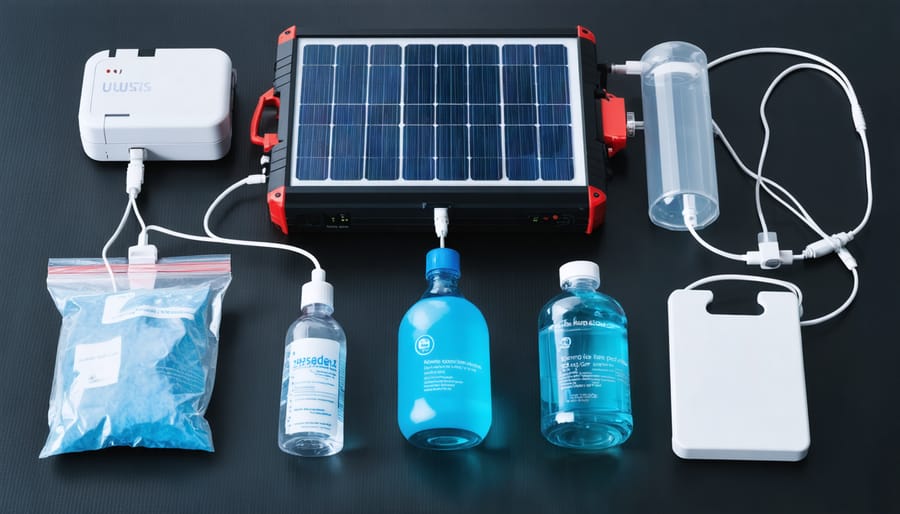
Essential Equipment Powered by Solar
Modern solar generators for emergency response can power a variety of critical medical equipment during evacuations. Portable vital signs monitors, which track patient heart rate, blood pressure, and oxygen levels, can run efficiently on solar power for extended periods. Emergency ventilators and oxygen concentrators, essential for respiratory support, are now available with solar-compatible power systems.
Compact medical refrigeration units, crucial for storing temperature-sensitive medications and blood products, can operate continuously using solar energy. LED examination lights and portable X-ray machines have been adapted to work with solar power systems, ensuring proper diagnostic capabilities in remote locations.
Defibrillators and ECG machines with solar charging capabilities provide life-saving cardiac care during transport. Battery-operated infusion pumps for precise medication delivery can be sustained through solar charging stations. Communication equipment, including satellite phones and emergency radios, maintain reliable contact during evacuations while running on solar power.
Mobile ultrasound devices and patient monitoring tablets have been redesigned to operate on minimal power, making them ideal for solar applications. These devices can typically run for 12-24 hours on a single charge from solar panels, ensuring continuous care during extended evacuation operations.
Real-World MEDEVAC Scenarios with Solar Backup
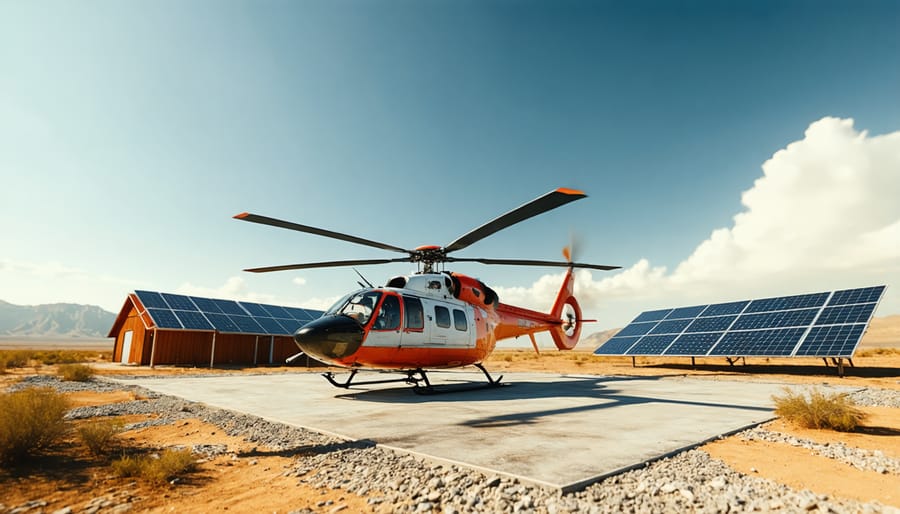
Remote Location Emergencies
Remote locations present unique challenges for medical evacuations, especially when conventional power sources aren’t available. Here are three scenarios that demonstrate how to handle MEDEVAC requests in these situations:
Scenario 1: Mountain Wilderness
Location: Remote mountain trail, coordinates N 40°15’12” W 105°34’48”
Patient: Hiker with severe altitude sickness and dehydration
Special Equipment: Portable oxygen concentrator required
Nearest Landing Zone: Small clearing 200 meters north of patient location
Challenge: No cell service, relying on satellite communication
Scenario 2: Desert Research Station
Location: Mojave Desert outpost, coordinates N 35°00’42” W 115°28’15”
Patient: Researcher with severe heat stroke
Special Equipment: None required
Nearest Landing Zone: Marked helipad at station
Challenge: Limited visibility due to sandstorm conditions
Scenario 3: Arctic Research Base
Location: Arctic Circle station, coordinates N 78°13’24” E 15°38’56”
Patient: Team member with suspected appendicitis
Special Equipment: Medical monitoring devices needed
Nearest Landing Zone: Base’s emergency landing pad
Challenge: Extreme cold affecting equipment operation
Key Considerations for Remote Location MEDEVACs:
– Always provide exact coordinates
– Identify nearest suitable landing zone
– Report weather conditions accurately
– List available medical equipment on-site
– Specify any hazards that could affect aircraft approach
– Have backup communication methods ready
– Prepare patient for potential extended wait times
– Ensure landing zone markers are visible in various conditions
These scenarios emphasize the importance of clear communication and thorough preparation when coordinating medical evacuations from remote locations where standard infrastructure isn’t available.
Natural Disaster Response
During natural disasters, solar-powered medical equipment proves invaluable for emergency response teams conducting MEDEVAC operations. In a recent hurricane response scenario, medics successfully used portable solar-powered vital signs monitors and LED surgical lights to treat patients before evacuation. The equipment maintained continuous operation for 72 hours without traditional power sources.
Consider this example: A devastating earthquake has cut off power to a remote village. The MEDEVAC team arrives with solar-powered oxygen concentrators and medical refrigeration units. Their 9-line report includes Line 3 (number of patients) as “6 critical,” while Line 8 (patient medical condition) specifies “2 requiring constant oxygen.” The solar equipment ensures uninterrupted care while awaiting helicopter transport.
Another successful implementation occurred during flood response operations. Teams deployed solar-charged communication devices and medical diagnostic equipment, maintaining critical operations despite widespread power outages. Their mobile solar array powered essential monitoring equipment for 12 patients over 36 hours.
Field reports highlight the reliability of solar-powered trauma kits, which include LED examination lights, portable ultrasound devices, and vital sign monitors. These kits have proven especially effective in areas where traditional power infrastructure is compromised or non-existent.
Key benefits observed include:
– Zero emissions during operation
– Silent functionality, ideal for sensitive operations
– Reliable power supply in isolated locations
– Reduced dependency on fuel transport
– Quick deployment and setup time
Emergency responders note that solar-powered equipment significantly enhances their capability to provide immediate care while coordinating evacuation efforts, particularly in scenarios where traditional power sources are compromised.
Grid Failure Situations
During recent natural disasters and widespread power outages, solar backup systems have proven invaluable in maintaining essential medical evacuation operations. In Hurricane Maria’s aftermath, several Puerto Rican hospitals successfully maintained critical systems backup power through solar installations, enabling continuous care and successful MEDEVAC missions.
A notable example occurred at San Juan Medical Center, where solar panels and battery storage kept emergency room equipment operational for 72 hours during a complete grid failure. This allowed medical staff to stabilize and coordinate the evacuation of twelve critical patients to mainland facilities. The backup system powered essential medical equipment, communication devices, and helicopter pad lighting systems.
In California’s 2019 wildfire season, multiple rural medical facilities relied on solar backup systems during planned power shutoffs. At Meadow Valley Medical Center, the solar installation maintained power for vital signs monitors, emergency lighting, and communication systems, facilitating three successful night-time MEDEVAC operations.
Solar backup systems have also proven essential in military forward operating bases. During a three-day grid failure at a remote medical facility in Afghanistan, solar power maintained critical operations, enabling the successful evacuation of wounded personnel. The system powered essential medical equipment, radio communications, and night vision capabilities required for safe helicopter operations.
These real-world scenarios demonstrate how solar backup systems provide reliable power during emergencies, ensuring continuous medical care and evacuation capabilities. Medical facilities implementing these systems report increased operational resilience and improved emergency response capabilities, particularly in areas prone to natural disasters or unreliable grid power.
The success of these installations has led to increased adoption of solar backup systems in medical facilities worldwide, with many incorporating this technology into their emergency preparedness protocols. This trend continues to strengthen the reliability of medical evacuation operations during grid failure situations.
Implementation Guidelines

Equipment Selection and Setup
For effective 9-line MEDEVAC operations, selecting and setting up the right equipment is crucial. Start with reliable emergency communication systems that can operate in various weather conditions. Your basic setup should include a military-grade radio with preset MEDEVAC frequencies, a GPS device for accurate coordinates, and a backup power source.
Essential equipment includes standardized 9-line cards or digital tablets with pre-loaded MEDEVAC forms, which help ensure quick and accurate transmission of critical information. Night operations require specialized equipment like strobe lights, IR beacons, or chemlights for marking landing zones.
For the medical team, prepare trauma kits appropriate for the expected casualties and environmental conditions. Include vital signs monitoring equipment, basic airway management tools, and hemorrhage control supplies. Consider portable solar-powered medical devices for extended field operations.
When setting up your equipment, create a designated MEDEVAC coordination point with clear line-of-sight for communications. Organize equipment in clearly marked, waterproof containers for quick access. Test all communication equipment regularly and maintain backup systems. Keep spare batteries and charging solutions readily available.
Remember to position medical equipment in a protected area near the casualty collection point, but away from the landing zone to prevent damage from rotor wash. This setup ensures smooth operations while maintaining safety protocols.
Maintenance and Testing
Regular maintenance and testing of 9-line MEDEVAC procedures are crucial for maintaining operational readiness. Medical teams should conduct monthly practice drills using various scenarios to ensure all personnel remain proficient in transmission protocols and response procedures.
Equipment checks should include testing radio communications, GPS devices, and backup power systems. Teams should verify that all required medical equipment is properly functioning and readily accessible. Creating a maintenance checklist helps track inspection dates and identify any issues requiring immediate attention.
Documentation is key – maintain detailed records of all practice sessions, including response times, areas for improvement, and any technical difficulties encountered. This data helps identify patterns and optimize future performance.
Consider implementing these best practices:
– Conduct quarterly full-scale simulations
– Rotate personnel roles during practice sessions
– Test communication systems under different weather conditions
– Review and update standard operating procedures regularly
– Verify accuracy of coordinates and landing zone information
– Practice night operations and adverse weather scenarios
Teams should also regularly update their knowledge of regional medical facilities and their capabilities. This ensures appropriate patient routing during actual emergencies.
Remember to debrief after each practice session, discussing what went well and areas needing improvement. This feedback loop is essential for maintaining high standards of emergency medical evacuation readiness.
As we conclude our exploration of 9-line MEDEVAC scenarios, it’s crucial to highlight how solar power has become a game-changer in modern medical evacuation operations. The reliability and sustainability of solar-powered systems ensure that life-saving equipment remains operational even in the most challenging environments, making every second count when it matters most.
Solar energy provides a dependable power source for medical equipment, communication devices, and lighting systems at emergency response stations. This renewable energy solution eliminates the uncertainty of conventional power sources, particularly in remote locations or during natural disasters where traditional power infrastructure might be compromised.
Real-world implementations have shown that solar-powered MEDEVAC stations can operate continuously, maintaining critical systems like patient monitoring equipment, emergency lighting, and communication devices. This uninterrupted power supply is essential for coordinating swift and effective medical evacuations, potentially making the difference between life and death.
The integration of solar power also supports environmental sustainability while ensuring operational readiness. By reducing reliance on fossil fuels, medical evacuation teams can maintain their readiness without compromising their environmental responsibility. This dual benefit of reliability and sustainability makes solar power an invaluable asset in modern emergency medical services.
Looking ahead, the continued advancement of solar technology promises even more efficient and effective MEDEVAC operations. From portable solar-powered medical devices to entire emergency response facilities powered by the sun, the possibilities for improving medical evacuation capabilities are limitless.
For medical professionals and emergency responders, embracing solar power isn’t just about environmental consciousness – it’s about ensuring that when a call comes in, they have the reliable power they need to execute their mission successfully. As we’ve seen through these nine scenarios, having dependable power can make all the difference in saving lives.
Remember, every successful MEDEVAC mission relies on multiple systems working together flawlessly, and solar power helps ensure that power supply never becomes the weak link in this critical chain of survival.


