Beautiful Passive Solar Homes That Slash Energy Bills
Transform your home into a natural climate control powerhouse with passive solar design – an architectural approach that can help eliminate energy bills while creating comfortable living spaces. From the award-winning Earthship homes in New Mexico to the ultra-efficient BedZED development in London, passive solar buildings are revolutionizing sustainable architecture worldwide.
Picture south-facing windows that capture winter sun but stay shaded in summer, thermal mass walls that store heat like natural batteries, and strategically placed overhangs that work in harmony with the changing seasons. These aren’t futuristic concepts – they’re proven design elements being implemented today in homes and commercial buildings across every climate zone.
Whether you’re planning a new build or retrofitting an existing structure, passive solar design offers practical, tested solutions that blend seamlessly with modern architecture. The following examples showcase how thoughtful design can harness natural energy flows to heat, cool, and illuminate spaces without complex mechanical systems or ongoing energy costs.
Sunroom Sanctuaries: Natural Light Maximizers
The Desert Oasis Design
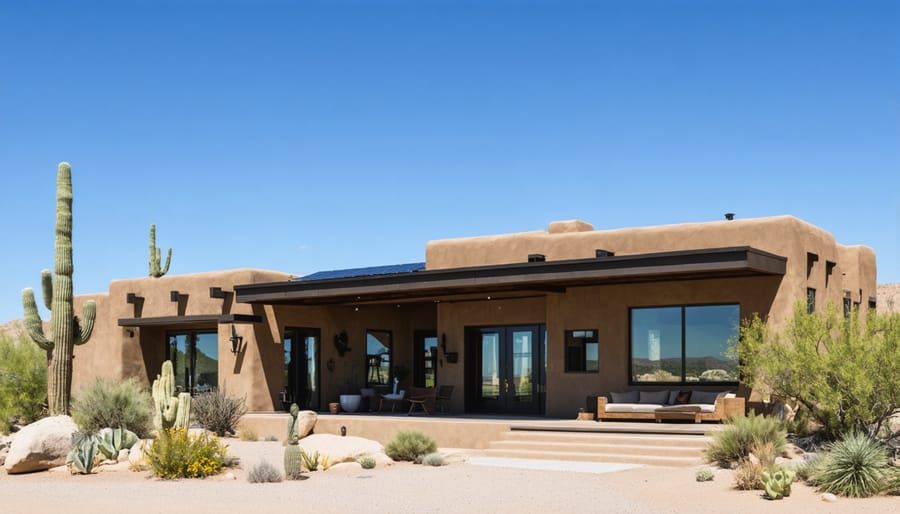
In the heart of Arizona’s Sonoran Desert stands a remarkable example of energy-smart living solutions that masterfully harnesses the power of passive solar design. This 2,400-square-foot residence showcases how strategic window placement and thermal mass walls can create a comfortable living space while minimizing energy consumption.
The home’s south-facing windows are carefully sized and positioned to capture winter sunlight while remaining shaded during summer months by extended roof overhangs. These windows work in harmony with the home’s thick adobe walls, which serve as thermal mass storage, absorbing heat during the day and releasing it slowly at night when temperatures drop.
The design incorporates locally sourced rammed earth walls, measuring 18 inches thick, which provide excellent insulation and thermal regulation. These walls maintain a steady indoor temperature, typically fluctuating only 5-7 degrees throughout the day, even when external temperatures swing by 30 degrees or more.
Interior concrete floors, stained in warm earth tones, act as additional thermal mass, collecting solar heat during winter days. The home’s layout maximizes natural ventilation, with clerestory windows positioned to create a chimney effect that draws hot air up and out during summer evenings.
This desert oasis demonstrates how traditional building materials and modern design principles can work together to create a comfortable, energy-efficient home that responds naturally to its environment.
Mountain Vista Home
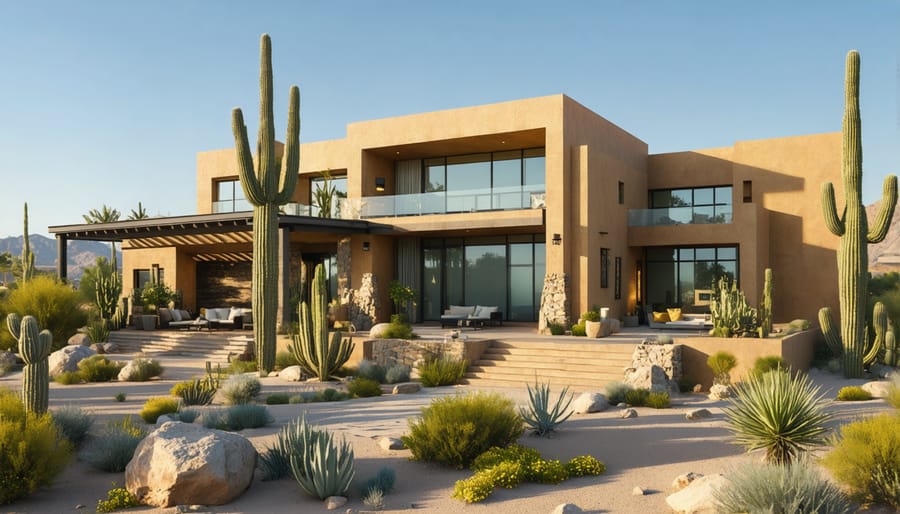
Nestled in the Colorado Rockies at 8,500 feet elevation, the Mountain Vista Home showcases how passive solar design can work beautifully in challenging climates. This 2,800-square-foot residence maximizes natural heating through its thoughtful orientation and carefully planned features.
The home’s southern facade features floor-to-ceiling windows that capture abundant sunlight during winter months when the sun sits lower in the sky. These triple-paned windows not only welcome warmth but also frame breathtaking mountain views, creating a seamless connection between indoor and outdoor spaces.
The interior’s most striking feature is its dark slate flooring, which serves as a thermal mass to absorb and store heat during sunny days. This natural heat bank slowly releases warmth throughout the evening, reducing the need for conventional heating by up to 70% during winter months.
The owners, Tom and Sarah Bennett, report their winter heating bills are consistently lower than similar-sized homes in the area. “The house maintains a comfortable temperature even during the coldest months,” Sarah shares. “On sunny winter days, we rarely need to use our backup heating system.”
Overhangs above the south-facing windows were precisely calculated to block intense summer sun while allowing winter rays to penetrate deeply into the home. Combined with strategic ventilation placement, this passive cooling approach keeps the home comfortable year-round without active air conditioning.
Smart Window Placement That Works
Coastal Climate Solutions
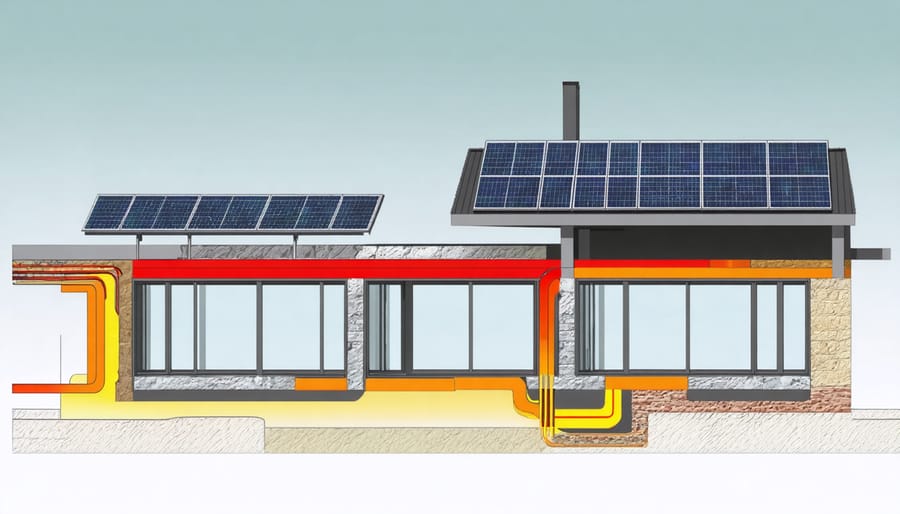
In coastal regions, passive solar design requires a thoughtful balance between capturing winter sun and preventing summer overheating. Large south-facing windows with adjustable shading devices work particularly well in these moderate climates. Many coastal homeowners opt for double-pane windows with low-E coatings, which help manage heat gain while maintaining clear views of the ocean.
A popular approach is the installation of operable clerestory windows, which promote natural ventilation while capturing indirect sunlight. These high-placed windows work in harmony with sea breezes, creating comfortable indoor temperatures year-round. Strategically placed awnings extend over south-facing windows, providing shade during summer months while allowing beneficial winter sun to penetrate deeper into living spaces.
Sliding glass doors with thermal breaks are another effective solution, especially when combined with retractable exterior screens. These features allow residents to control solar gain while maintaining connection with outdoor spaces. Many coastal homes also incorporate transom windows above regular windows and doors, maximizing natural light without compromising wall space for furnishings.
For optimal results, these window solutions should be paired with thermal mass materials like concrete floors or stone walls, which help regulate indoor temperatures by absorbing excess heat during the day and releasing it at night.
Northern Exposure Strategies
In colder climates, the right window arrangement can make a significant difference in capturing and retaining heat. North-facing windows require special attention since they receive minimal direct sunlight and can be a major source of heat loss. The key is to minimize window area on northern exposures while maximizing insulation.
Consider using smaller, triple-pane windows on northern walls, ideally comprising no more than 4% of the total wall area. These windows should be positioned higher on the wall to allow natural light while reducing heat loss. Installing interior window quilts or cellular shades provides additional insulation during cold nights.
For northern walls, incorporate increased insulation values through techniques like double-wall construction or extra layers of rigid foam insulation. Consider creating a thermal buffer zone by adding a mudroom or storage area on the north side of the building.
Some homeowners have found success with clerestory windows on northern exposures, which allow indirect light while minimizing heat loss. These high windows can be combined with light-colored interior surfaces to maximize natural illumination without compromising thermal performance.
Remember to seal all window frames properly and use appropriate weatherstripping to prevent drafts, which are particularly noticeable on northern exposures during winter months.
Natural Materials as Heat Banks
Concrete and Stone Applications
Concrete and stone elements serve as excellent thermal mass materials in passive solar homes, naturally absorbing and storing heat during the day and releasing it at night. Many successful passive solar homes incorporate sustainable building materials like polished concrete floors and stone accent walls to maximize heat retention.
For example, the Desert Rock House in Arizona features exposed concrete floors throughout its south-facing living spaces, which absorb sunlight during winter days and radiate warmth throughout the evening. The concrete’s thermal mass helps maintain comfortable indoor temperatures despite extreme desert temperature swings.
In Colorado’s Mountain Vista Home, locally-sourced stone walls line the interior of south-facing windows. These walls, ranging from 8 to 12 inches thick, effectively capture and store solar heat. The homeowners report saving up to 70% on their heating costs during winter months.
Another innovative application can be found in the Vermont Solar Farmhouse, where concrete countertops and a stone fireplace surround work together as heat sinks. The kitchen’s concrete surfaces absorb excess heat during cooking, while the massive stone fireplace stores warmth from both passive solar gain and active use, releasing it gradually throughout the night.
These real-world examples demonstrate how strategic placement of concrete and stone elements can significantly enhance a home’s thermal performance while adding natural beauty to the interior design.
Water Features as Thermal Mass
Water features bring a dynamic approach to thermal mass in passive solar design, offering both functionality and aesthetic appeal. Swimming pools, decorative ponds, and water walls can store significant amounts of heat during the day and release it gradually when temperatures drop, helping maintain consistent indoor temperatures.
A popular application is the installation of water walls in sunlit spaces, where large panels of flowing water capture and store solar energy. These features can absorb up to five times more heat than concrete or stone, making them incredibly efficient thermal regulators. For example, a south-facing water wall in a living room can reduce heating costs by up to 25% during winter months.
Indoor fountains and reflection pools strategically placed in sunny areas serve dual purposes: they add humidity to dry indoor air while functioning as thermal storage. Many homeowners have reported success with small-scale water features, such as decorative fountains in sunrooms or conservatories, which help moderate temperature swings throughout the day.
For outdoor applications, swimming pools near south-facing windows can reflect additional sunlight into the home while storing heat. During summer, these water features provide natural cooling through evaporation, creating a comfortable microclimate around the building. The key is positioning water elements where they can receive direct sunlight during peak hours while remaining visible from living spaces, enhancing both their thermal performance and visual impact.
Living Shade Solutions
Deciduous Tree Placement
Deciduous trees are nature’s perfect solution for seasonal temperature control in passive solar design. These trees provide shade during hot summer months when their leaves are full, while allowing beneficial sunlight to pass through during winter after losing their leaves.
For optimal results, plant deciduous trees on the south and west sides of your building. Large varieties like maple, oak, or elm should be positioned 20-25 feet from your home’s facade. This distance allows the trees to cast effective shade on your roof and walls during summer while preventing any potential foundation issues from root systems.
Consider the sun’s path when choosing tree placement. Western-facing trees help block intense afternoon sun, while southern-placed trees manage overhead sunlight. Medium-sized trees can be planted closer to the building (15-20 feet) for targeted window shading.
For immediate impact, start with fast-growing species like river birch or tulip trees. While they establish themselves, temporary solutions like trellises with climbing vines can provide intermediate shade. Remember to account for full-grown tree sizes in your planning – a sapling might seem perfectly placed today but could overshadow too much of your solar collection area in ten years.
Many homeowners report 15-25% reductions in summer cooling costs after implementing strategic tree placement, making this one of the most cost-effective passive solar strategies available.
Green Wall Integration
Living walls represent one of the most visually striking approaches to green building integration, offering both aesthetic appeal and remarkable thermal benefits. These vertical gardens consist of plants growing directly on building facades, creating a natural insulation layer that regulates indoor temperatures throughout the year.
During summer months, the plant coverage shields walls from direct sunlight, reducing heat gain and cooling costs. The plants’ natural process of evapotranspiration creates a cooling effect around the building envelope. In winter, the green wall acts as an additional insulation layer, helping retain indoor heat and reducing energy consumption for heating.
Installation typically involves a framework attached to the building’s exterior, complete with growing medium, irrigation systems, and carefully selected plant species. Popular choices include native plants, succulents, and climbing vines that thrive in local conditions while requiring minimal maintenance.
Real-world examples show impressive results: A California office building reported a 23% reduction in cooling costs after installing a 1,500-square-foot living wall. Homeowners with green walls consistently report more stable indoor temperatures and reduced energy bills, with some achieving savings of up to 30% on their cooling costs.
The key to success lies in proper plant selection, professional installation, and regular maintenance. When integrated thoughtfully, these living walls become both an energy-saving feature and a stunning architectural element that connects buildings with nature.

Passive solar design represents a powerful yet elegant solution for creating more sustainable and comfortable living spaces. Throughout this exploration of real-world examples, we’ve seen how thoughtful design choices can dramatically reduce energy consumption while enhancing the quality of life for occupants.
The benefits of implementing passive solar principles are clear and compelling. From significant energy savings and reduced utility bills to improved indoor comfort and increased property values, these design strategies offer both immediate and long-term rewards. Homeowners who have embraced passive solar features report up to 70% reduction in heating costs and express high satisfaction with their living environments.
What’s particularly encouraging is the versatility of passive solar design. Whether you’re planning a new construction project or looking to retrofit an existing building, there are options available for every budget and climate zone. The key is to start with the basics – proper orientation, adequate insulation, and strategic window placement – and build from there according to your specific needs and resources.
As our world faces increasing environmental challenges, implementing passive solar design isn’t just a matter of personal benefit – it’s a responsible choice for our planet’s future. Every building that incorporates these principles contributes to reducing our collective carbon footprint while setting an example for others to follow.
We encourage you to take the first step toward incorporating passive solar design in your next building project. Start small if needed, but start somewhere. The resources and examples shared here provide a solid foundation for your journey toward more sustainable living. Remember, every solar-optimized window and well-placed thermal mass brings us closer to a more sustainable future.