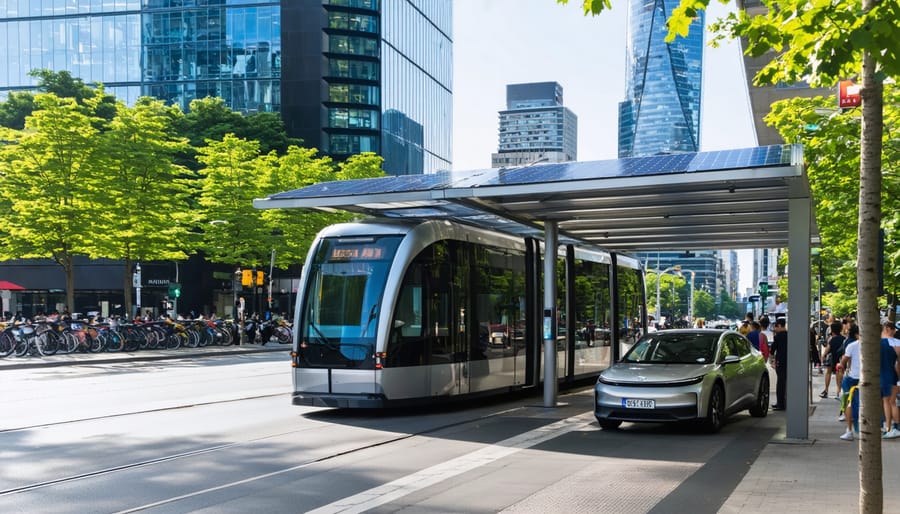
Solar-Powered Transit Is Transforming City Transportation Today
Solar power is revolutionizing urban landscapes, transforming city rooftops and infrastructure into powerful energy generators that drive sustainable urban mobility solutions. From apartment complexes harnessing rooftop solar arrays to power electric vehicle charging stations, to innovative solar-integrated building materials that turn entire facades into energy-producing surfaces, cities are becoming their own power plants.
The integration of solar technology in urban environments has become increasingly sophisticated, with smart grid systems now enabling communities to share excess power production and stabilize local energy networks. This decentralized approach to power generation not only reduces strain on traditional power grids but also creates more resilient neighborhoods capable of maintaining essential services during outages.
For city dwellers and property managers, urban solar installations offer a practical pathway to energy independence while contributing to cleaner air and reduced carbon emissions. With installation costs dropping by over 70% in the past decade, solar power has evolved from an ambitious concept to an accessible solution for sustainable city living.
How Solar Power is Revolutionizing Urban Transportation
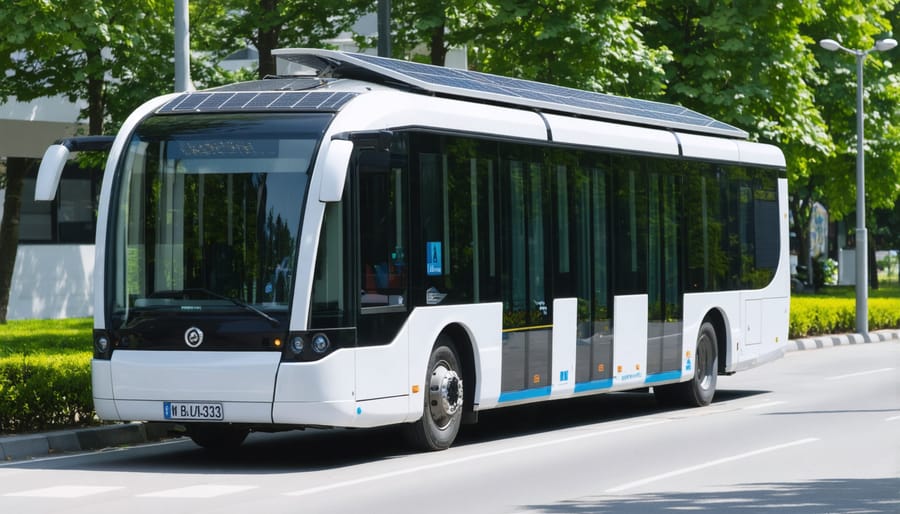
Solar-Powered Buses and Shuttles
Solar-powered buses and shuttles are revolutionizing urban transportation by combining clean energy with public transit. These innovative vehicles use rooftop solar panels to supplement their electric power systems, reducing both operational costs and environmental impact. Cities like Adelaide, Australia, and Singapore have successfully integrated solar-electric buses into their public transportation networks, showing promising results in reducing carbon emissions.
The typical solar-electric bus features high-efficiency photovoltaic panels mounted on the roof, which can generate between 2-3 kWh of electricity per day in optimal conditions. This solar assist helps extend the vehicle’s range by 5-10% and reduces the energy needed from grid charging. While the panels don’t completely power the bus, they significantly decrease the overall energy consumption and help maintain battery charge during idle times.
Many cities are now pilot-testing these vehicles on regular routes, particularly in sunny regions where solar generation potential is highest. The benefits extend beyond environmental impact – transit authorities report lower maintenance costs compared to traditional diesel buses, and passengers enjoy a quieter, smoother ride. As solar technology continues to advance and become more affordable, we’re likely to see more solar-powered buses and shuttles becoming a common sight in urban areas worldwide.
Solar Charging Stations for Electric Vehicles
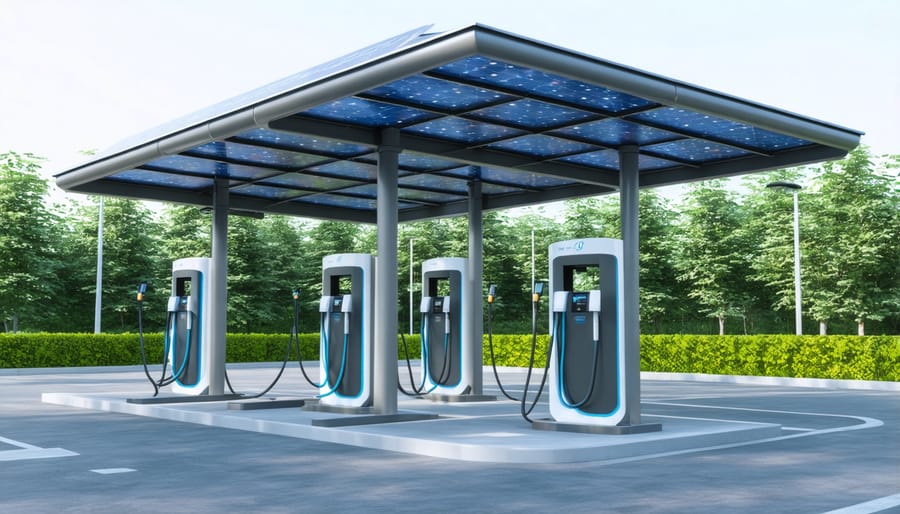
Solar charging stations are revolutionizing urban transportation by combining clean energy generation with sustainable mobility solutions. These innovative installations feature solar panels that capture sunlight to power EV charging networks, creating a self-sustaining ecosystem for electric vehicles in cities.
A typical solar charging station includes photovoltaic panels mounted on canopies, which serve the dual purpose of generating electricity and providing shade for parked vehicles. During peak sunlight hours, these stations can generate excess power that’s stored in battery systems for nighttime or cloudy-day charging.
Many urban areas are incorporating these stations into existing infrastructure, such as parking lots, shopping centers, and office complexes. Property managers report significant benefits, including increased property value, tenant satisfaction, and LEED certification points. For businesses, offering solar-powered EV charging has become a powerful way to attract environmentally conscious customers while demonstrating corporate sustainability commitment.
The installation costs are often offset by federal and state incentives, while ongoing maintenance requirements are minimal compared to traditional charging stations. As cities push toward cleaner transportation solutions, these solar-powered charging hubs are becoming essential components of sustainable urban planning.
Real-World Success Stories in Solar Transit
Adelaide’s Solar Bus Fleet
Adelaide, Australia’s commitment to sustainable transportation took a major leap forward with its innovative solar-powered bus fleet initiative. Launched in 2020, the city converted 12 of its public buses to run on solar energy, making it one of the first cities in the Southern Hemisphere to implement such a program at scale.
The buses are equipped with advanced solar panels on their roofs, which generate approximately 3,500 watts of power per day. This energy is stored in high-capacity batteries, allowing the buses to operate efficiently even on cloudy days. The system’s smart energy management ensures optimal power distribution between the solar panels and the battery storage.
What makes Adelaide’s program particularly impressive is its integration with the city’s existing solar infrastructure. The bus depots feature large solar arrays that provide supplementary charging when needed, creating a comprehensive clean energy ecosystem for public transportation.
The results have been remarkable: a 90% reduction in operational carbon emissions, 30% lower maintenance costs compared to traditional diesel buses, and overwhelmingly positive feedback from passengers. The success of this initiative has inspired several other Australian cities to develop similar programs, demonstrating how urban solar mobility can transform public transportation while contributing to cleaner air and reduced urban noise pollution.
Dubai’s Solar-Powered Transport Network
Dubai’s pioneering solar-powered transport network stands as a shining example of sustainable urban mobility. The city has integrated solar technology across its public transportation system, with solar panels adorning metro stations, bus shelters, and parking facilities throughout the metropolitan area.
The Dubai Metro, the centerpiece of this initiative, features extensive solar installations along its routes and stations, generating enough power to offset a significant portion of its operational energy needs. Solar-powered bus stops not only provide shelter but also power digital information displays and USB charging ports for waiting passengers.
What makes Dubai’s system particularly impressive is its comprehensive approach. The Roads and Transport Authority (RTA) has implemented solar-powered street lighting, traffic signals, and even experimental solar roads that capture energy from the intense desert sun. Electric vehicle charging stations powered by solar arrays have been strategically placed throughout the city, encouraging the adoption of clean transportation.
The network’s success lies in its smart integration with the city’s existing infrastructure. Real-time monitoring systems optimize energy distribution, while excess power is fed back into the municipal grid. This model has inspired other cities worldwide to explore similar solar-powered transport solutions, proving that sustainable urban mobility is not just possible but practical and efficient.
Installation and Infrastructure Requirements
Solar Panel Integration
Integrating solar panels into urban vehicles requires careful consideration of several technical factors to ensure optimal performance and safety. The solar panel installation requirements vary depending on the vehicle type and intended use, but certain fundamental elements remain consistent across all applications.
First, the mounting system must be aerodynamic and lightweight while providing secure attachment points. Most successful integrations use specialized aluminum frames that add minimal height to the vehicle’s profile. These frames typically include shock-absorbing elements to protect the panels from vibration damage during transit.
The electrical system needs proper voltage regulators and charge controllers to manage power flow between the panels and the vehicle’s battery system. Most urban vehicles require 12V or 24V systems, with panels typically generating between 100W to 400W of power, depending on size and efficiency.
Weather resistance is crucial for vehicle-mounted systems. Panels must be sealed against moisture and debris, with marine-grade connections and weatherproof junction boxes. The installation should also include bypass diodes to maintain partial power generation even when sections of the panel are shaded by urban obstacles like buildings or trees.
For maximum efficiency, panels should be installed at a slight angle when possible, though this must be balanced against aerodynamic considerations. Most successful integrations achieve a compromise with a 5-10 degree tilt, which provides reasonable energy collection while maintaining vehicle performance.
Supporting Infrastructure
Successful urban solar power implementation requires robust supporting infrastructure to ensure optimal performance and longevity. Cities must first assess and upgrade their electrical grid to handle bi-directional power flow, allowing excess solar energy to feed back into the system. Smart meters and monitoring systems are essential components that help track energy production and consumption patterns.
Building codes and permitting processes need updating to streamline solar installations while maintaining safety standards. Many cities are creating dedicated solar permit offices to expedite approvals and ensure proper installation practices. Regular maintenance programs are crucial, including cleaning schedules, equipment inspections, and performance monitoring.
Storage solutions play a vital role in urban solar infrastructure. Battery systems, whether at individual buildings or community-scale installations, help manage peak loads and provide backup power. Cities must also consider establishing recycling programs for solar panels and batteries reaching the end of their lifecycle.
Emergency response teams require specialized training to handle solar-related incidents, and cities should develop clear protocols for maintenance workers accessing rooftop installations. Public education programs help residents understand system operations and maintenance requirements.
Weather monitoring stations and predictive analytics tools help optimize solar array performance and prepare for weather-related challenges. Cities should also maintain detailed mapping systems of solar installations to aid in urban planning and emergency response coordination.

Cost Benefits and Environmental Impact
Installing solar panels in urban areas offers substantial financial and environmental benefits that make the investment increasingly attractive. Homeowners typically see a 20-30% reduction in their monthly electricity bills immediately after installation, with savings growing over time as energy costs rise. Many cities offer tax incentives and rebates that can cut initial installation costs by up to 50%, making the transition to solar power more affordable than ever.
The environmental impact is equally impressive. A typical residential solar system prevents approximately 3-4 tons of carbon emissions annually – equivalent to planting 100 trees. In dense urban environments, where air quality is often compromised, this reduction in emissions has an immediate positive effect on local air quality and public health.
From a property value perspective, homes with solar installations typically sell 4.1% higher than comparable properties without solar power. Commercial buildings with solar installations often command higher rental rates and attract environmentally conscious tenants.
The collective impact of urban solar adoption creates a ripple effect throughout the city. As more buildings generate clean energy, the strain on the municipal power grid decreases, especially during peak usage hours. This reduces the need for costly grid upgrades and helps stabilize electricity prices for all residents. Additionally, urban solar installations often inspire neighboring properties to follow suit, creating sustainable energy communities within city blocks.
The future of urban mobility is increasingly intertwined with solar power, offering a bright path toward sustainable city transportation. As solar technology becomes more efficient and affordable, we’re seeing innovative applications emerge – from solar-powered buses and charging stations to entire transit networks running on clean energy. Cities worldwide are embracing these solutions, reducing their carbon footprint while creating more livable urban spaces. The integration of smart grid technology with solar-powered vehicles and infrastructure is making zero-emission transportation not just a possibility, but an achievable reality. With continued investment in research and development, and growing public support for renewable energy, solar-powered urban mobility is set to transform how we move through our cities, creating cleaner, quieter, and more sustainable communities for generations to come.