

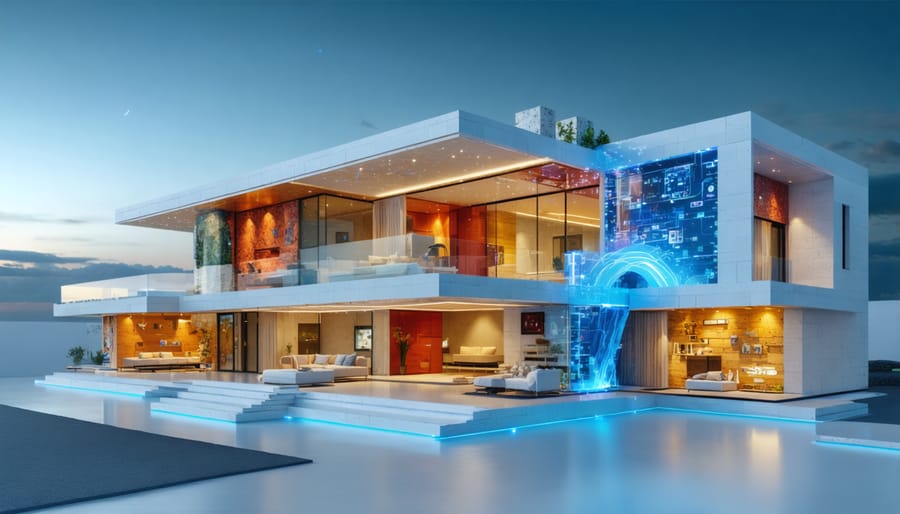
Next-Gen Home Insulation Tech That Slashes Energy Bills
Transform your home’s energy efficiency with revolutionary insulation technologies that help you manage your energy consumption more effectively than ever before. Advanced insulation concepts have evolved far beyond traditional fiberglass batts, introducing groundbreaking materials like aerogel composites that offer up to five times better thermal resistance than conventional options while being remarkably thinner.
Phase-change materials (PCMs) embedded in building materials now actively regulate indoor temperatures, absorbing excess heat during warm hours and releasing it when temperatures drop. Smart insulation systems, integrated with home automation technology, dynamically adjust their properties based on environmental conditions, while vacuum-insulated panels deliver unprecedented R-values in ultra-thin profiles perfect for space-constrained retrofits.
These innovations represent more than just improved temperature control – they’re reshaping how we think about building efficiency. By combining cutting-edge materials science with sustainable design principles, modern insulation solutions are creating homes that maintain comfort while significantly reducing energy demands. Whether you’re planning a renovation or designing a new construction project, understanding these advanced concepts is crucial for achieving optimal thermal performance in today’s energy-conscious world.
Smart Phase-Change Materials Transform Home Insulation
How PCM Insulation Works
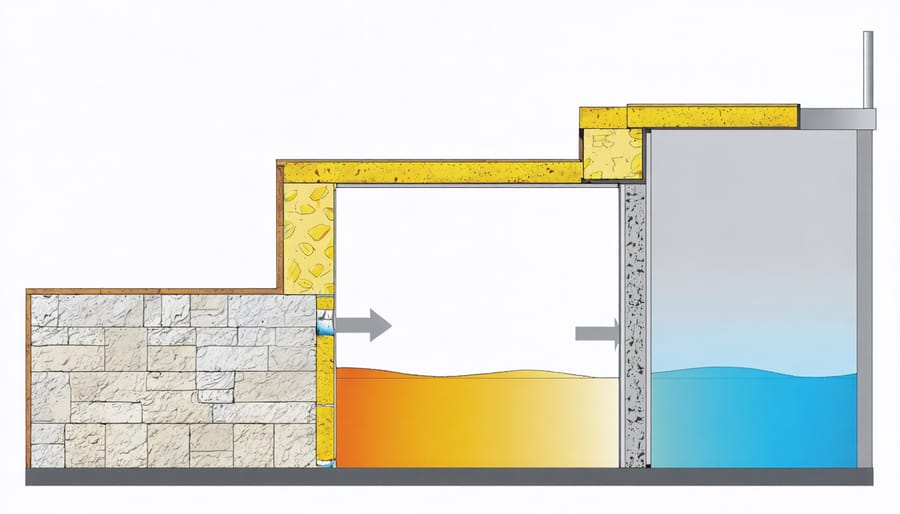
Phase-change materials (PCM) in insulation work like a thermal battery, storing and releasing heat to maintain comfortable indoor temperatures. These innovative materials change their physical state – from solid to liquid and back – at specific temperatures, absorbing or releasing heat in the process.
Imagine a jar of honey that becomes solid when cool and liquid when warm. PCM insulation works similarly but is engineered to change states at temperatures that benefit your home’s thermal comfort. When your room heats up during the day, the PCM absorbs excess heat by melting, preventing temperature spikes. As the room cools at night, the material solidifies, releasing stored heat back into the space.
The magic happens within microscopic capsules embedded in traditional insulation materials or specialized panels. These capsules contain carefully selected compounds that change phase at precise temperatures – typically between 71-77°F (22-25°C), matching human comfort levels.
What makes PCM insulation particularly effective is its ability to reduce temperature fluctuations without using additional energy. This passive temperature control can significantly lower heating and cooling costs while maintaining more consistent indoor comfort. The technology is especially beneficial in climates with large daily temperature swings or in buildings with substantial solar gain through windows.
Unlike traditional insulation that only slows heat transfer, PCM actively manages heat flow, making it a powerful tool in modern energy-efficient building design.
Real-World Benefits and Energy Savings
The real-world impact of advanced insulation concepts, particularly Phase Change Materials (PCMs), extends far beyond theoretical benefits. Homeowners implementing PCM insulation typically report energy savings of 20-30% on their heating and cooling costs, helping them significantly reduce your power bills throughout the year.
Take Sarah’s experience, for instance. After installing PCM insulation in her 2,000-square-foot home in Arizona, she saw her summer cooling costs drop by 25% in the first year. The material’s ability to absorb and release heat at specific temperatures maintained comfortable indoor conditions while reducing the strain on her HVAC system.
Commercial buildings have witnessed even more dramatic results. A California office complex reported a 35% reduction in cooling costs after incorporating PCM insulation into their building envelope. The investment paid for itself within three years through energy savings alone.
Beyond monetary benefits, PCM insulation contributes to environmental sustainability by reducing carbon emissions. A typical residential installation can prevent up to 1,000 pounds of CO2 emissions annually – equivalent to planting 50 trees. The materials also last longer than traditional insulation, with many manufacturers offering 20-25 year warranties, making them a smart long-term investment for both the planet and your wallet.
Vacuum Insulated Panels: Space-Age Tech for Your Walls
Why VIPs Outperform Traditional Insulation
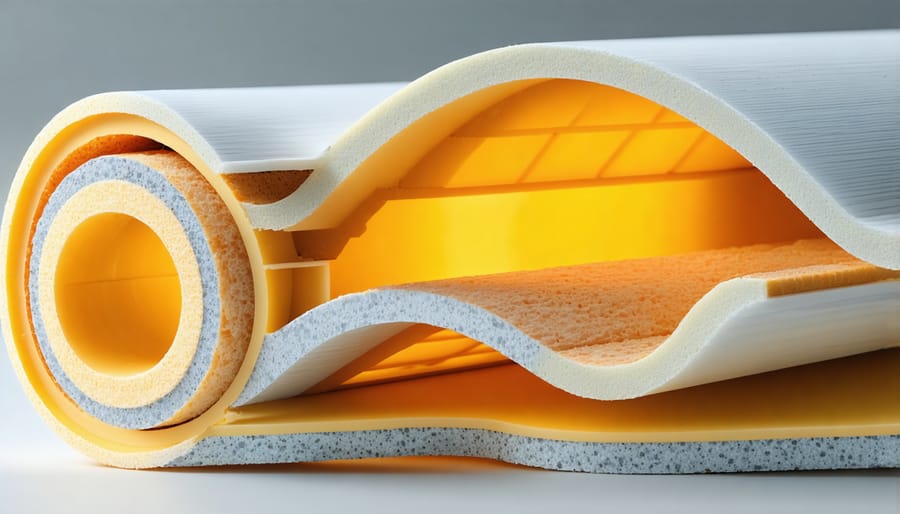
Vacuum Insulated Panels (VIPs) represent a quantum leap forward in insulation technology, delivering up to 10 times better thermal performance than traditional materials like fiberglass or foam. This remarkable efficiency stems from their unique construction: a micro-porous core material sealed within an airtight, vacuum-sealed envelope.
While conventional insulation relies on trapped air pockets to slow heat transfer, VIPs nearly eliminate heat conductivity by removing air altogether. This means you can achieve superior insulation with significantly thinner walls – a game-changer for both new construction and retrofits. When integrated with smart home energy solutions, VIPs can dramatically reduce heating and cooling costs.
Consider this: a 1-inch VIP provides the same insulating power as 10 inches of traditional fiberglass. This space-saving advantage makes VIPs particularly valuable in urban environments where every inch counts. They’re also incredibly durable, maintaining their performance for 25-30 years with proper installation.
Beyond energy savings, VIPs contribute to a smaller carbon footprint by reducing the materials needed for construction and decreasing ongoing energy consumption. For environmentally conscious property owners, this represents a win-win solution that combines sustainability with practical benefits.
Installation Considerations and Cost Analysis
Installing advanced insulation systems like Vacuum Insulated Panels (VIPs) requires careful planning and professional expertise. While the initial cost ranges from $20 to $40 per square foot – significantly higher than traditional insulation – the long-term energy savings often justify the investment.
A typical 2,000-square-foot home might require an initial investment of $40,000-80,000 for complete VIP installation. However, homeowners can expect to reduce their heating and cooling costs by 25-40% annually, depending on climate conditions and existing insulation quality.
Installation must be precise, as VIPs cannot be cut or modified on-site like traditional insulation. Professional installers will:
– Carefully measure and plan panel placement
– Create a detailed installation map
– Use specialized handling techniques to prevent panel damage
– Install protective covering layers
The return on investment typically occurs within 5-8 years through reduced energy bills. Additional benefits include increased property value and potential eligibility for energy efficiency tax credits or rebates. Many homeowners choose to start with high-impact areas like attics or walls facing extreme temperatures, making the upgrade more manageable financially while still achieving significant energy savings.
Remember to factor in maintenance costs, though VIPs generally require minimal upkeep when properly installed.
Aerogel: The Lightweight Insulation Powerhouse
Benefits of Aerogel Insulation
Aerogel insulation represents a remarkable breakthrough in thermal protection technology, offering unparalleled performance that surpasses traditional materials. This ultra-lightweight material, sometimes called “frozen smoke,” can provide up to 10 times better insulation than conventional options while using significantly less space.
One of the most impressive benefits is aerogel’s extremely low thermal conductivity, typically around 0.015 W/mK, making it one of the most efficient insulators available today. This means homeowners can achieve superior insulation levels with thinner wall profiles, maximizing living space while minimizing energy loss.
The material’s hydrophobic nature makes it naturally moisture-resistant, preventing common issues like mold growth and thermal performance degradation over time. It’s also non-toxic and fire-resistant, adding layers of safety to its impressive performance capabilities.
Environmentally conscious property owners will appreciate that aerogel insulation can reduce heating and cooling costs by up to 30% compared to traditional materials. Its durability ensures long-lasting performance without degradation, making it a sustainable choice for modern buildings.
Despite its higher initial cost, the long-term energy savings and space-saving benefits make aerogel insulation an increasingly attractive option for both residential and commercial applications.
Best Applications for Aerogel
Aerogel insulation excels in applications where maximum thermal performance is needed in minimal space. This revolutionary material proves particularly effective in retrofitting historic buildings where preserving original architectural features is crucial while improving energy efficiency.
In residential settings, aerogel shines in challenging areas like bay windows, door frames, and thin exterior walls where traditional insulation would be too bulky. Its moisture-resistant properties make it ideal for basement walls and areas prone to condensation.
The commercial sector benefits from aerogel’s exceptional performance in industrial pipelines, where it prevents heat loss in high-temperature processes while maintaining a slim profile. Aerospace and marine industries utilize aerogel for its lightweight properties and superior insulating capabilities in extreme conditions.
For solar applications, aerogel proves invaluable in thermal storage systems and solar water heaters, maximizing energy retention. Building professionals often choose aerogel for green building projects targeting LEED certification, as its performance contributes significantly to energy efficiency goals.
While the initial cost is higher than traditional insulation, aerogel’s longevity and performance make it cost-effective in situations where space is limited and maximum thermal efficiency is paramount. Many users report significant energy savings within the first year of installation.
Bio-Based and Sustainable Insulation Solutions
Hemp and Mycelium Insulation
Nature’s own insulation solutions are making waves in sustainable construction, with hemp and mycelium leading the charge. These eco-friendly materials offer remarkable insulation properties while leaving a minimal environmental footprint.
Hemp insulation, made from the stalks of industrial hemp plants, provides excellent thermal regulation comparable to traditional fiberglass. What sets it apart is its ability to naturally regulate moisture, preventing mold growth while maintaining consistent indoor temperatures. Hemp insulation is non-toxic, renewable, and can be installed without protective equipment – a major advantage for DIY enthusiasts.
Mycelium, the root structure of mushrooms, is revolutionizing how we think about building materials. When grown in controlled conditions with agricultural waste, mycelium creates a dense network that forms incredibly effective insulation panels. These living materials can be grown to exact specifications and naturally fire-resistant properties.
Installation of hemp insulation is straightforward: panels or batts can be fitted between wall studs, much like traditional insulation. For mycelium, pre-grown blocks are typically installed during construction phases, though retrofit solutions are becoming available.
Both materials offer impressive R-values while sequestering carbon throughout their lifecycle. Hemp insulation typically lasts 50-75 years, while mycelium structures can endure for decades when properly maintained. The cost of these natural alternatives has decreased significantly as production scales up, making them increasingly competitive with conventional options.
Homeowners report improved indoor air quality and more stable temperature regulation after switching to these bio-based insulators. As sustainability becomes a priority in construction, hemp and mycelium insulation represent the future of eco-conscious building materials.
Environmental Impact and Performance
Advanced insulation concepts aren’t just about keeping homes comfortable – they’re making a significant positive impact on our environment. Modern insulation solutions can reduce a building’s energy consumption by up to 50%, directly leading to lower carbon emissions and a smaller environmental footprint.
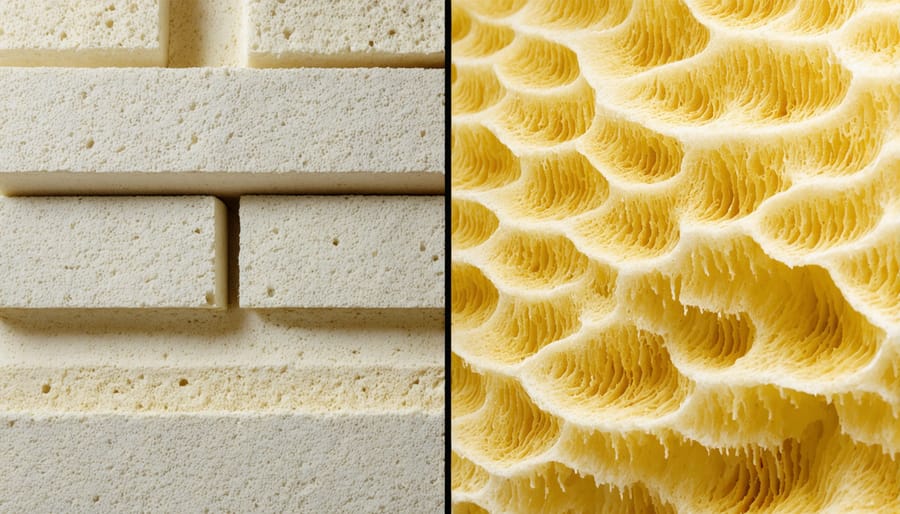
The latest eco-friendly insulation materials, such as recycled denim, sheep’s wool, and cellulose made from recycled paper, offer excellent thermal performance while giving new life to materials that might otherwise end up in landfills. These sustainable alternatives perform just as well as, and sometimes better than, traditional fiberglass insulation.
Performance metrics show that advanced insulation technologies excel in both summer and winter conditions. For example, aerogel insulation, despite being incredibly lightweight, can provide up to four times better thermal performance than conventional materials. Vacuum insulated panels (VIPs) achieve similar results with even thinner profiles, making them ideal for space-constrained areas.
The environmental benefits extend beyond energy savings. Many modern insulation materials are produced using less energy than traditional options, and some even help improve indoor air quality by naturally filtering pollutants and regulating humidity levels. This creates healthier living spaces while reducing the need for additional air purification systems.
From a long-term perspective, advanced insulation concepts contribute to building sustainability by extending the structural lifespan and reducing maintenance requirements. The superior moisture control of these materials helps prevent mold growth and structural damage, ensuring buildings remain efficient and healthy for decades to come.
By choosing advanced insulation solutions, property owners aren’t just investing in comfort – they’re actively participating in environmental conservation while enjoying significant energy cost savings.
As we’ve explored throughout this guide, advanced insulation technologies are revolutionizing how we think about building efficiency and energy conservation. From aerogels to vacuum-insulated panels, these innovations are paving the way for more sustainable and comfortable living spaces. The future of insulation technology looks incredibly promising, with ongoing research into bio-based materials and smart insulation systems that can adapt to changing environmental conditions.
The growing focus on energy-efficient home improvements continues to drive innovation in this field. As climate change concerns intensify and energy costs rise, we can expect to see even more groundbreaking developments in insulation technology. Phase-change materials and nanomaterials are likely to become more accessible and affordable, making these advanced solutions available to more homeowners and businesses.
Remember that while some of these technologies may seem futuristic, many are already available and proving their worth in real-world applications. By staying informed about these advances and carefully considering which solutions best fit your needs, you can make smart decisions that benefit both your comfort and the environment. The journey toward better building efficiency is ongoing, and these innovative insulation concepts are leading the way to a more sustainable future.


