
What Is Tirzepatide? A Research Overview of the Dual Agonist
Tirzepatide is a research compound that activates two gut-hormone receptors at once, GIP and GLP-1, which is why scientists call it a dual agonist. An agonist is simply a molecule that switches a receptor on, much like a key turning a lock. Most earlier compounds in this family turned on only one lock. The tirzepatide peptide turns on two, and that difference is what has drawn so much attention from metabolic researchers.
Why does it matter? Both hormones help the body respond to meals. They influence insulin release, appetite signals, and how the body handles blood sugar. Studying them together offers a fuller picture of how these systems cooperate, in the same way a home energy system works better when solar panels, batteries, and smart controls are designed to work as a team.
This article walks through the basics in plain language: what tirzepatide is, how the two pathways work, what research has explored so far, and the safety context worth knowing.
Think of it as a more complete conversation between your gut and your brain. Let’s break down how it happens.
What Tirzepatide Means: A Plain-Language Definition
Tirzepatide is a once-weekly injectable medicine developed to help manage blood sugar and body weight. It has been studied extensively in clinical research, which is why so many people are curious about how it works and what it was designed to do.
The easiest way to understand it is through the word “agonist.” An agonist is a substance that fits into a receptor, a tiny docking spot on a cell, and switches on a signal. Think of a key turning in a lock. A dual agonist is one molecule that can turn two different locks. Or picture a solar panel paired with a battery: each does its own job, but together they work as a more complete system. Tirzepatide works in a similar spirit, activating two separate hormone signals at once.
Here are the key terms in plain language:
- Agonist
- A substance that fits a receptor and turns on its signal, like a key opening a lock.
- Dual agonist
- A single medicine that activates two different receptors, rather than just one.
- GIP
- Short for glucose-dependent insulinotropic polypeptide, a natural gut hormone that responds to meals and helps the body release insulin.
- GLP-1
- Short for glucagon-like peptide-1, another natural gut hormone that helps regulate insulin, appetite, and digestion.
- Incretin
- The family name for gut hormones, including GIP and GLP-1, that send signals after you eat.
- Clinical trial
- A carefully designed research study that tests how a medicine performs and how safe it appears in people.
It’s worth being clear about what this article is and isn’t. Tirzepatide is a prescription-only medicine, which means it’s prescribed and monitored by a qualified healthcare professional. This overview simply summarizes what research has explored, so you can understand the science. It isn’t a recommendation for treatment, and it isn’t a substitute for personal medical advice.
How Tirzepatide Works: Two Hormone Signals Working Together
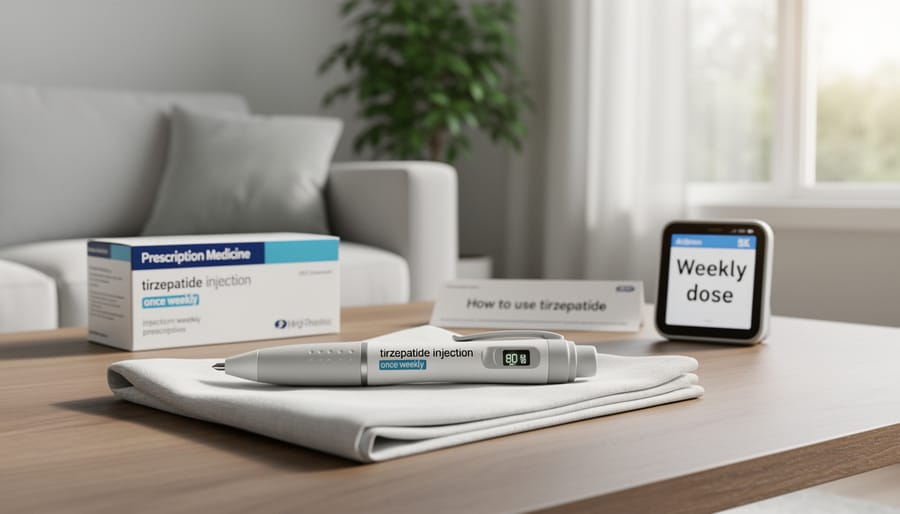
The GLP-1 Pathway: The Familiar Signal
GLP-1 is short for glucagon-like peptide-1, a natural hormone your gut releases after you eat. Think of it as a friendly messenger that tells your body, “Food has arrived, so let’s get ready.” It nudges the pancreas to release insulin when blood sugar is rising, slows how quickly the stomach empties, and sends fullness signals to the brain.
Researchers realized this one signal was useful, so they developed medicines called GLP-1 receptor agonists that copy it. Because the body breaks down natural GLP-1 within minutes, these medicines are designed to last much longer, with some taken just once a week. They have been studied for years in type 2 diabetes and weight management, which makes GLP-1 the well-understood foundation of this class.
That familiar signal is what tirzepatide builds on. Much like a solar setup works better as a two-signal system than a single input, researchers wondered what adding a second pathway might do.
Adding GIP: What Makes It a Dual Agonist
The second pathway involves GIP, short for glucose-dependent insulinotropic polypeptide. It’s another gut hormone, released after you eat, and it also helps the body respond to incoming food. Think of it as a second signal on the same team, rather than a competitor to GLP-1.
Tirzepatide is built to activate both GIP and GLP-1 receptors from a single molecule. Researchers were curious about this pairing because the two signals are naturally released together after meals, so combining them in one medicine seemed like a logical next step. It’s a bit like pairing a solar array with a battery: each does its own job, and together they can do more. If you enjoy seeing how pathways work when two systems team up, this idea will feel familiar.
Here’s the exciting part: scientists are still learning exactly how much each signal contributes. The full picture remains an active area of study, so expect the understanding to keep growing.
What the Research Says: Where Tirzepatide Is Studied and Used

Tirzepatide has been studied in some of the largest clinical trial programs in recent diabetes and weight research, and that work is why you’ll see it discussed so often. Think of it the way you’d think about testing a new solar inverter: before anyone trusts it on a real rooftop, it gets measured under controlled conditions, compared against alternatives, and reviewed by independent experts.
Here are the main areas where tirzepatide has been researched and used:
- Type 2 diabetes management: Researchers have looked at how the medicine helps the body keep blood sugar levels steadier alongside diet and activity.
- Chronic weight management: Studies have examined whether the medicine, paired with lifestyle changes, can support meaningful and lasting weight reduction in adults living with obesity or overweight.
- Ongoing investigation areas: Scientists continue to explore how this dual-signal approach might relate to other health conditions, though this research is still developing.
So how do these studies actually work? The large trial programs generally follow a similar design. Volunteers are divided into groups, with one group receiving tirzepatide and another receiving a placebo (an inactive look-alike) or an existing treatment. Neither the participants nor often the researchers know who is getting what, which keeps the results fair. Over weeks and months, the teams track measures such as blood sugar readings, body weight, and any side effects that appear.
That comparison step matters. It lets researchers see whether a medicine does something beyond what would happen on its own, and how it stacks up against options people already use. Results from many separate trials are then gathered together, which gives a fuller picture than any single study could.
It’s also worth remembering that this field moves forward steadily. New studies are published, and approved uses can be updated over time. For the most dependable answers, check the research and labeling information from official health agencies, which explain what the medicine is approved for in your region.
Your healthcare provider is the best partner for turning that general information into guidance that fits your own situation. Bringing a few questions to that conversation, such as what the evidence shows and what to expect, can make the visit far more productive.
Understanding the Safety Conversation and What to Keep in Mind
Every medicine comes with a safety conversation, and tirzepatide is no different. In clinical research, the most commonly reported side effects tend to involve the digestive system. These can include nausea, diarrhea, constipation, vomiting, and a general feeling of fullness. Researchers have often noted that these symptoms show up more while a person is getting started or when the dose changes, and then ease over time for many people. That pattern is a big reason healthcare providers typically introduce the medicine gradually.
Here’s the encouraging part: knowing what to expect makes it easier to speak up early. Just as a smart solar plan helps homeowners avoid common pitfalls before they become costly surprises, understanding the research ahead of time helps people ask better questions before treatment begins.
A few things are worth keeping in mind:
– Individual health situations differ, including medical history, other medications, and personal goals.
– Medical supervision matters, since a healthcare professional can monitor progress, adjust dosing, and respond if something doesn’t feel right.
– Decisions belong in a conversation, not in an article. A qualified provider can weigh the research against your specific circumstances.
It’s also wise to be cautious about where any prescription medicine comes from. Products sold outside regulated pharmacies or without a prescription may not match what was studied in clinical trials, and there’s no reliable way to confirm their quality. Sticking with licensed providers and pharmacies keeps the focus on safety, which is exactly where it belongs.

Common Questions About Tirzepatide
Here are quick, plain-language answers to some of the questions readers ask most often. Think of this as a friendly cheat sheet you can bring to a conversation with your healthcare provider.
Is tirzepatide the same as semaglutide?
No, they’re different medicines. Semaglutide activates one hormone receptor (GLP-1), while tirzepatide activates two (GLP-1 and GIP), which is why it’s called a dual agonist.
What does “dual agonist” mean?
An agonist is a substance that switches on a receptor, like a key turning a lock. A dual agonist switches on two different receptors at once, so two hormone signals work together.
How is it taken?
Tirzepatide is given as a once-weekly injection, and a healthcare professional guides the dosing plan. The details depend on the individual and the approved labeling, so that’s a conversation for your care team.
Is it available without a prescription?
No. Tirzepatide is a prescription-only medicine, and it should come from a licensed provider and a regulated pharmacy.
Another question that comes up a lot: where can you find reliable, up-to-date information? Your best starting points are official health agency websites, the medicine’s current prescribing information, and your own doctor or pharmacist. Approvals, labeling, and research findings can change over time, so checking these sources beats relying on a single article, including this one.
If you’re ever unsure whether something you’ve read applies to you, write down your questions and bring them to your next appointment. Clear questions lead to clearer answers, and understanding the basics, like what a dual agonist is and how it works, puts you in a good position to have that conversation with confidence.
So, what is tirzepatide? It’s a once-weekly injectable prescription medicine, studied as a dual agonist, meaning it activates two hormone signals, GIP and GLP-1, that play a role in blood sugar, appetite, and digestion. Think of it as two keys turning two locks at the same time, with researchers still exploring everything that partnership can do.
Understanding the basics is a real advantage. When you know what a medicine is designed to do, you can walk into a conversation with your healthcare provider feeling prepared, ask sharper questions, and weigh the research alongside your own health needs. That kind of curiosity is exactly how good decisions begin.
Keep that spirit going. Clear, practical explanations make big ideas feel approachable, whether the topic is new science or the sunlight hitting a rooftop. If you’re curious about how innovation shapes everyday life, we invite you to explore more of our solar energy guides. There’s plenty more to discover, one simple explanation at a time.