


Solar Powered Home Security: Power Your Protection 24/7
Transform your home into a self-sustaining energy hub with solar power technology that harnesses the sun’s unlimited potential. Modern solar-powered homes blend seamless efficiency with environmental responsibility, offering homeowners a practical path to energy independence and reduced utility bills. By converting sunlight into electricity through rooftop solar panels, these systems power everything from basic household appliances to entire HVAC systems, while excess energy can be stored in batteries for nighttime use or fed back into the power grid.
Today’s solar homes represent more than just energy savings – they’re a testament to how far residential renewable technology has evolved. With advanced photovoltaic cells capturing more sunlight than ever before, smart inverters optimizing power distribution, and sophisticated battery systems ensuring consistent supply, solar-powered homes have become a reliable, cost-effective solution for sustainable living. Whether you’re looking to reduce your carbon footprint, slash energy costs, or increase your property value, understanding how solar homes work is your first step toward a brighter, more sustainable future.
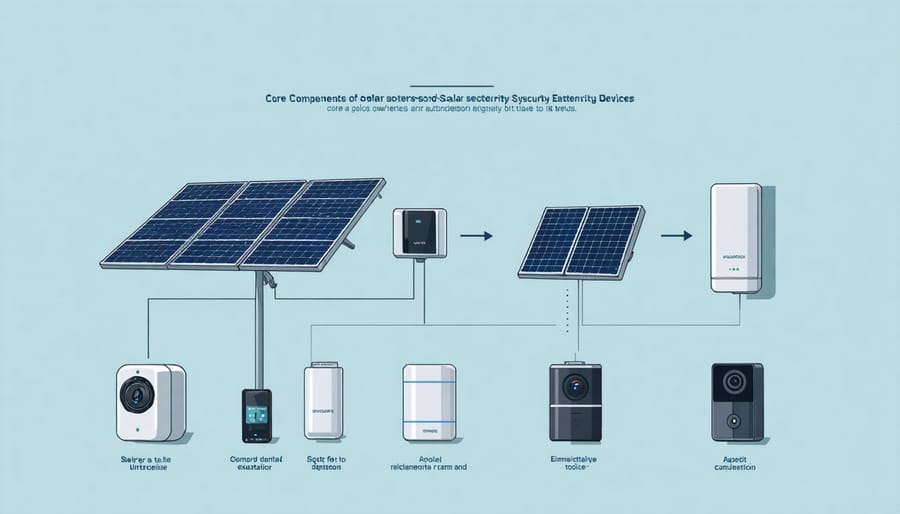
Core Components of a Solar Powered Security System
Solar Panels and Energy Collection
Solar panels are the heart of any solar-powered home system, working tirelessly to capture sunlight and convert it into usable electricity. These panels consist of photovoltaic cells made from silicon layers that create an electric field when exposed to sunlight. As part of today’s cutting-edge solar innovations, modern panels can capture energy even on cloudy days, though they perform best in direct sunlight.
When sunlight hits the panels, it triggers a reaction called the photovoltaic effect. The solar cells absorb photons from sunlight, which excite electrons within the silicon material. These electrons begin to flow, creating direct current (DC) electricity. This DC power then travels to an inverter, which converts it into alternating current (AC) electricity – the type used by most household appliances and devices.
The amount of energy your panels collect depends on several factors, including panel orientation, local weather patterns, and the time of day. Most residential systems include multiple panels arranged in arrays to maximize energy collection and ensure consistent power supply throughout the day.
Battery Storage Solutions
Battery storage is the key to making solar power work around the clock. Modern solar homes use advanced battery systems to store excess energy generated during sunny days for use at night or during cloudy weather. Think of it as your home’s energy savings account – you deposit surplus power during the day and withdraw it when needed.
Most homeowners opt for lithium-ion batteries, similar to those in electric vehicles, due to their reliability and long lifespan. These batteries are typically installed in a garage or utility room and connect directly to your solar system. When your panels produce more electricity than you’re using, the excess energy charges the batteries instead of going back to the grid.
A properly sized battery system can power your home for several hours or even days, depending on your energy needs. Many smart battery systems automatically manage power flow, prioritizing stored energy use during peak utility rate hours to maximize savings. They also provide backup power during grid outages, keeping essential appliances running when traditional power fails.
For optimal performance, most homes need 10-15 kWh of battery storage capacity, though this varies based on household size and energy consumption patterns.
Installation and Integration
Positioning Solar Panels
The position of your solar panels plays a crucial role in maximizing your home’s solar energy production. For optimal results in the Northern Hemisphere, panels should face true south (not magnetic south) at an angle between 30-45 degrees. This orientation ensures maximum sun exposure throughout the day and across seasons.
Your roof’s pitch is a key consideration – most residential roofs already have a suitable angle for solar panel installation. If you have a flat roof, mounting brackets can create the ideal tilt. Remember that even a 15-degree variation from true south only reduces efficiency by about 5%, so don’t worry if your roof isn’t perfectly oriented.
Avoid shade from trees, chimneys, or neighboring buildings, as even partial shade can significantly reduce panel efficiency. A good rule of thumb is to ensure panels receive direct sunlight between 9 AM and 3 PM, when solar radiation is strongest.
For ground-mounted systems, you have more flexibility in positioning. Consider installing tracking systems that follow the sun’s path throughout the day, potentially increasing energy production by up to 25%. However, these systems require more maintenance and space.
Keep in mind that local weather patterns and seasonal changes may affect optimal positioning. Professional installers can use solar pathfinder tools to determine the best placement for your specific location and circumstances.
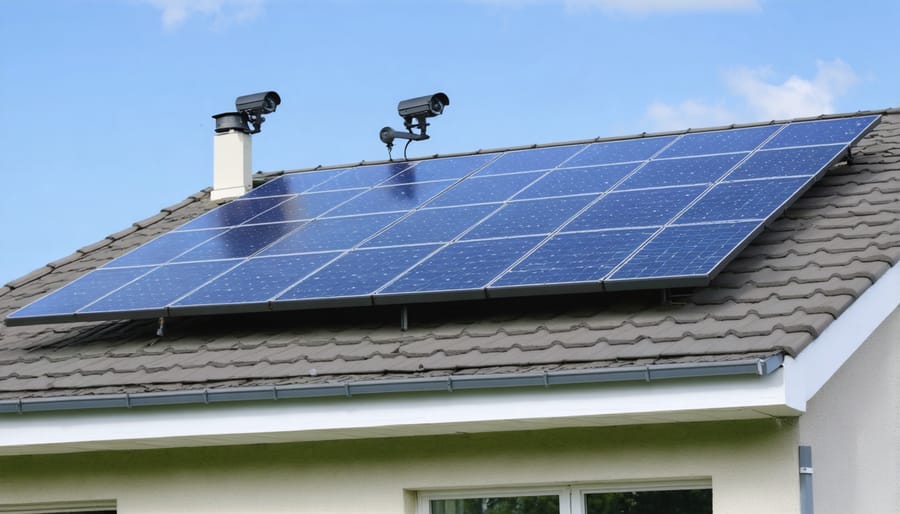
Connecting Security Devices
Integrating security devices into your solar-powered system is a crucial step in creating a comprehensive smart home automation setup. Start by connecting your security cameras and motion sensors to a dedicated circuit from your solar power distribution panel. This ensures stable power supply even during grid outages.
For optimal performance, install a backup battery specifically for your security system. This provides uninterrupted protection during nighttime or cloudy days. Connect the security components through a low-voltage DC circuit, which is more efficient and safer than running them directly from the main AC power.
When wiring surveillance cameras, use weatherproof cables and ensure proper grounding. Position your security control panel near the solar inverter for easy monitoring and maintenance. Most modern security systems are compatible with solar power, but double-check voltage requirements before installation.
Consider using power-efficient LED security lights with motion sensors. These draw minimal energy from your solar system while providing effective security coverage. Install a surge protector between your security devices and the solar power supply to prevent damage from voltage fluctuations.
Remember to label all security-related wiring clearly and create a detailed diagram of connections for future reference. Regular testing of the security system’s power consumption helps optimize your solar array’s performance while maintaining reliable home protection.
Maintaining Your Solar Security System
Regular Maintenance Tasks
To keep your solar-powered home running efficiently, follow these essential maintenance tasks throughout the year. Clean your solar panels every three to six months using water and a soft brush to remove dust, leaves, and bird droppings. During winter, clear any snow accumulation promptly to maintain optimal sunlight absorption.
Inspect your panels quarterly for any physical damage, loose connections, or deteriorating seals. Check the mounting hardware and ensure all brackets remain secure. Monitor your system’s performance through its digital interface, noting any unexpected drops in energy production that might indicate issues.
Have a certified solar technician perform an annual comprehensive inspection of your entire system. They’ll examine the inverter, wiring, and battery storage system if you have one. Keep trees and bushes trimmed to prevent shading of your panels, especially during peak sunlight hours.
Review your energy monitoring system monthly to track production levels and efficiency. Clean or replace air filters near the inverter as needed, typically every six months. Document all maintenance activities and keep records of your system’s performance – this information is valuable for warranty claims and troubleshooting.
Remember, well-maintained solar panels can last 25-30 years while operating at peak efficiency.
Common Issues and Solutions
When running a solar-powered home, you might encounter several common challenges, but don’t worry – most have straightforward solutions. Battery performance issues often arise during extended cloudy periods. To address this, consider installing a hybrid system that can switch to grid power when needed, or add extra battery storage capacity for backup.
Some homeowners notice decreased system efficiency due to dirt and debris on their panels. Regular cleaning, ideally every 3-4 months, can restore optimal performance. If you live in a dusty area or near trees, you might need more frequent cleaning.
Inverter problems can manifest as error messages or reduced power output. Often, a simple reset solves the issue. If problems persist, contact your installer for professional diagnostics. Watch for unusual noises or blinking lights, as these can indicate inverter issues requiring attention.
Monitor your energy production regularly through your system’s app or display. If you notice significant drops in generation, check for shading from new tree growth or nearby construction. Sometimes, repositioning panels or trimming vegetation can restore full efficiency.
Lastly, if your batteries aren’t holding charge as long as they used to, they might need replacement. Most quality batteries last 10-15 years with proper maintenance.
Cost Benefits and Energy Savings
Installing a solar-powered system for your home is a significant investment that pays off handsomely over time. Most homeowners see a complete return on investment within 5-8 years, after which they enjoy essentially free electricity for decades. The average American household can save between $10,000 and $30,000 on electricity costs over 20 years by switching to solar power.
Beyond immediate energy savings, solar installations increase property values by an average of 4.1%. Many states offer tax incentives, rebates, and solar renewable energy certificates (SRECs) that can reduce initial installation costs by 30-50%. When combined with federal tax credits, these incentives make solar power increasingly accessible to homeowners.
The energy efficiency of solar homes extends beyond electricity generation. Modern solar systems, including those used for benefits of solar security systems, often come with smart monitoring capabilities that help optimize energy consumption. This technology allows homeowners to track their energy production and usage in real-time, making it easier to adjust habits for maximum savings.
Maintenance costs are minimal, typically requiring only occasional cleaning and system checks. With most solar panels guaranteed for 25 years and actually lasting even longer, the long-term financial benefits far outweigh the initial investment.
Solar-powered homes represent a bright future for sustainable living, offering a perfect blend of environmental responsibility and practical benefits. By harnessing the sun’s energy, homeowners can significantly reduce their carbon footprint while enjoying substantial savings on energy bills. The initial investment in solar panels and equipment pays off through years of reduced utility costs and potential tax incentives. As solar technology continues to advance and become more affordable, there’s never been a better time to make the switch. Whether you’re motivated by environmental concerns, energy independence, or long-term savings, solar power provides a reliable and sustainable solution for modern homes. Take the first step toward a cleaner, more sustainable future by exploring solar options for your home today.


