Solar Education Makes Science Come Alive (How Schools Are Leading the Change)
Solar education stands at the intersection of environmental responsibility and academic innovation, empowering the next generation to understand and harness clean energy solutions. As our world accelerates toward renewable energy adoption, integrating solar concepts into classroom curricula has become not just an option, but an educational imperative.
Today’s students need more than theoretical knowledge – they require hands-on experience with the technologies that will power their future. From elementary school science projects to advanced high school physics courses, solar education provides a unique platform to combine STEM learning with real-world environmental solutions.
The beauty of solar education lies in its versatility. Whether through simple demonstrations of photovoltaic cells or complex system design projects, it offers engaging learning opportunities across multiple grade levels and subjects. Students gain practical skills while developing environmental awareness, critical thinking abilities, and problem-solving capabilities that extend far beyond the classroom.
Research shows that schools implementing comprehensive solar education programs see increased student engagement in science and mathematics, while simultaneously reducing their carbon footprint and energy costs. This dual benefit of educational enhancement and environmental stewardship makes solar education a compelling choice for forward-thinking educational institutions.
Why Solar Education Matters in Modern Schools
Environmental Literacy for the Next Generation
Solar education plays a crucial role in nurturing environmentally conscious citizens who understand their impact on the planet. By teaching students about solar energy, we’re empowering them to become stewards of the environment and advocates for sustainable practices in their communities.
When young learners grasp the connection between solar power and environmental protection, they develop a deeper appreciation for renewable energy solutions. This understanding often extends beyond the classroom, influencing family discussions about energy choices and inspiring home-based sustainability projects.
Students who participate in solar education programs demonstrate increased awareness of climate change and energy conservation. They learn to think critically about energy consumption and often become natural ambassadors for clean energy in their households and neighborhoods.
The hands-on nature of solar education, from building simple solar ovens to monitoring solar panel performance, creates lasting impressions that shape environmental values. These experiences foster a sense of responsibility and environmental stewardship that students carry into adulthood.
By investing in solar education today, we’re cultivating a generation of environmentally literate citizens who will make informed decisions about energy use and environmental protection in the future.
Real-World STEM Applications
Solar education naturally integrates with STEM subjects, creating engaging real-world learning opportunities. In science classes, students explore photovoltaic cells and energy conversion principles, conducting experiments with mini solar panels to understand electromagnetic radiation. Mathematics comes alive through calculating energy output, analyzing cost savings, and graphing solar production data across different seasons.
Engineering projects allow students to design and build solar-powered devices, from simple toys to complex charging stations. They learn about circuits, energy storage, and how latest solar innovations are reshaping our energy landscape. Technology integration involves using monitoring systems to track solar performance, creating data visualizations, and developing energy management solutions.
These hands-on experiences help students understand complex concepts while developing critical thinking and problem-solving skills. They see how classroom learning applies to real-world sustainability challenges, inspiring many to pursue careers in renewable energy and environmental science. This practical approach makes abstract concepts tangible and demonstrates the immediate relevance of STEM education in addressing global energy challenges.
Building Effective Solar Curriculum
Age-Appropriate Learning Materials
Solar education needs to be tailored to different age groups to ensure maximum engagement and understanding. For elementary school students (grades K-5), focus on basic concepts using colorful illustrations, hands-on experiments, and simple demonstrations. Interactive activities like creating solar ovens from cardboard boxes or using solar-powered toys help young learners grasp fundamental concepts while having fun.
Middle school students (grades 6-8) can handle more complex topics, including the physics of photovoltaic cells and real-world applications. Project-based learning works well at this level, such as building small solar-powered vehicles or conducting energy audits of their school buildings.
High school students benefit from in-depth exploration of solar technology, including mathematical calculations, advanced scientific principles, and career opportunities in the renewable energy sector. They can engage in sophisticated projects like designing solar installation plans for their school or analyzing cost-benefit scenarios for solar adoption.
For each age group, incorporate age-appropriate vocabulary and real-world examples that students can relate to. Elementary students might learn about “solar energy” as “power from the sun,” while high school students can explore terms like “photovoltaic effect” and “energy conversion efficiency.”
Digital resources, including interactive simulations and educational games, should also be adapted to match students’ cognitive development and technological literacy levels. This ensures that learning remains engaging and effective across all grade levels.
Hands-On Learning Activities
Engaging students in hands-on solar projects creates lasting impressions and deeper understanding of solar energy principles. Here are several practical activities that educators can implement:
Create a Simple Solar Oven
Using a pizza box, aluminum foil, and plastic wrap, students can build their own solar ovens to cook simple snacks. This demonstrates how solar energy can be concentrated and converted to heat energy while teaching basic principles of reflection and insulation.
Solar-Powered Car Challenge
Students work in teams to design and build small cars powered by mini solar panels. This project introduces concepts of energy conversion, electrical circuits, and mechanical engineering while fostering creativity and problem-solving skills.
Solar Cell Phone Charger
Guide students through building a basic solar phone charger using a small solar panel, charging circuit, and USB port. This practical project helps them understand how solar power can be used in everyday applications.
Solar Energy Measurement Station
Set up a simple weather station with solar intensity meters to track daily and seasonal changes in solar energy. Students can collect data, create graphs, and analyze patterns, incorporating math and scientific observation skills.
These activities can be adapted for different grade levels and integrated into various subjects, from physics to environmental science, making solar education both engaging and memorable.
Integration with Existing Subjects
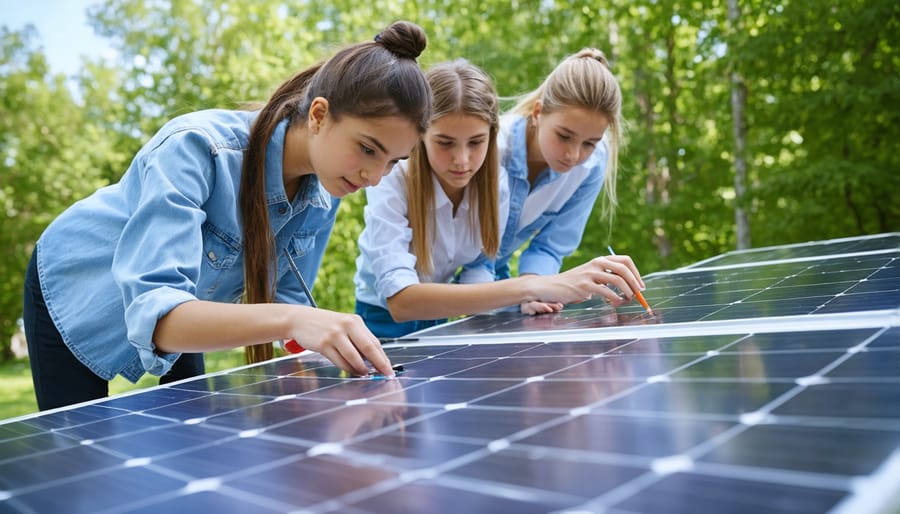
Solar education seamlessly integrates into existing subjects, making it easier for educators to incorporate sustainable energy concepts without overhauling their entire curriculum. In science classes, students can learn about photovoltaic cells while studying energy transformation and electricity. This hands-on approach helps them grasp both solar technology and fundamental scientific principles simultaneously.
Mathematics teachers can use real-world solar data to teach graphing, calculations, and statistical analysis. Students might calculate energy savings, determine optimal panel angles, or analyze local solar radiation patterns. These practical applications make abstract mathematical concepts more relevant and engaging.
Geography lessons benefit from exploring solar potential in different regions, climate impacts on solar efficiency, and global renewable energy trends. Social studies classes can examine the socio-economic effects of solar adoption, energy policies, and environmental justice issues.
Even art and design classes can incorporate solar themes through projects like designing solar-powered devices or creating awareness campaigns about renewable energy. Language arts teachers might assign research papers or creative writing pieces about solar innovation and environmental sustainability.
For younger students, simple experiments with solar toys and basic solar cooking demonstrations can introduce core concepts while maintaining engagement. This cross-disciplinary approach ensures that solar education becomes a natural part of the learning experience rather than an additional burden on already full schedules.
Implementation Success Stories
Elementary School Case Study
Sunshine Elementary School in Colorado transformed their approach to science education by implementing a comprehensive solar energy curriculum, becoming a model for successful community solar initiatives in education.
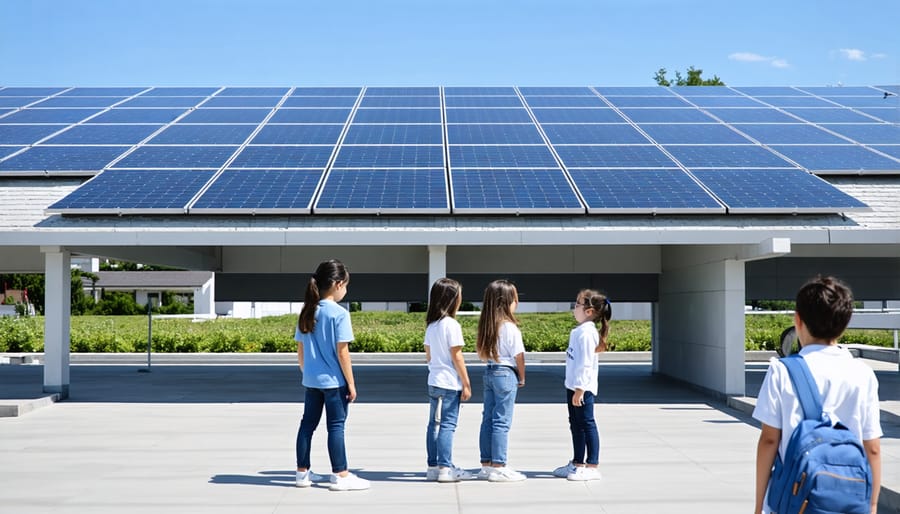
The school installed a small solar array on their roof, which became the centerpiece of their hands-on learning program. Students in grades 3-5 participate in weekly “Solar Science” sessions where they monitor energy production, analyze data, and learn about renewable energy concepts through interactive experiments.
Teachers report that student engagement in science has increased dramatically since the program’s introduction. “We’ve seen a 40% improvement in science test scores,” says Sarah Martinez, the school’s STEM coordinator. “The students are especially excited about our solar-powered garden project, where they use energy from our panels to operate irrigation systems.”
The program extends beyond science classes, incorporating solar energy concepts into math, art, and even language arts. Students write creative stories about solar-powered futures and solve real-world math problems using data from their school’s solar installation.
Parents have become enthusiastic supporters, with many families inspired to explore solar options for their homes. The success has prompted neighboring schools to develop similar programs, creating a network of solar-educated communities.
High School STEM Program Integration
Integrating solar education into high school STEM programs creates exciting opportunities for students to engage with renewable energy technology while developing crucial problem-solving skills. Many schools are now incorporating hands-on solar projects into their physics, environmental science, and engineering curricula.
A successful STEM solar program typically includes both theoretical and practical components. Students learn about photovoltaic cell operation, energy conversion principles, and electrical systems while working with real solar equipment. Popular activities include building small-scale solar panels, conducting energy audits, and designing solar-powered devices.
Schools can start by installing monitoring systems on existing solar installations, allowing students to analyze real-time data and understand energy production patterns. This data becomes a valuable teaching tool across multiple subjects, from mathematics to computer science.
Several schools have reported increased student engagement after implementing solar projects. For example, students often participate in solar car competitions, design sustainable building models, and create energy-saving proposals for their communities. These projects help develop critical thinking and project management skills while fostering environmental awareness.
Teachers can access numerous free resources and curriculum guides from renewable energy organizations. Many utility companies also offer educational partnerships, providing materials and sometimes funding for solar education initiatives. This support helps schools create comprehensive programs that prepare students for future careers in renewable energy.
Resources and Support for Schools
Schools looking to implement solar education programs have access to a wealth of resources and support systems. The U.S. Department of Energy’s Solar for Schools program offers comprehensive curriculum materials, lesson plans, and hands-on activities suitable for various grade levels. These materials are designed to make complex solar concepts accessible and engaging for students of all ages.
Organizations like the National Energy Education Development (NEED) Project provide free downloadable teaching materials, professional development opportunities, and interactive learning kits. These resources help educators confidently teach solar energy concepts while building community through solar education.
Financial support is available through various channels, including federal grants, state-level incentives, and private sector partnerships. The Solar Energy Industries Association (SEIA) maintains an updated database of funding opportunities specifically for educational institutions implementing solar programs.
Online platforms and digital tools enhance the learning experience:
– Virtual solar system design software
– Energy monitoring dashboards
– Interactive simulation games
– Educational video libraries
– Student project templates
Professional development resources ensure teachers feel confident delivering solar education:
– Workshop programs
– Certification courses
– Mentorship opportunities
– Teaching guides
– Peer networking platforms
Many solar companies offer educational partnerships, providing schools with:
– Demo equipment
– Guest speakers
– Field trip opportunities
– Installation site visits
– Technical expertise
Local utilities and environmental organizations often support school solar initiatives through:
– Educational materials
– Training sessions
– Equipment donations
– Program funding
– Expert consultation
These resources create a robust support system for schools embarking on solar education programs, ensuring successful implementation and lasting impact on students’ understanding of renewable energy.
Solar education represents a pivotal step toward creating a more sustainable future, empowering the next generation with knowledge and skills to tackle climate change head-on. Through comprehensive solar education programs, schools have successfully transformed their campuses into living laboratories, where students gain hands-on experience with renewable energy technology while developing critical thinking and problem-solving abilities.
The impact of solar education extends far beyond the classroom walls. Students who participate in these programs often become environmental advocates in their communities, sharing their knowledge with family members and inspiring local businesses to consider sustainable alternatives. Schools that have implemented solar education initiatives report increased student engagement in STEM subjects and a greater awareness of environmental responsibility among their student body.
Now is the time for schools to take action and embrace solar education. Starting small with classroom discussions and basic solar demonstrations can lead to more extensive programs, including student-led sustainability projects and even campus-wide solar installations. The resources and support available for implementing solar education have never been more accessible, with numerous organizations offering curriculum materials, training, and funding opportunities.
By investing in solar education today, schools can help create a brighter, cleaner future while preparing students for emerging careers in renewable energy. The journey toward sustainability begins with education, and every school has the potential to make a meaningful contribution to this crucial mission.