

Carbon and Methane: The Two Hidden Enemies in Green Hydrogen Production
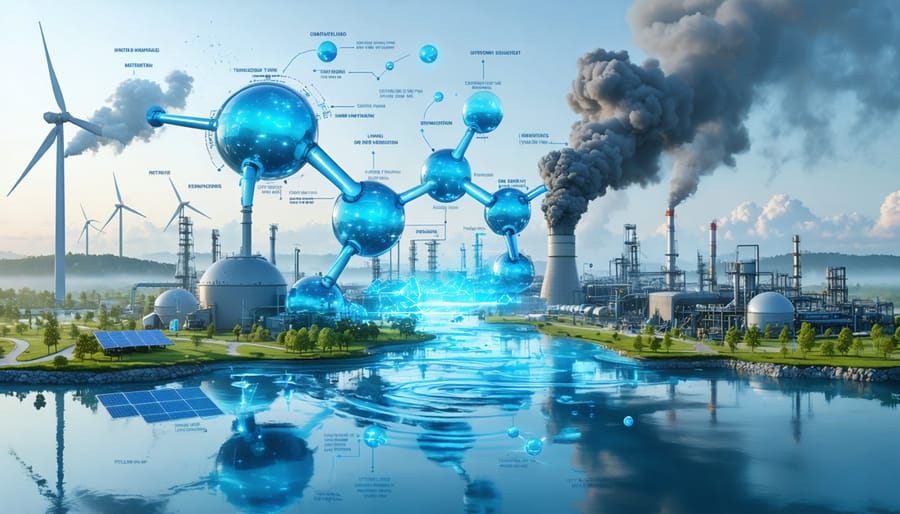
Two greenhouse gases are fundamentally reshaping our planet’s climate future: carbon dioxide (CO2) and methane. These powerful heat-trapping molecules, released through industrial processes and fossil fuel consumption, now stand at their highest atmospheric concentrations in human history. While traditional hydrogen production methods contribute significantly to these emissions, innovative green hydrogen production technologies offer a promising path forward. By harnessing renewable energy to split water molecules, we can create clean-burning hydrogen fuel without generating harmful greenhouse gases. Understanding these emissions – from their molecular structure to their environmental impact – has become crucial for homeowners and businesses alike as we transition toward sustainable energy solutions. The choices we make today about energy production and consumption will determine whether we can effectively reduce these atmospheric pollutants and protect our climate for future generations.
The CO2 Challenge in Traditional Hydrogen Production
Gray Hydrogen’s Carbon Footprint
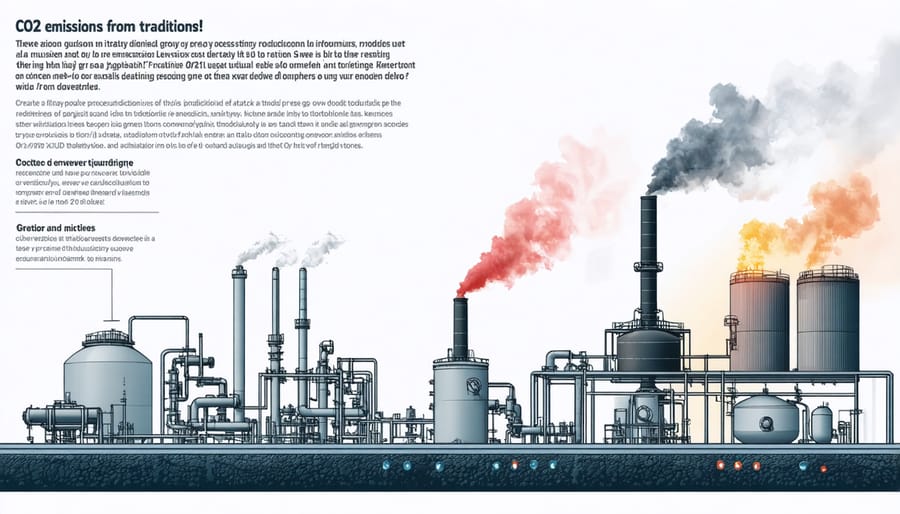
Steam methane reforming, the primary method for producing gray hydrogen, leaves a significant carbon footprint on our environment. For every kilogram of hydrogen produced through this process, approximately 9-12 kilograms of carbon dioxide are released into the atmosphere. To put this into perspective, the global hydrogen production industry generates around 830 million metric tons of CO2 annually – equivalent to the combined emissions of Indonesia and the United Kingdom.
The process works by combining natural gas (methane) with high-temperature steam, creating a reaction that yields hydrogen. However, this chemical transformation also produces CO2 as a byproduct. Without carbon capture technology in place, these emissions are released directly into the atmosphere, contributing to climate change.
The carbon intensity of gray hydrogen production is particularly concerning because hydrogen is often promoted as a clean energy carrier. While hydrogen itself produces only water vapor when used as fuel, the traditional production method’s heavy carbon footprint undermines its potential environmental benefits. This reality has sparked increased interest in cleaner production methods, particularly green hydrogen made through renewable energy-powered electrolysis.
Impact on Global Warming
The production of traditional hydrogen contributes significantly to global warming through substantial CO2 emissions. When fossil fuels are used in the hydrogen production process, approximately 9-12 tons of CO2 are released for every ton of hydrogen produced. This means the global hydrogen industry currently generates about 830 million tons of carbon dioxide annually – equivalent to the combined CO2 emissions of the United Kingdom and Indonesia.
These emissions intensify the greenhouse effect by trapping heat in Earth’s atmosphere, leading to rising global temperatures, sea level rise, and more extreme weather events. The impact is particularly concerning because hydrogen demand is expected to grow significantly in the coming decades as industries transition to cleaner energy solutions.
However, there’s hope on the horizon. Green hydrogen production, which uses renewable energy sources like solar and wind power for electrolysis, can eliminate these CO2 emissions entirely. By switching to green hydrogen production methods, we can significantly reduce the industry’s carbon footprint while meeting the growing demand for clean energy solutions.
Methane: The Silent Greenhouse Gas Problem
Methane Leakage Issues
Natural gas has long been promoted as a cleaner alternative to coal, but methane leakage during extraction and transportation poses a significant environmental challenge. When natural gas is extracted from wells and transported through pipelines, small amounts of methane can escape into the atmosphere through leaks, vents, and equipment malfunctions.
These methane leaks, often called “fugitive emissions,” are particularly concerning because methane is about 25 times more potent as a greenhouse gas than carbon dioxide over a 100-year period. Recent studies suggest that methane leakage rates from natural gas operations can range from 1% to 4% of total gas production, with some estimates even higher.
The problem occurs at various points in the supply chain. During well completion, significant amounts of methane can escape. Pipeline connections, compressor stations, and storage facilities are also common sources of leaks. Even well-maintained systems experience some degree of leakage, making it a persistent challenge for the industry.
While improved technologies and stricter regulations have helped reduce methane emissions, the issue remains a critical consideration when evaluating the environmental impact of natural gas-based processes.
Methane’s Warming Potential
Methane packs a powerful punch when it comes to global warming – it’s about 28 to 36 times more potent than carbon dioxide over a 100-year period. Think of it this way: while CO2 is like a light blanket warming our planet, methane acts more like a thick winter comforter. In the first 20 years after its release, methane’s warming effect is even more dramatic, about 84 times stronger than CO2.
What makes methane particularly concerning is its immediate impact. While it doesn’t stay in the atmosphere as long as carbon dioxide (about 12 years compared to CO2’s centuries-long presence), it traps heat much more effectively during its lifetime. This means that reducing methane emissions can have a significant and quick effect on slowing global warming.
The good news is that because methane has a shorter atmospheric life, taking action to reduce methane emissions today can lead to noticeable improvements in global warming within our lifetime. This makes methane reduction strategies particularly valuable in our fight against climate change.

Green Hydrogen: The Zero-Emission Solution
Electrolysis Technology
At the heart of green hydrogen production lies electrolysis, a remarkably clean process that splits water molecules into hydrogen and oxygen using electricity. When powered by renewable energy sources like solar or wind power, this process produces zero greenhouse gas emissions, making it a cornerstone of modern renewable energy storage solutions.
The process works through specialized devices called electrolyzers, which use two electrodes submerged in water. When electricity flows through these electrodes, it breaks the chemical bonds in water (H2O), separating it into pure hydrogen (H2) and oxygen (O2). The hydrogen is then collected and stored for various applications, from powering fuel cells to industrial processes.
What makes this technology particularly exciting is its simplicity and scalability. Modern electrolyzers can be as small as household appliances or as large as industrial facilities, depending on the production needs. The only inputs required are water and electricity, and the only byproduct is pure oxygen, which can be released into the atmosphere or captured for other uses.
This stands in stark contrast to traditional hydrogen production methods, which rely heavily on fossil fuels and generate significant greenhouse gas emissions. By switching to electrolysis powered by renewable energy, we can eliminate these emissions while creating a versatile, clean energy carrier.
Environmental Benefits
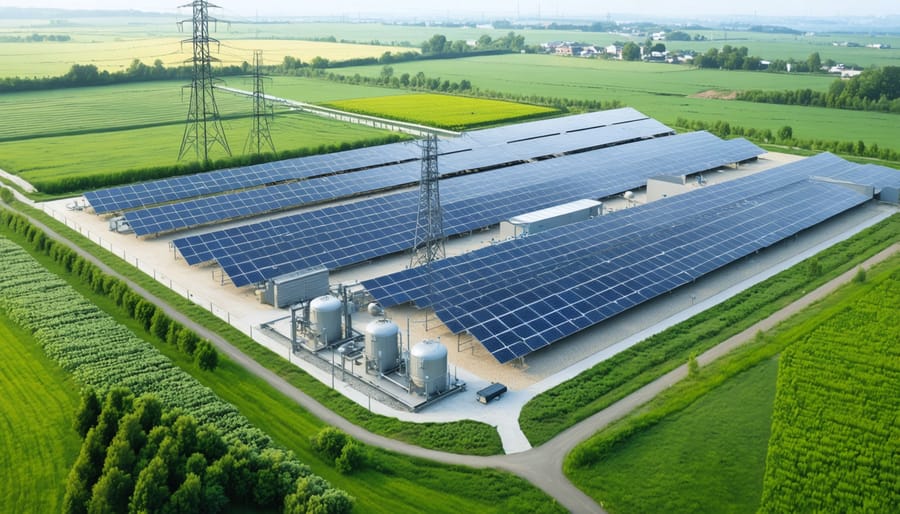
Green hydrogen production offers a remarkable solution to reducing two of the most significant greenhouse gases: carbon dioxide (CO2) and methane. Unlike traditional hydrogen production methods, which rely heavily on fossil fuels and release substantial amounts of CO2, green hydrogen uses renewable energy sources like solar power applications to split water through electrolysis, resulting in zero direct emissions.
When we replace grey hydrogen (produced from natural gas) with green hydrogen, we can prevent approximately 9-12 tons of CO2 emissions for every ton of hydrogen produced. This reduction is particularly significant in industries like steel manufacturing, chemical production, and heavy transportation, where hydrogen is extensively used.
Moreover, green hydrogen helps address methane emissions, which are 25 times more potent than CO2 in terms of heat-trapping capability. Traditional hydrogen production methods often involve natural gas reforming, which can lead to methane leakage during extraction and processing. By switching to green hydrogen, we eliminate these methane emissions entirely.
The environmental benefits extend beyond direct emission reductions. As green hydrogen production scales up, it creates a positive feedback loop: increased demand for renewable energy drives further development of clean power infrastructure, leading to even greater greenhouse gas reductions across multiple sectors.
As we’ve explored throughout this article, addressing both carbon dioxide and methane emissions is crucial for creating a truly sustainable future. Green hydrogen emerges as a powerful solution that tackles these two significant greenhouse gases simultaneously, offering a path forward that aligns with our climate goals and energy needs.
By transitioning to green hydrogen production methods, we can significantly reduce CO2 emissions that traditionally come from fossil fuel-based hydrogen production. This shift alone could prevent millions of tons of carbon dioxide from entering our atmosphere each year. Moreover, the elimination of methane leakage associated with natural gas-based hydrogen production addresses one of the most potent greenhouse gases – one that’s 84 times more powerful than CO2 in its warming effect over a 20-year period.
The beauty of green hydrogen lies in its circular nature: it’s produced using renewable electricity to split water, and when used, it produces only water vapor as a byproduct. This clean cycle represents a complete departure from the greenhouse gas-intensive methods of the past.
For homeowners and businesses considering the switch to hydrogen-based solutions, the environmental benefits are clear and compelling. Every installation of a green hydrogen system, whether for heating, transportation, or industrial processes, represents a concrete step toward reducing both CO2 and methane emissions.
The technology is ready, and the momentum is building. As costs continue to decrease and infrastructure expands, green hydrogen is becoming an increasingly practical choice for those looking to make a meaningful impact on climate change. By embracing this technology, we’re not just addressing one greenhouse gas – we’re tackling two of the most significant contributors to climate change while paving the way for a cleaner, more sustainable energy future.
The time to act is now. Every investment in green hydrogen infrastructure brings us closer to a world where we can meet our energy needs without compromising our planet’s future. Together, we can create a sustainable energy landscape that future generations will thank us for.


