

Solar EV Charging Stations: Power Your Electric Car with Pure Sunshine
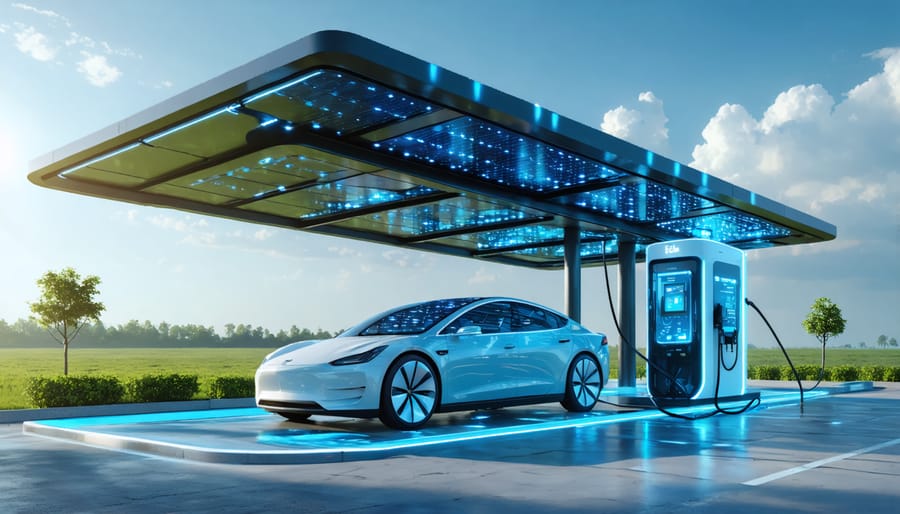
Solar-powered EV charging stations are revolutionizing sustainable transportation by offering a truly zero-emission solution for electric vehicle owners. By harnessing clean solar energy to power our vehicles, these innovative charging stations eliminate the reliance on grid electricity while significantly reducing carbon emissions and operating costs.
Picture a seamless integration where sunlight converts directly into driving power: solar panels capture energy during daylight hours, smart inverters optimize power conversion, and advanced storage systems ensure reliable charging even after sunset. This self-sustaining ecosystem represents the perfect marriage of renewable energy and electric mobility.
For property owners and businesses, solar EV charging stations offer a compelling combination of environmental stewardship and financial benefits. They demonstrate environmental leadership, attract eco-conscious customers, and provide a valuable amenity that appreciates over time. As electric vehicles become increasingly mainstream, these solar-powered charging solutions are positioning themselves as essential infrastructure for a sustainable future.
How Solar EV Charging Stations Work
Essential Components
A solar electric vehicle charging station combines several cutting-edge solar energy innovations to create a sustainable charging solution. At its heart are high-efficiency solar panels, typically mounted on overhead canopies or nearby structures, which convert sunlight into clean electricity. These panels are carefully sized to match your charging needs, usually ranging from 5kW to 25kW for residential installations.
The system’s brain is the solar inverter, which transforms the DC power from your panels into AC power that your EV can use. Modern inverters come with smart monitoring capabilities, allowing you to track energy production and consumption through user-friendly mobile apps.
Energy storage is crucial for 24/7 charging reliability. Deep-cycle batteries store excess solar power generated during sunny hours, making it available for nighttime or cloudy day charging. Most systems use lithium-ion batteries, known for their long life and excellent performance.
The charging equipment itself includes Level 2 or DC fast chargers, depending on your needs. Level 2 chargers are perfect for home use, providing 25-30 miles of range per hour of charging, while DC fast chargers can add up to 200 miles in just 30 minutes. Smart charging stations come with features like scheduled charging, power output control, and smartphone connectivity, making it easy to monitor and manage your charging sessions.
Energy Flow and Storage
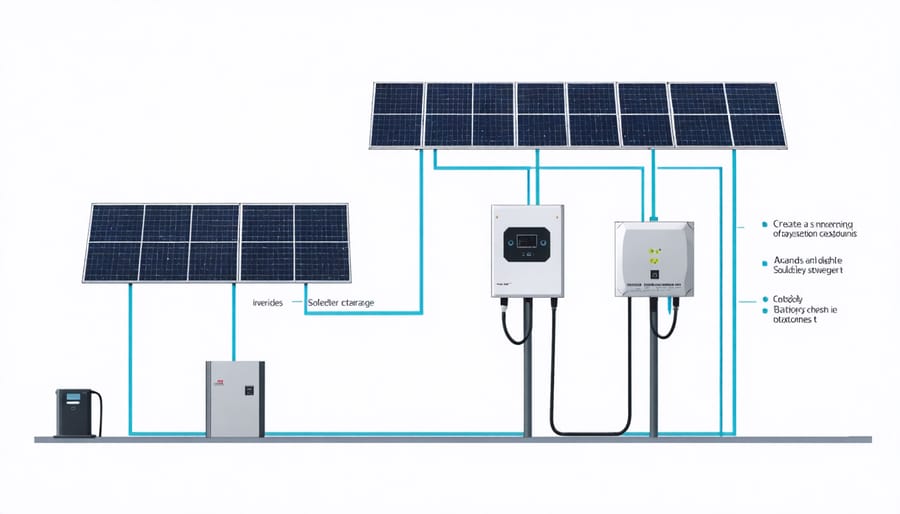
Solar electric vehicle charging stations work through a seamless flow of energy, starting with sunlight capture and ending with power delivery to your vehicle. Solar panels mounted on carports or nearby structures convert sunlight into DC electricity through photovoltaic cells. This clean energy then flows to power inverters, which transform it into AC electricity that’s compatible with charging equipment.
The system includes smart energy storage solutions, typically high-capacity lithium-ion batteries, which store excess solar power generated during peak sunlight hours. This stored energy ensures reliable charging even during cloudy days or at night, making the station available 24/7. The batteries act as a buffer, maintaining steady power supply and reducing strain on the electrical grid.
When you plug in your electric vehicle, the charging station’s management system optimizes power delivery based on several factors: available solar energy, stored battery power, and your vehicle’s charging requirements. During optimal conditions, your car charges directly from solar power. When solar production is low, the system automatically switches to stored energy or grid power if needed.
The entire process is monitored by advanced control systems that maximize charging efficiency while protecting both your vehicle and the charging equipment. Real-time monitoring allows users to track energy production, storage levels, and charging status through user-friendly mobile apps or display screens.
Benefits for Home Installation
Cost Savings Over Time
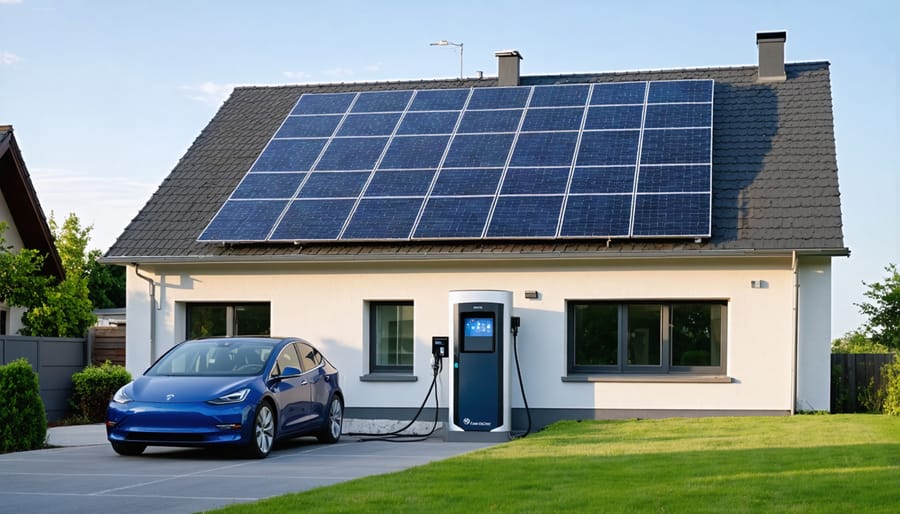
Installing a solar EV charging station is a significant upfront investment that pays substantial dividends over time. When you reduce your power bills through solar charging, you’ll typically see a return on investment within 5-7 years, depending on your local electricity rates and solar conditions.
Consider this: the average EV owner spends $30-60 monthly on charging costs using grid electricity. With a solar charging station, these costs drop dramatically, often to near-zero after the initial investment is recovered. For commercial property owners, the savings are even more substantial, especially when factoring in demand charges and peak-hour rates.
The financial benefits extend beyond direct energy savings. Many regions offer tax incentives, rebates, and grants for installing solar EV charging stations. These incentives can cover up to 30% of the installation costs, significantly shortening the payback period. Additionally, property values typically increase with the installation of solar charging infrastructure, making it a smart long-term investment.
Energy independence is another crucial advantage. By generating your own power, you’re protected from rising utility rates and grid instability. This predictability in energy costs makes budgeting easier and provides peace of mind for both homeowners and businesses looking to maintain long-term operational costs.
Environmental Impact
Solar electric vehicle charging stations represent a significant leap forward in reducing our carbon footprint. By harnessing clean solar energy to power electric vehicles, these stations eliminate the indirect emissions typically associated with grid-powered EV charging. A single solar charging station can prevent approximately 5-7 metric tons of CO2 emissions annually, equivalent to planting over 100 trees.
The environmental benefits extend beyond carbon reduction. Unlike traditional charging stations that rely on fossil fuel-generated electricity, solar charging stations operate with zero direct emissions. This means cleaner air quality in urban areas where charging stations are most concentrated. Additionally, solar charging stations reduce the strain on the electrical grid, particularly during peak hours when energy demand is highest.
Many solar charging stations incorporate sustainable design elements, such as recycled construction materials and native landscaping. These features help minimize the environmental impact of the installation while creating natural shade and reducing the heat island effect in parking areas.
The long-term environmental impact is equally impressive. With a typical lifespan of 25-30 years, solar panels continue to generate clean energy with minimal maintenance. When combined with smart energy storage solutions, these stations can operate even during cloudy days or at night, providing a reliable and sustainable charging solution for the growing electric vehicle market.
Installation Guide for Homeowners
Site Assessment
Before installing a solar EV charging station, it’s crucial to assess your property’s solar potential. Start by evaluating your available space, particularly roof areas or ground-mounted options that receive direct sunlight. The ideal location should face south in the Northern Hemisphere, with minimal shade from trees, buildings, or other obstacles.
Consider tracking sun exposure throughout different seasons using a solar pathfinder or similar assessment tools. This helps identify optimal placement and potential energy generation capacity. Remember that even partial shade can significantly impact solar panel efficiency.
Your property’s structural integrity is another vital factor. Ensure your roof can support the additional weight of solar panels and mounting equipment. For ground installations, check local zoning laws and ensure the soil can provide adequate foundation support.
Analyze your current electrical setup, including your main service panel’s capacity and potential upgrade needs. The charging station’s location should be reasonably close to both your electrical infrastructure and where you park your EV to minimize installation costs and power loss.
Weather patterns in your area play a crucial role too. While solar panels work in all climates, local weather conditions affect system sizing and energy production estimates. Consider annual sunshine hours, seasonal variations, and extreme weather events that might impact your system’s performance.
Don’t forget to check local regulations, HOA restrictions, and permit requirements before proceeding with installation plans.
Required Permits and Regulations
Before installing a solar EV charging station, you’ll need to secure several permits and comply with local regulations. Most jurisdictions require both electrical and building permits, which ensure your installation meets safety standards and building codes. Start by contacting your local planning department to understand specific requirements for your area.
Typical documentation requirements include detailed site plans, electrical diagrams, and equipment specifications. You’ll also need to show compliance with National Electrical Code (NEC) requirements, particularly Article 625, which specifically addresses EV charging systems. For solar components, additional permits related to renewable energy installations may be necessary.
Many utility companies require interconnection agreements when connecting solar systems to the grid. This documentation outlines how your system will interact with the power grid and ensures proper safety protocols are in place.
If you’re installing in a homeowners association (HOA) community, you’ll need to obtain approval from your HOA board. Commercial installations may require additional permits, including zoning permits and environmental impact assessments.
Working with a certified installer can significantly simplify the permitting process, as they’re familiar with local requirements and can handle most paperwork on your behalf. Remember to keep copies of all permits and inspections for your records, as they may be needed for insurance purposes or future property sales.
Professional Installation Tips
When installing your solar EV charging station, proper planning and execution are crucial for optimal performance and safety. Start by having a certified electrician assess your property’s electrical capacity and solar potential. Your main service panel should have sufficient amperage to handle the charging station’s load, typically requiring a dedicated 40-60 amp circuit.
Position your charging station in a location that receives maximum sunlight exposure for the solar panels while remaining convenient for vehicle access. Consider factors like cable length, weather protection, and proximity to your electrical panel. Installing a weather-resistant NEMA enclosure will protect your equipment from the elements.
Common installation pitfalls to avoid include undersizing your solar array, improper grounding, and inadequate weatherproofing. Ensure all connections are properly sealed and weatherproofed, especially outdoor components. Don’t skip the permit process – local building codes and regulations must be followed for safety and legal compliance.
For optimal performance, install a smart energy management system to balance charging loads with your home’s power consumption. This prevents system overload and maximizes solar energy utilization. Consider future expansion needs by installing conduit and wiring that can accommodate additional charging stations or increased power requirements.
Remember to document all installation details and keep maintenance records. Regular inspections of wiring connections, solar panels, and charging equipment will ensure long-term reliability and safety of your system.
Maintenance and Optimization
Regular Maintenance Schedule
Regular maintenance ensures your solar EV charging station operates at peak efficiency while extending its lifespan. Create a monthly schedule to inspect solar panels for dust, debris, or bird droppings, and clean them using soft brushes and appropriate cleaning solutions. Every three months, check all electrical connections, ensuring they remain tight and corrosion-free.
Twice yearly, schedule professional inspections of your smart solar solutions to verify system performance and identify potential issues early. These check-ups should include testing inverter efficiency, monitoring charge controller settings, and evaluating battery health if your system includes storage.
Keep detailed maintenance logs recording cleaning dates, inspection results, and any repairs. Monitor your system’s performance through its digital interface, noting any unusual changes in power generation or charging speeds. During winter months, ensure snow doesn’t accumulate on panels, and trim nearby vegetation that might cast shadows on the array.
Remember to test emergency shut-off mechanisms quarterly and replace any worn weatherproofing seals as needed. This proactive approach helps prevent unexpected downtime and maintains optimal charging capabilities for your electric vehicles.
Troubleshooting Common Issues
While solar EV charging stations are highly reliable, you may occasionally encounter some common issues. If your station isn’t charging properly, first check the display panel for error messages and ensure all connections are secure. A simple reset by turning the system off for 5 minutes and back on often resolves minor glitches.
Poor charging performance might indicate dirty solar panels. Regular cleaning and removing debris can restore optimal efficiency. If you notice significantly reduced charging speeds during cloudy days, your battery storage system may need inspection.
When the inverter displays warning lights or unusual noises, document the symptoms and avoid using the station. Similarly, if you notice any damaged cables or loose connections, discontinue use immediately.
Contact a certified technician if you experience:
– Persistent error messages
– Complete system failure
– Electrical issues
– Severe performance decline
– Physical damage to components
Remember that most modern systems include remote monitoring capabilities, allowing technicians to diagnose issues quickly. For safety reasons, never attempt to repair electrical components yourself, as this could void your warranty and create hazardous conditions.
Solar EV charging stations represent a powerful step toward a more sustainable future in transportation. By harnessing clean solar energy to power our vehicles, we’re not just reducing carbon emissions – we’re creating a self-sustaining ecosystem that benefits both the environment and our wallets. The combination of solar power and electric vehicle charging offers remarkable advantages, from significant cost savings to increased energy independence and reduced grid reliance.
Whether you’re a homeowner looking to charge your EV with solar power or a business owner aiming to provide green charging solutions, the technology is now more accessible than ever. With decreasing installation costs, generous incentives, and improving technology, there’s never been a better time to invest in solar EV charging infrastructure. By embracing this innovative solution, you’re not just preparing for the future – you’re actively helping to create a cleaner, more sustainable world for generations to come.


