


Solar Farms Near Your Home? Here’s What Really Happens to Property Values
As solar farms increasingly dot our rural landscapes, property owners face a complex reality: the relationship between these renewable energy installations and nearby home values. Recent studies from the Lawrence Berkeley National Laboratory reveal that while some properties within one mile of utility-scale solar installations experience modest value decreases of 1.5-3%, others show no significant impact or even slight increases when paired with thoughtful landscaping and community benefit programs.
The impact largely depends on three key factors: visibility from the property, distance from the installation, and the quality of solar farm development practices. Well-designed solar projects that incorporate native vegetation buffers, maintain professional operations, and contribute to local tax revenues often minimize or eliminate negative property value effects. Understanding these nuances helps homeowners make informed decisions about solar development in their communities and potentially negotiate better terms with developers to protect their property investments.
Rather than viewing solar farms solely as potential threats to property values, savvy homeowners increasingly recognize opportunities to leverage these installations for community benefits while implementing strategic mitigation measures.
The Real Estate Impact of Neighboring Solar Farms
Property Value Statistics and Research Findings
Recent studies examining the impact on property values near solar farms have shown mixed but generally neutral results. Research conducted by the Lawrence Berkeley National Laboratory found that properties within one mile of utility-scale solar installations experienced minimal to no significant decrease in value. In fact, some communities have reported slight increases in property values due to increased tax revenue and infrastructure improvements associated with solar developments.
A comprehensive study across six states revealed that 84% of properties maintained their original value trajectory after nearby solar farm construction. The remaining properties showed variations of ±2%, which analysts attribute to broader market factors rather than solar installation impacts. These findings align with similar studies in the UK and Australia, where property values remained stable despite initial concerns from homeowners.
It’s worth noting that proper landscaping and screening measures implemented by solar farm developers have played a crucial role in maintaining property values by minimizing visual impact and preserving neighborhood aesthetics.
Distance Factor: How Proximity Matters
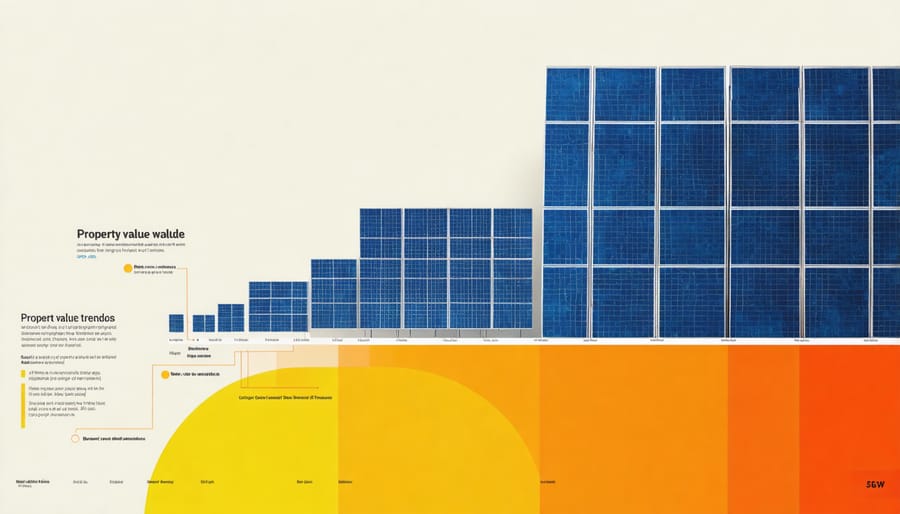
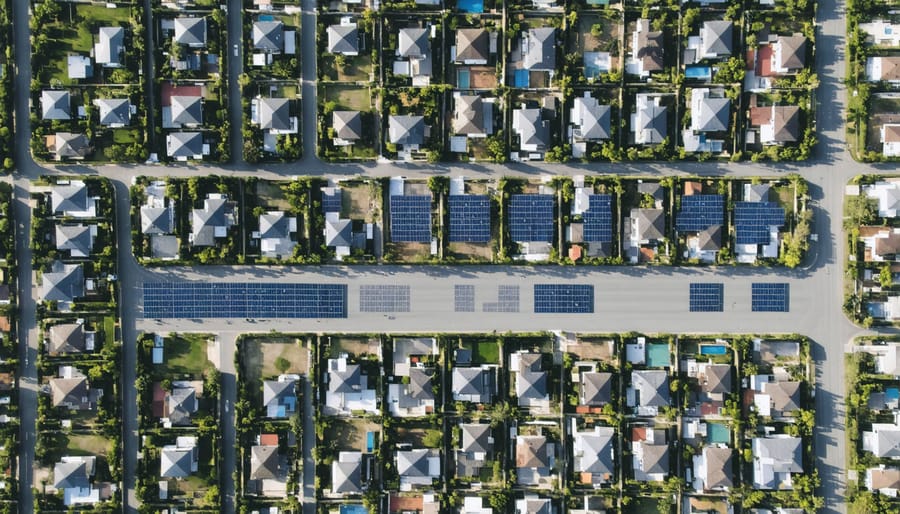
Research shows that the impact of solar farms on property values typically diminishes significantly with distance. Properties immediately adjacent to solar installations may experience more noticeable effects, while homes located just a quarter-mile away often see minimal to no impact on their market value.
A comprehensive study by the University of Rhode Island found that properties within 0.1 miles of a solar installation experienced an average value decrease of about 1.7%. However, properties located 0.5 miles or further showed no measurable impact on their selling prices. This creates what experts call a “distance decay effect,” where any potential negative influence rapidly decreases as the distance from the solar farm increases.
Landscaping and natural barriers play a crucial role in this equation. Properties with existing tree lines or landscaping buffers between homes and solar installations generally maintain their value better than those with direct sight lines. For homeowners concerned about nearby solar developments, understanding this distance factor can help in making informed decisions about property purchases or sales, and potentially negotiating for additional screening measures during solar farm planning stages.
Key Factors Influencing Property Value Changes
Visual Impact and Aesthetic Concerns
The visual impact of solar farms on neighboring properties is often cited as a primary concern among homeowners. Large-scale solar installations can alter the natural landscape and potentially affect the aesthetic appeal of surrounding areas. Modern solar farms typically occupy significant land areas and feature rows of panels that can be visible from nearby properties.
However, research shows that thoughtful design and proper landscaping can significantly minimize these visual impacts. Many successful solar projects incorporate natural screening methods like trees, shrubs, and berms to create visual buffers. These green barriers not only help maintain property aesthetics but can also enhance local biodiversity.
Recent developments in solar farm design have introduced more visually appealing panel layouts and anti-glare technology. Some facilities now feature dual-use designs that combine solar generation with agriculture or pollinator-friendly gardens, creating more attractive landscapes.
While initial concerns about visual impact are valid, property owners often report that well-designed solar farms become an accepted part of the landscape over time, similar to other infrastructure developments. Professional assessments suggest that properties with strategic visual barriers show minimal to no negative impact on their market value due to nearby solar installations.
Environmental and Health Considerations
Solar farms have sparked discussions about various environmental considerations and health impacts. Research shows that modern solar installations produce no harmful emissions, radiation, or noise pollution that could affect nearby residents. These facilities actually help improve local air quality by reducing reliance on fossil fuels. While some concerns have been raised about glare from solar panels, advanced anti-reflective coatings and thoughtful placement minimize this issue.
Studies have found no evidence linking solar farms to adverse health effects. In fact, they contribute to better public health by decreasing air pollutants and greenhouse gas emissions. The electromagnetic fields generated by solar equipment are minimal and comparable to common household appliances. Additionally, most solar farms incorporate native vegetation and pollinator-friendly plants, creating natural habitats that enhance local biodiversity while maintaining soil health.
Community Benefits and Infrastructure Improvements
While solar farms may initially raise concerns about property values, they often bring significant community benefits that can enhance overall neighborhood desirability. Many solar developments contribute substantial tax revenue to local governments, which typically funds improved schools, roads, and public services. These infrastructure upgrades can positively impact property values across the entire community.
Solar farm developers frequently invest in local infrastructure improvements, including road maintenance, drainage systems, and utility upgrades. Some communities have negotiated agreements that include new recreational facilities, walking trails, or green spaces around solar installations, creating amenities that attract homebuyers.
Additionally, solar farms can create local jobs during construction and operation phases, boosting the local economy. Many communities also benefit from reduced electricity rates through community solar programs, offering long-term cost savings to residents. These economic advantages, combined with infrastructure improvements, often counterbalance initial property value concerns and contribute to sustainable community growth.
Mitigating Value Impact: Solutions and Strategies
Landscape Screening and Buffers
Effective landscape screening can significantly minimize the visual impact of solar farms on neighboring properties, helping maintain property values and enhance community acceptance. Strategic planting of native trees, shrubs, and vegetation creates natural buffers that blend seamlessly with the existing environment while providing year-round screening.
Many successful solar installations incorporate tiered vegetation layouts, with taller trees at the perimeter gradually transitioning to shorter shrubs closer to the panels. This approach not only masks the installation but also creates wildlife corridors and enhances local biodiversity. Fast-growing evergreen species like Leyland Cypress and Eastern Red Cedar are particularly effective, providing immediate screening benefits within 2-3 years of planting.
Best practices include maintaining a minimum buffer width of 25-50 feet, depending on the site’s topography and neighboring properties. Installing mature plants can provide instant screening, though this option typically requires a higher initial investment. Regular maintenance ensures the buffer remains effective over time.
Some communities have found success with decorative fencing combined with climbing vines and flowering plants, creating an attractive boundary that serves both practical and aesthetic purposes. This hybrid approach often receives positive feedback from neighboring property owners while maintaining the solar farm’s efficiency.

Legal Protections and Property Rights
Property owners concerned about nearby solar farm developments have several legal protections at their disposal. Most jurisdictions require proper zoning, environmental impact assessments, and public hearings before solar farm construction can begin. These regulations ensure transparency and give homeowners a voice in the development process.
Local ordinances typically mandate setback requirements, screening measures, and maintenance standards for solar facilities. These rules help minimize visual impacts and protect neighboring property values. Additionally, many areas have specific guidelines about glare management and landscape buffering to address common concerns.
Homeowners can protect their interests by staying informed about their rights and participating actively in local planning processes. Some jurisdictions offer property value guarantee agreements, where solar developers commit to compensating nearby residents if their property values decline due to the installation.
Working with real estate attorneys who specialize in renewable energy projects can help homeowners understand their options and negotiate better terms with developers. Many communities have successfully established reasonable compromises that balance clean energy goals with property rights protection.
Remember that documented evidence of property value impacts can strengthen your position in negotiations or legal proceedings, so maintain detailed records of your property’s value before and after solar farm development.
Making Informed Real Estate Decisions
When considering property near existing or planned solar farms, it’s essential to make decisions based on comprehensive research rather than assumptions. Start by reviewing recent solar farm investment data and local market trends to understand the actual impact on property values in your area.
Consider requesting multiple property appraisals from professionals familiar with renewable energy developments. These experts can provide valuable insights into how similar installations have affected nearby properties over time. Additionally, engage with local real estate agents who can share market performance data for properties near existing solar farms.
For current homeowners, consider these practical steps:
– Document your property’s current condition and value
– Participate in community planning meetings about proposed solar developments
– Research potential benefits, such as reduced utility costs or tax incentives
– Consider landscaping improvements that can maintain or enhance property aesthetics
For potential buyers, focus on:
– Reviewing zoning regulations and future development plans
– Understanding setback requirements and visual impact
– Investigating maintenance agreements for the solar installation
– Examining any community benefit programs offered by solar developers
Remember that property values are influenced by numerous factors beyond nearby solar installations. Location, market conditions, and overall property maintenance often play more significant roles in determining long-term value.
While research shows mixed results regarding solar farms’ impact on property values, the overall evidence suggests minimal long-term negative effects. Studies indicate that well-planned and maintained solar installations can coexist with stable property values, particularly when developers implement proper screening and landscaping measures. Some communities have even seen increased property values due to the growing appeal of clean energy infrastructure and sustainable development.
For homeowners concerned about nearby solar developments, engaging with local planning authorities and solar farm developers can help ensure proper implementation of mitigation strategies. Understanding that property values are influenced by multiple factors, including location, market conditions, and overall community development, puts solar farms’ impact in perspective. By focusing on responsible development practices and community benefits, solar farms can contribute to a sustainable future while maintaining healthy real estate markets.


