Solar-Powered Cities: How Green Energy Infrastructure is Revolutionizing Urban Transport
Transforming our cities and communities through green energy infrastructure represents one of humanity’s most promising paths toward a sustainable future. As climate change accelerates and traditional energy sources face mounting environmental and economic challenges, the rapid deployment of renewable energy systems has become not just an option, but an imperative.
Today’s green energy infrastructure combines cutting-edge solar arrays, advanced wind farms, and innovative storage solutions to create resilient power networks that slash carbon emissions while boosting energy independence. These systems are increasingly cost-competitive with fossil fuels, offering both environmental and economic advantages for homeowners and businesses alike.
From solar canopies charging electric vehicles to smart microgrids powering entire neighborhoods, green energy infrastructure is revolutionizing how we generate, distribute, and consume power. The technology has matured significantly, with improved efficiency and reduced installation costs making sustainable energy solutions more accessible than ever before.
By investing in green energy infrastructure today, communities can secure reliable, clean power for decades to come while creating local jobs and stimulating economic growth. The transition to renewable energy represents not just an environmental necessity, but a tremendous opportunity to build a more sustainable and prosperous future for all.
The Building Blocks of Green Energy Infrastructure
Solar-Powered Charging Stations
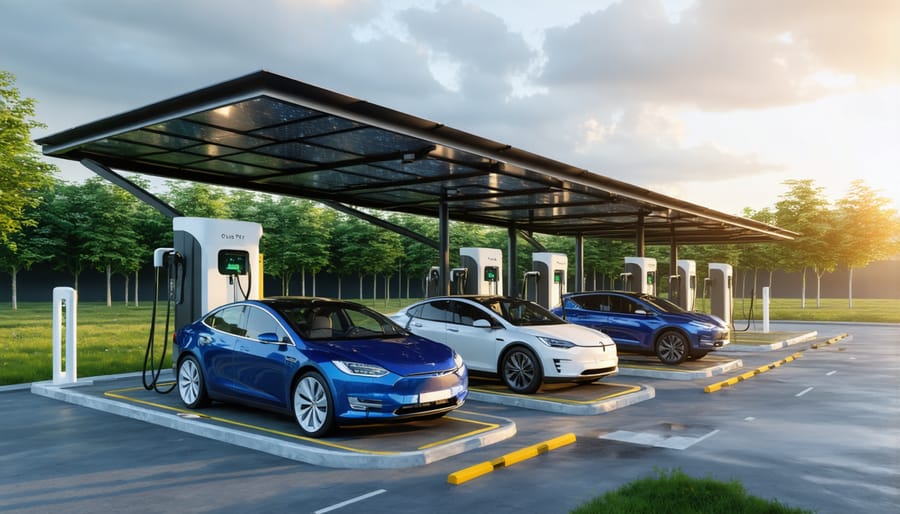
Solar-powered charging stations are revolutionizing the way we power our electric vehicles while supporting sustainable transportation. These innovative stations combine solar panels, energy storage systems, and charging equipment to create a self-sustaining power source for EVs. Much like community solar projects, these charging hubs benefit entire neighborhoods by providing clean, renewable energy for multiple vehicles.
The stations typically feature overhead canopies equipped with photovoltaic panels that capture sunlight throughout the day. This solar energy is then converted into electricity and either used immediately for charging or stored in battery banks for later use. During peak sunlight hours, these stations can generate excess power that feeds back into the grid, creating a truly sustainable energy cycle.
What makes these stations particularly appealing is their reliability and low maintenance requirements. Most systems come with smart monitoring capabilities that allow users to track energy production and charging status through mobile apps. For businesses and property managers, installing solar charging stations can qualify for tax incentives while attracting environmentally conscious customers and tenants.
Smart Grid Integration
Smart grids are revolutionizing how we power our transportation systems, acting as the digital backbone of modern green energy infrastructure. These intelligent networks use advanced sensors and two-way communication technology to distribute electricity more efficiently, making them perfect for supporting electric vehicle charging stations and other sustainable transport solutions.
By monitoring energy usage in real-time, smart grids can balance power distribution during peak charging times, preventing grid overload while ensuring reliable service. For example, when multiple electric vehicles plug in at a charging station, the smart grid automatically adjusts power flow to accommodate the increased demand without compromising overall grid stability.
The system also prioritizes renewable energy sources when available, directing solar and wind power to charging stations during optimal production periods. This intelligent routing helps reduce reliance on fossil fuels and maximizes the use of clean energy. For property managers and homeowners, smart grid integration means lower operating costs and more predictable energy expenses.
Additionally, these systems provide valuable usage data that helps planners optimize charging station locations and anticipate future infrastructure needs, making sustainable transport more accessible to everyone.
Residential Solar Solutions for EV Charging

Home Charging Station Setup
Setting up a home charging station for your electric vehicle is simpler than you might think. Here’s your step-by-step guide to getting started:
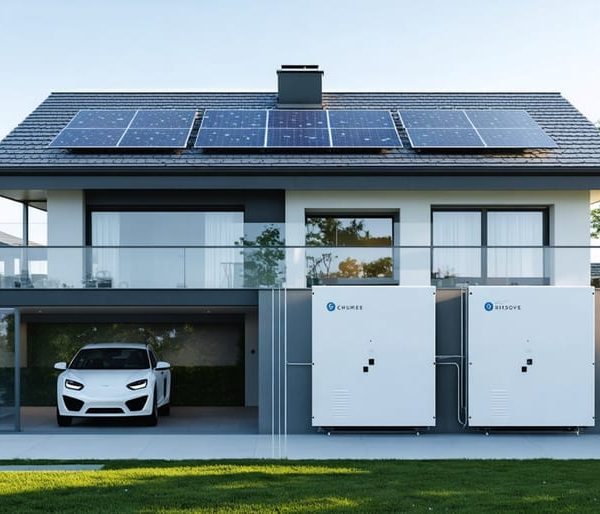
First, assess your home’s electrical capacity. Most modern homes can accommodate Level 2 charging, which requires a 240-volt circuit. Contact a certified electrician to evaluate your electrical panel and recommend any necessary upgrades.
Choose your charging station based on your vehicle’s specifications and daily driving needs. Look for units with smart features like scheduling and energy monitoring to optimize charging costs. Popular options typically range from 32 to 48 amps, providing 25-37 miles of range per hour of charging.
Installation involves:
1. Selecting an accessible location, ideally near your parking space
2. Obtaining necessary permits from your local authority
3. Having a licensed electrician install a dedicated circuit
4. Mounting the charging station
5. Testing the system thoroughly
For maintenance, regularly inspect cables for wear, keep the charging port clean, and ensure the station remains dry and protected from the elements. Most units require minimal upkeep beyond occasional firmware updates.
“Installing our home charging station was a game-changer,” says Sarah Chen, an EV owner from Portland. “We charge overnight when electricity rates are lowest, and wake up to a fully charged car every morning.”
Remember to check with your utility company about special EV charging rates or incentives that could help offset installation costs.
Cost Benefits and Energy Savings
Investing in green energy infrastructure delivers substantial financial returns while contributing to environmental sustainability. Property owners typically see a 20-30% reduction in energy costs within the first year of installation, with savings increasing over time as utility rates rise. Solar panel systems, for example, can pay for themselves in 5-7 years through reduced electricity bills, making them an attractive long-term investment.
The path to zero net energy homes has become increasingly accessible, with modern solar installations capable of eliminating monthly energy bills entirely. Commercial properties benefit even more significantly, with large-scale solar implementations reducing operational costs by up to 75% while providing tax incentives and depreciation benefits.
Beyond direct energy savings, green infrastructure increases property value by an average of 4.1%, according to recent real estate studies. Smart energy management systems further optimize consumption patterns, reducing waste and improving efficiency by an additional 15-20%. Government incentives, including tax credits and rebates, can offset up to 30% of initial installation costs, making the transition to renewable energy more affordable than ever.
Many property owners report complete system cost recovery within 8-10 years, while enjoying decades of reduced energy expenses and environmental benefits thereafter.
Commercial Applications and Benefits
Fleet Charging Solutions
Solar-powered charging systems are revolutionizing how businesses manage their vehicle fleets while reducing their carbon footprint. These innovative solutions combine solar panels, energy storage systems, and smart charging stations to create a sustainable ecosystem for fleet operations.
By installing solar carports or rooftop arrays, businesses can generate clean electricity to power their entire fleet of electric vehicles. A typical system can offset up to 80% of a fleet’s charging needs, resulting in significant cost savings and environmental benefits.
Smart charging management systems ensure optimal energy distribution throughout the day. During peak sunlight hours, vehicles can charge directly from solar power, while battery storage systems provide reliable charging capability during cloudy days or nighttime operations.
Companies implementing these solutions report average energy cost reductions of 40-60% compared to traditional grid-based charging. For example, a delivery company in California reduced its annual energy costs by $75,000 after installing a solar fleet charging system.
The installation process typically takes 4-6 weeks and includes:
– Site assessment and system design
– Solar panel installation
– Charging infrastructure setup
– Smart management system integration
– Staff training and system monitoring
Many businesses qualify for federal and state incentives, making the transition to solar fleet charging more affordable than ever. The return on investment typically occurs within 3-5 years, while the environmental benefits begin immediately.
Public Transportation Integration
Public transportation is experiencing a remarkable transformation through solar energy integration, making our daily commutes more sustainable than ever. Cities worldwide are embracing innovative solutions that combine local green energy initiatives with public transit infrastructure to reduce carbon emissions and operating costs.
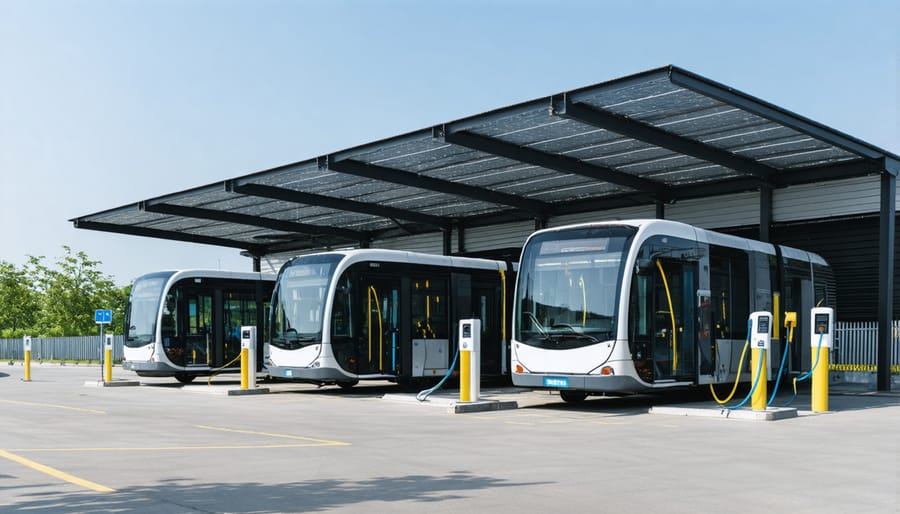
Solar-powered bus stations and train platforms now feature energy-generating canopies that provide shade while powering digital displays, lighting, and charging stations. In California, several transit authorities have installed solar panels on bus depot roofs, generating enough electricity to power their electric bus fleets and maintenance facilities.
European cities are leading the way with solar-thermal trams that use photovoltaic panels along track routes to power their operations. These systems not only reduce dependency on the traditional power grid but also demonstrate how existing infrastructure can be upgraded for sustainability.
The integration extends to ticketing systems and passenger amenities, with solar-powered ticket machines and real-time arrival displays becoming increasingly common. These improvements show how public transportation can become more energy-efficient while enhancing the passenger experience, making sustainable transit options more attractive to commuters.
Future-Proofing Your Green Energy Investment
Scalability Considerations
When planning your green energy infrastructure, it’s crucial to think ahead and design systems that can grow with your needs. Start by assessing your current energy requirements and projecting future demands, considering factors like potential property expansions or additional electric vehicles. A modular approach to solar panel installation allows for easy expansion without requiring a complete system overhaul.
For homeowners and businesses alike, incorporating circular economy principles into your infrastructure planning ensures sustainable growth while minimizing waste. Consider installing slightly larger inverters than currently needed and implementing smart energy management systems that can accommodate future additions.
Infrastructure scalability also means planning adequate space for battery storage expansion and ensuring your electrical panel has extra capacity. Many successful installations start with a core system and add components gradually, spreading costs over time while maintaining system efficiency. Remember to check local regulations regarding future modifications and secure necessary permits that allow for planned expansions.
By thinking ahead and building flexibility into your green energy system from the start, you’ll save both time and money while creating a truly future-proof sustainable energy solution.
Maintenance and Upgrades
Regular maintenance is key to keeping your green energy systems operating at peak efficiency. For solar panels, schedule quarterly cleaning to remove dust and debris, and conduct annual inspections to check for any damage or wear. During these checks, pay special attention to connection points and mounting hardware.
For wind turbines, monthly visual inspections can help identify early signs of wear, while professional maintenance should be performed annually. This includes checking blade balance, lubricating moving parts, and testing electrical components.
When it comes to upgrades, stay informed about new technological developments in the renewable energy sector. Many older solar panels can be enhanced with modern microinverters or power optimizers to improve their efficiency. Smart monitoring systems can be retrofitted to existing installations, providing real-time performance data and early warning of potential issues.
Consider upgrading your energy storage systems every 7-10 years as battery technology continues to improve. Modern batteries offer better capacity, longer lifespan, and improved safety features. Remember that while upgrades require initial investment, they often pay for themselves through increased efficiency and reduced operating costs.
The transition to green energy infrastructure represents a pivotal shift in how we power our transportation future. From solar-powered charging stations to wind-powered public transit systems, these sustainable solutions are already transforming our cities and communities. By embracing these technologies, we’re not just reducing emissions – we’re creating cleaner, quieter, and more livable spaces for everyone.
You can be part of this positive change. Consider installing solar panels at your home to charge an electric vehicle, support local initiatives for renewable energy projects, or advocate for green infrastructure in your community. Every step, whether big or small, contributes to a more sustainable transportation network.
The future of mobility is clean, efficient, and powered by renewable energy. Together, we can build an infrastructure that serves both our transportation needs and our planet’s well-being. Start your green energy journey today – your actions will help pave the way for generations to come.