

Solar Water Policies That Actually Save You Money and Resources
Solar energy policies are reshaping how we power our homes and businesses, creating unprecedented opportunities for property owners to slash energy costs while contributing to a sustainable future. Over the past decade, federal and state incentives have made solar installations more accessible than ever, with tax credits covering up to 30% of system costs and net metering programs allowing homeowners to sell excess power back to the grid.
As communities across America embrace renewable energy, local governments are streamlining permit processes and removing barriers to solar adoption. From California’s mandate requiring solar panels on new homes to New York’s ambitious clean energy targets, progressive policies are making solar power a cornerstone of our energy infrastructure. These initiatives aren’t just environmental victories – they’re smart financial decisions that can increase property values and provide decades of reliable, clean energy.
Understanding these policies is crucial for anyone considering solar installation. Modern incentive programs, combined with declining equipment costs and improved technology, have reduced the average payback period to just 5-7 years in many regions. Whether you’re a homeowner looking to reduce utility bills or a business owner aiming to decrease operational costs, current solar policies offer compelling pathways to energy independence and long-term savings.
The Hidden Water Footprint of Solar Energy
Water Requirements for Different Solar Technologies
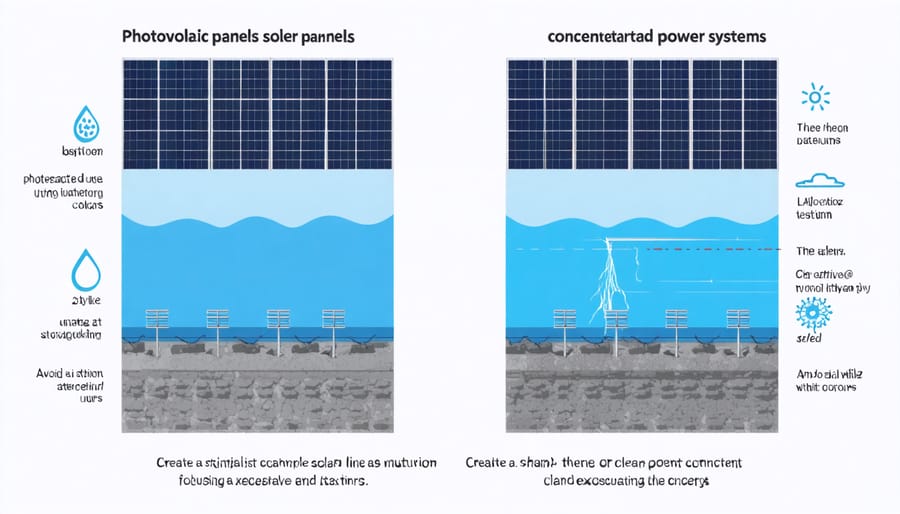
When it comes to solar energy systems, water usage varies significantly between different technologies. Traditional photovoltaic (PV) panels are incredibly water-efficient, requiring minimal water mainly for occasional cleaning to maintain optimal performance. A typical residential PV system only needs about 20 gallons of water per year for maintenance.
In contrast, concentrated solar power (CSP) systems use substantially more water, primarily for cooling purposes and steam generation. These systems can consume between 600 and 800 gallons of water per megawatt-hour of electricity produced. However, newer CSP technologies are incorporating dry-cooling methods, which can reduce water usage by up to 90%.
For homeowners considering solar installations, the water requirements shouldn’t be a major concern with standard PV panels. Even in areas with water restrictions, the minimal cleaning needs can often be met with rainwater or water-free cleaning methods. Some innovative companies are now offering automated cleaning solutions and hydrophobic panel coatings that further reduce water requirements, making solar energy an increasingly sustainable choice for environmentally conscious property owners.
Maintenance and Cleaning Water Usage
While solar panels are generally low-maintenance, they do require periodic cleaning to maintain optimal efficiency. The water usage for solar panel maintenance varies depending on the installation size, location, and cleaning method. For residential systems, typical water consumption ranges from 2-5 gallons per cleaning session, with most homes requiring 3-4 cleanings annually. This water usage is a crucial consideration in the overall solar panel lifecycle.
In arid regions, where water conservation is paramount, innovative cleaning solutions have emerged. These include waterless cleaning systems, robotic cleaners, and specialized cleaning solutions that require minimal water. Some regions offer guidelines or restrictions on water usage for panel maintenance, particularly during drought conditions.
Property owners can optimize water usage by:
– Scheduling cleanings during rainy seasons
– Using rainwater collection systems
– Implementing automated cleaning systems
– Employing professional services with water-efficient equipment
These practices help balance the need for clean, efficient panels with responsible water consumption, ensuring sustainable operation of solar installations while respecting local water conservation policies.
Current Solar Water Policies Affecting Homeowners
State-Level Water Use Regulations
Water usage in solar energy systems varies significantly across states, with regulations reflecting local environmental concerns and resource availability. Many states have integrated water consumption guidelines into their broader home energy efficiency regulations, particularly in drought-prone regions.
California leads with strict water conservation requirements for solar installations, mandating dry-cleaning methods for photovoltaic panels whenever possible. Arizona and Nevada have implemented similar measures, requiring solar system owners to use water-efficient cleaning technologies and schedule maintenance during off-peak hours.
Understanding these state solar installation regulations is crucial for homeowners planning new installations. Some states offer incentives for implementing water-saving technologies, such as automated cleaning systems or rainwater harvesting setups.
Colorado and New Mexico have pioneered regulations that balance water conservation with solar efficiency, introducing guidelines for recycled water use in panel cleaning. Texas focuses on groundwater protection, requiring solar facilities to report water usage and implement conservation plans.
For residential installations, most states recommend quarterly cleaning schedules using minimal water and environmentally friendly cleaning solutions. This approach helps maintain optimal system performance while preserving precious water resources.
Local Water Conservation Requirements
Water conservation plays a crucial role in solar energy systems, particularly for solar thermal installations that use water as a heat transfer medium. Many municipalities have implemented specific requirements to ensure responsible water usage in solar energy systems while maintaining their efficiency.
Most local regulations require solar installations to incorporate water-recycling systems that minimize waste. These systems typically include closed-loop designs where the same water circulates continuously, reducing the need for frequent refills. Property owners must also install automatic shut-off valves to prevent water loss in case of system malfunctions or leaks.
In drought-prone areas, additional restrictions may apply. For instance, some cities require the use of non-potable water in solar thermal systems whenever possible. Others mandate regular system inspections to ensure optimal water usage and prevent wastage through equipment deterioration.
Smart monitoring systems are becoming increasingly common requirements in newer installations. These systems help track water consumption and can quickly detect unusual usage patterns or potential leaks. Many jurisdictions now require monthly or quarterly water usage reports from large-scale solar installations.
For homeowners, compliance usually involves maintaining detailed records of water consumption and system maintenance. Local water districts often provide guidelines and resources to help property owners meet these requirements while maximizing their solar system’s efficiency. Some municipalities even offer incentives for installing water-efficient solar solutions that exceed standard conservation requirements.
Smart Water Management Solutions for Solar Systems
Water-Efficient Cleaning Technologies
Maintaining clean solar panels is crucial for optimal performance, but traditional cleaning methods can be water-intensive. Fortunately, modern technology offers innovative solutions that keep panels spotless while minimizing water consumption.
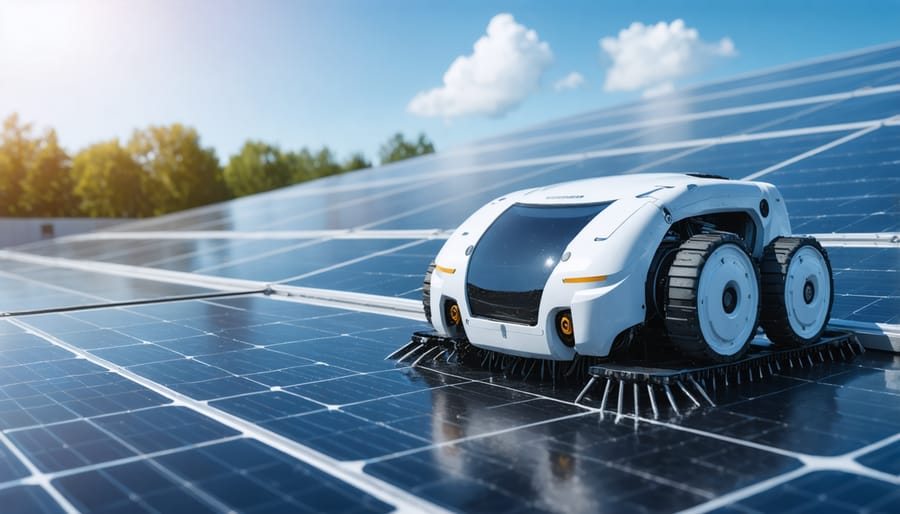
Robotic cleaning systems are leading the charge in water-efficient maintenance. These automated devices use microfiber brushes and specialized cleaning patterns to remove dust and debris without requiring large amounts of water. Some advanced models even operate completely dry, using electrostatic technology to repel dust particles.
Hydrophobic coatings represent another breakthrough in panel maintenance. These special treatments create a water-repellent surface that helps panels stay cleaner longer. When rain falls, it effectively cleans the panels while carrying away dirt and dust, reducing the need for manual cleaning.
Compressed air systems offer a waterless alternative for regular maintenance. These systems use controlled bursts of air to dislodge loose debris, particularly effective in arid regions where water conservation is paramount.
For times when water cleaning is necessary, high-pressure, low-volume spray systems maximize efficiency. These systems can clean effectively using up to 90% less water than traditional methods. Some models even recycle and filter the water for multiple uses.
Smart monitoring systems help optimize cleaning schedules by tracking panel performance and dirt accumulation. This data-driven approach ensures cleaning is performed only when necessary, preventing wasteful maintenance routines.
For homeowners, simple solutions like telescoping cleaning tools with built-in water conservation features make regular maintenance both effective and environmentally responsible. These tools typically include flow regulators and precision spray patterns to minimize water waste while maintaining cleaning effectiveness.
Automated Monitoring Systems
Modern solar installations are becoming increasingly smart, featuring automated monitoring systems that revolutionize how we manage water consumption. These intelligent systems use sensors and real-time data analysis to ensure optimal water usage in solar thermal systems and panel cleaning operations.
Smart meters and flow sensors continuously track water consumption, alerting property owners when usage patterns deviate from the norm. This immediate feedback helps detect leaks, inefficiencies, or maintenance issues before they become costly problems. Many systems now include weather-tracking features that adjust cleaning schedules based on local conditions, preventing unnecessary water use during rainy periods.
Mobile apps connected to these monitoring systems give users complete control at their fingertips. Property owners can view detailed water consumption reports, receive maintenance alerts, and adjust settings remotely. Some advanced systems even use artificial intelligence to learn from usage patterns and automatically optimize water consumption over time.
For commercial installations, automated monitoring systems can manage multiple arrays simultaneously, ensuring consistent performance across large solar farms. These systems typically include soil moisture sensors that help determine when panel cleaning is necessary, preventing both water waste and reduced efficiency from dirty panels.
The return on investment for these smart systems is impressive, with many users reporting 30-40% reductions in water consumption after installation. The technology also helps maintain compliance with local water usage regulations by providing detailed documentation of consumption patterns and conservation efforts.
When selecting a monitoring system, look for features like leak detection, automated shutdown capabilities, and integration with existing building management systems. Many manufacturers now offer user-friendly interfaces that make it easy to track and optimize water usage without technical expertise.
Cost Benefits of Water-Smart Solar Policies
Long-term Savings Analysis
Installing a water-efficient solar system can lead to substantial savings over time, making it a smart investment for both residential and commercial property owners. A typical household can expect to reduce their water heating costs by 50-80% within the first year of installation, while also cutting their carbon footprint significantly.
Let’s break down the numbers: An average family of four spending $600 annually on water heating can save between $300-$480 per year with a solar water heating system. When combined with water-efficient fixtures and smart monitoring systems, these savings can increase to $500-$600 annually.
The initial investment in a water-efficient solar system typically ranges from $3,000 to $8,000, depending on system size and complexity. However, with current federal tax incentives and local rebates, this cost can be reduced by 26-30%. Most homeowners recover their investment within 4-6 years through reduced utility bills.
Long-term benefits extend beyond direct cost savings. These systems typically last 20-25 years, providing consistent savings throughout their lifespan. Additionally, properties with solar water heating systems often see increased resale values, with studies showing a 3-4% premium over comparable properties without solar installations.
Maintenance costs are minimal, usually requiring only periodic inspections and occasional part replacements, averaging $50-$100 annually. This makes water-efficient solar systems one of the most cost-effective renewable energy investments available to property owners.
Available Incentives and Rebates
Several attractive financial incentives are available to help offset the costs of installing water-efficient solar systems. The federal solar Investment Tax Credit (ITC) remains one of the most significant benefits, allowing you to deduct 30% of your total solar installation costs from your federal taxes through 2032.
Many states offer additional tax credits and rebates specifically for water-conscious solar installations. For example, California’s Self-Generation Incentive Program (SGIP) provides rebates for solar systems that incorporate water-saving features. Some states even offer performance-based incentives that reward you based on the amount of energy your system produces while conserving water.
Local utility companies frequently provide their own incentive programs. These can include cash rebates, reduced electricity rates, or special time-of-use billing arrangements for solar customers who implement water-efficient cooling systems. Some utilities offer additional bonuses for installing smart monitoring systems that track both energy and water usage.
Property tax exemptions are available in many jurisdictions for solar installations, including those with water-saving features. Additionally, several municipalities offer expedited permits and reduced fees for solar projects that incorporate water conservation measures.
Remember to check with your local solar installer, as available incentives can vary significantly by location and may change periodically. Many installers can help you navigate the application process and maximize your eligible benefits.
As we’ve explored throughout this article, solar energy policies play a crucial role in shaping the future of renewable energy adoption. The combination of federal tax incentives, state-level rebates, and local regulations creates numerous opportunities for homeowners to embrace solar technology while saving money and contributing to environmental conservation.
To start your solar journey, consider these actionable steps:
First, research your local solar policies and available incentives. Contact your utility company to understand net metering programs and connection requirements. Then, obtain multiple quotes from certified solar installers who can assess your property’s solar potential and recommend appropriate system sizes.
Next, review your financing options, including solar loans, leases, and power purchase agreements. Remember that many incentives have deadlines, so timing your installation can maximize your savings.
Don’t forget to check your homeowners’ association regulations and secure necessary permits before installation. Consider joining local solar advocacy groups to stay informed about policy changes and connect with other solar homeowners.
By taking advantage of current solar policies while they’re available, you’re not just investing in your property – you’re contributing to a sustainable future. The transition to solar energy has never been more accessible or financially attractive, making now the perfect time to take action and become part of the renewable energy revolution.


