


Solar Hybrid Retrofit Kits: Transform Your Existing System Into a Smart Power Solution
Transform your existing solar system into a cutting-edge hybrid powerhouse with retrofit technology that seamlessly integrates battery storage capabilities. Modern hybrid retrofit kits now enable homeowners to upgrade their solar installations without replacing entire systems, delivering enhanced energy independence and significant cost savings. By adding smart battery storage, power monitoring, and intelligent load management, these kits maximize solar investment while providing reliable backup power during outages.
The evolution of retrofit technology has made it possible to convert traditional grid-tied solar systems into sophisticated hybrid setups at a fraction of the cost of new installations. Whether you’re looking to reduce your carbon footprint further, shield yourself from rising electricity rates, or ensure continuous power supply, hybrid retrofit solutions offer a practical pathway to energy self-sufficiency. These upgrades not only future-proof your home’s energy system but also increase property value while qualifying for various green energy incentives and tax benefits.
Why Upgrade Your Solar System with a Hybrid Retrofit Kit?
Enhanced Energy Independence
Hybrid retrofit kits transform your existing solar setup into a more versatile and self-reliant energy system. By adding battery storage and smart controllers, you gain unprecedented control over your power consumption and generation patterns. The system intelligently manages energy flow, storing excess solar power during peak production hours and releasing it when needed most.
This enhanced independence means you’re less reliant on the grid during power outages or peak pricing periods. The smart controller automatically switches between power sources based on your preferences, maximizing self-consumption of solar energy while minimizing grid dependency. You can even program the system to prioritize stored energy usage during high-rate periods, significantly reducing your electricity bills.
Many homeowners report achieving up to 80% energy independence after installing a hybrid retrofit kit, especially when combined with smart home energy management systems. This level of control not only provides peace of mind during grid disruptions but also offers long-term financial benefits through optimized energy usage.
Cost Savings and ROI
Investing in a hybrid retrofit kit offers substantial financial advantages compared to a complete system overhaul. Homeowners can typically maximize energy savings while spending 40-60% less than the cost of a new installation. Most users report breaking even on their investment within 3-5 years through reduced utility bills and energy storage benefits.
The retrofit approach preserves your existing solar infrastructure while adding modern capabilities, eliminating the need for costly panel replacements. By storing excess energy during peak production hours and using it during high-demand periods, homeowners can reduce their reliance on expensive grid power. Many utility companies offer additional incentives and rebates for hybrid system upgrades, further improving the return on investment.
When factoring in increased property value and potential tax benefits, hybrid retrofit kits present a compelling financial case for environmentally conscious homeowners looking to enhance their energy independence.
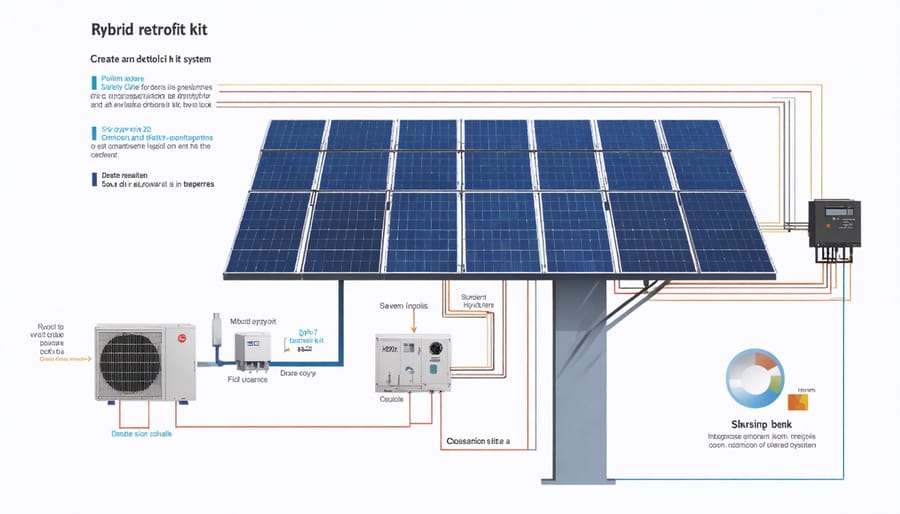
Components of a Hybrid Retrofit Kit
Battery Storage Systems
Modern hybrid retrofit kits offer several battery storage options to suit different energy needs and budgets. The most popular choice is lithium-ion batteries, known for their high energy density, long lifespan, and reliable performance. These batteries typically last 10-15 years and require minimal maintenance.
For homeowners seeking a more eco-friendly option, saltwater batteries are emerging as an alternative. While they offer lower energy density, they’re completely non-toxic and highly recyclable. Lead-acid batteries remain a budget-friendly choice, though they need more frequent maintenance and have a shorter lifespan of 5-7 years.
Storage capacity options generally range from 5kWh to 20kWh for residential systems. A typical family home might start with a 10kWh system, which can power essential appliances during an outage or store excess solar energy for evening use. The modular nature of most storage systems allows for easy expansion as your energy needs grow.
When selecting a battery system, consider factors like daily energy consumption, peak power requirements, and available installation space. Most modern systems include smart monitoring capabilities, letting you track performance through user-friendly mobile apps.
Smart Inverter Technology
The heart of any hybrid retrofit system lies in its smart inverter technology, which seamlessly manages power flow between your solar panels, battery storage, and the electrical grid. These advanced inverters are designed to automatically optimize energy usage, ensuring your home draws power from the most cost-effective source at any given time. Unlike traditional inverters, hybrid models can simultaneously charge batteries from solar panels while powering your home, maximizing energy efficiency.
Modern smart inverters feature sophisticated monitoring capabilities that let you track energy production and consumption through user-friendly mobile apps. This real-time data helps you make informed decisions about your energy usage and enables a smooth grid integration process. Many models also include built-in protective features that safeguard your battery system and maintain stable power quality during outages.
The smart functionality extends to automatic switching between power sources, ensuring uninterrupted power supply while maintaining optimal battery health. These inverters can even learn your household’s energy patterns over time, adjusting their operation to maximize self-consumption of solar power and minimize grid dependency.
Installation Process and Compatibility
System Assessment
Before installing a hybrid retrofit kit, it’s essential to evaluate your existing solar setup for compatibility. Start by examining your current inverter – note its make, model, and capacity. Most modern string inverters manufactured within the last five years can accommodate hybrid upgrades, but older models might need replacement.
Next, assess your electrical panel’s capacity and available space. You’ll need room for additional circuit breakers and potential system controls. Document your panel’s amperage rating and check for any existing solar-specific breakers.
Review your current energy consumption patterns and solar production data. This information helps determine the appropriate battery storage size for your needs. Look for monitoring systems or power bills that show your usage trends throughout different seasons.
Physical space is another crucial factor. Measure the area where you plan to install the battery unit, ensuring adequate ventilation and protection from weather. Most hybrid batteries require a clean, dry space with temperatures between 32-113°F (0-45°C).
Finally, check local building codes and utility requirements regarding hybrid system installations. Some areas may have specific regulations about battery placement and electrical modifications.

Integration Steps
Installing a hybrid retrofit kit involves several key steps that can be completed by a qualified technician. First, assess your existing setup using our comprehensive solar system installation guide to ensure compatibility. Begin by mounting the battery unit in a cool, dry location, preferably indoors or in a protected outdoor area.
Next, install the hybrid inverter adjacent to your existing solar inverter, ensuring proper ventilation and accessibility. Connect the battery to the hybrid inverter using the supplied cables, following proper polarity. Integration with your home’s electrical panel requires installing a critical load panel for backup power functionality.
Program the system settings through the provided interface, including charge/discharge preferences and backup power priorities. Install the monitoring system components and connect to your home’s Wi-Fi network for remote access and performance tracking.
Finally, conduct a thorough system test to verify proper operation, including simulation of grid outages to ensure backup power functionality works as intended. Schedule regular maintenance checks to maintain optimal performance and maximize system longevity.
Common Challenges and Solutions
While installing a hybrid retrofit kit, homeowners often encounter several common challenges. Compatibility issues with existing inverters can arise, but this is typically resolved by consulting with a qualified installer who can recommend compatible equipment. Some users face space constraints when adding battery storage, which can be addressed through creative mounting solutions or utilizing compact battery designs.
Wiring integration sometimes proves tricky, especially in older homes. Professional electricians can usually find workarounds by updating electrical panels or installing additional circuits. Connection problems between new and existing components can occur, but most modern retrofit kits come with detailed troubleshooting guides and manufacturer support.
Temperature management is another frequent concern, particularly in warmer climates. This can be solved by ensuring proper ventilation and installing temperature monitoring systems. Remember, most challenges have straightforward solutions when working with experienced installers.
Maintenance and Monitoring
System Performance Tracking
Modern hybrid retrofit kits come equipped with sophisticated monitoring systems that help you track your energy production and consumption in real-time. Most systems include a user-friendly mobile app or web dashboard where you can view detailed performance metrics at a glance.
Key monitoring features typically include daily power generation, battery charge levels, grid consumption, and energy savings calculations. Many systems also offer customizable alerts that notify you about important events like power outages or maintenance needs.
Smart meters included in retrofit kits measure both incoming and outgoing power, helping you understand your energy patterns better. This data proves invaluable for optimizing your system’s efficiency and maximizing cost savings.
Some advanced monitoring tools even provide weather forecasting integration, helping you predict solar generation and plan energy usage accordingly. Regular performance tracking also helps identify potential issues early, ensuring your hybrid system maintains peak efficiency throughout its lifetime.
For the best results, check your system’s performance metrics weekly and keep a log of any significant changes or patterns you notice.

Regular Maintenance Tips
To keep your hybrid retrofit kit performing optimally, establish a regular maintenance routine. Start by checking battery connections monthly, ensuring they’re clean and free from corrosion. Clean your solar panels quarterly to maintain maximum efficiency, and inspect the inverter’s cooling fans and vents for dust buildup.
Monitor your system’s performance through its management app, watching for any unusual patterns in energy production or storage. Schedule professional inspections annually to verify all components are working correctly and safely.
Keep a maintenance log to track cleaning dates, performance metrics, and any issues you notice. Replace air filters as recommended by the manufacturer, typically every 6-12 months. Check weather sealing around outdoor components twice yearly, especially before extreme weather seasons.
Remember to test your backup power function quarterly to ensure it activates smoothly when needed. This simple maintenance routine will help extend your system’s lifespan and maintain its efficiency for years to come.
Transforming your existing solar system into a hybrid powerhouse is more than just an upgrade – it’s an investment in a sustainable and resilient future. By installing a hybrid retrofit kit, you’re not only maximizing your energy independence but also contributing to a greener planet while enjoying significant cost savings on your utility bills.
The benefits are clear: enhanced energy security during grid outages, improved self-consumption of solar power, and smart energy management capabilities that adapt to your household’s unique needs. With minimal disruption during installation and compatibility with most existing solar systems, there’s never been a better time to make the switch.
Whether you’re a homeowner looking to reduce your carbon footprint or a business owner aiming to cut operational costs, hybrid retrofit solutions offer a practical path forward. As electricity prices continue to rise and environmental concerns grow, taking action now ensures you’re well-positioned for the future.
Don’t let your solar investment stop at generation – take the next step toward complete energy independence by upgrading to a hybrid system today. Your wallet – and the planet – will thank you.


