


Solar-Powered Landscapes That Pay For Themselves
Transform your outdoor space into a self-sustaining energy hub with zero energy solar landscaping – where innovative design meets renewable power generation. Imagine a backyard that not only looks stunning but produces all the electricity your home needs, effectively reducing your energy bills to zero.
Solar-powered landscapes represent the perfect fusion of environmental responsibility and smart home technology. By strategically integrating solar panels into pergolas, garden structures, and pathway lighting, homeowners can harvest clean energy while creating beautiful, functional outdoor spaces. These systems work in harmony with nature, using advanced photovoltaic technology to capture sunlight during the day and power your home 24/7 through efficient energy storage solutions.
The concept goes beyond traditional rooftop solar installations, incorporating elements like solar-powered water features, LED landscape lighting, and even charging stations for electric vehicles – all while maintaining the aesthetic appeal of your outdoor living space. Best of all, modern zero energy solar solutions qualify for substantial tax incentives and rebates, making the transition to sustainable living more affordable than ever.
Whether you’re looking to reduce your carbon footprint, eliminate utility bills, or increase your property value, zero energy solar landscaping offers a practical path to energy independence while creating an outdoor oasis that works for you.
What Makes a Landscape Zero Energy?
The Solar Energy Balance
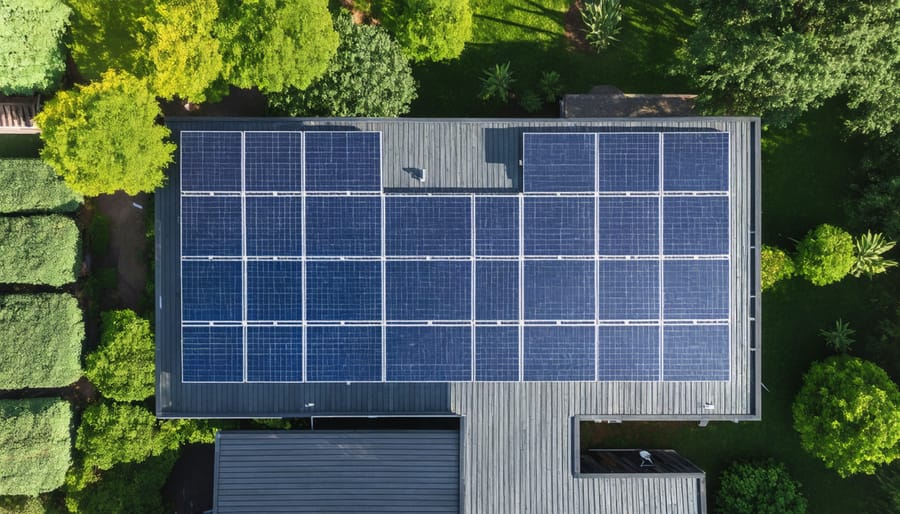
Creating an effective sustainable landscape design requires careful consideration of energy generation and conservation features. Solar-powered landscapes work by strategically positioning elements that both capture and preserve energy throughout your outdoor space. Solar panels can be integrated into pergolas and shade structures, serving the dual purpose of generating power while creating comfortable outdoor living areas. Light-colored hardscaping materials reflect sunlight, reducing heat absorption and cooling needs, while deciduous trees provide natural shade in summer and allow warming sunlight through in winter. Strategic placement of water features powered by solar pumps can help cool the surrounding air through evaporation. Solar-powered LED landscape lighting stores energy during the day and illuminates paths and features at night, while rain gardens and proper grading help manage water resources efficiently. By combining these elements thoughtfully, your landscape becomes a self-sustaining ecosystem that generates as much energy as it consumes.
Energy-Smart Plant Selection
Strategic plant selection and placement can significantly boost your zero-energy solar landscape’s efficiency. Choose deciduous trees for the south and west sides of your property to provide cooling shade during summer while allowing warming sunlight through in winter. Fast-growing varieties like maple and oak work well for this purpose.
For ground cover, opt for low-maintenance, drought-resistant plants that require minimal water and upkeep. Native species are ideal as they naturally thrive in your climate zone and support local biodiversity. Consider ornamental grasses, which need little maintenance while providing year-round visual interest.
Around solar installations, select low-growing plants that won’t cast shadows on panels. Sedums and other ground covers work perfectly here, preventing soil erosion without interfering with solar collection. For maximum efficiency, keep taller plants at least 20 feet away from solar arrays to prevent future shading issues.
Position climbing plants on pergolas or trellises to create natural cooling zones for outdoor living spaces. This reduces the need for artificial cooling while maintaining comfortable temperatures in adjacent indoor areas.
Essential Solar Features for Your Landscape
Solar-Powered Lighting Systems
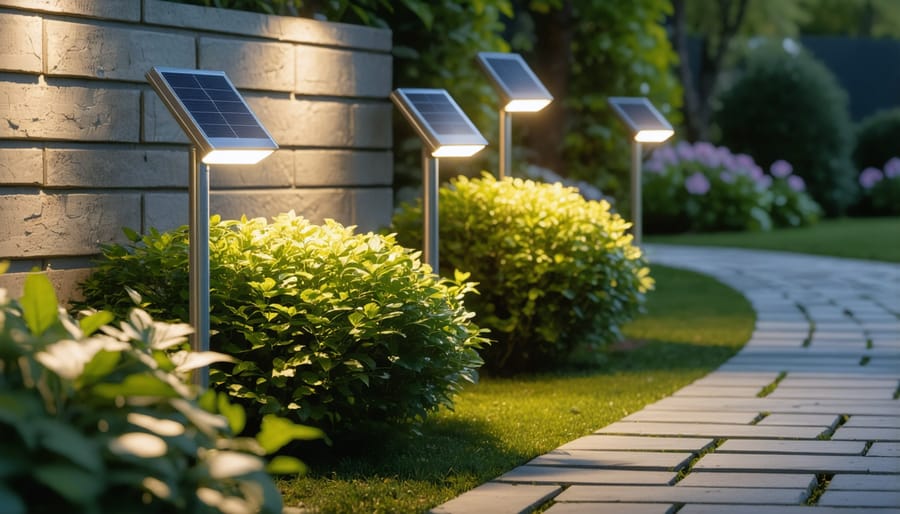
Transform your outdoor spaces with modern reliable solar landscape lighting that combines beauty with sustainability. These innovative lighting systems harness the sun’s energy during daylight hours and automatically illuminate your property after dark, requiring zero connection to the power grid.
Today’s solar-powered lighting solutions feature advanced LED technology, high-capacity batteries, and smart sensors that adjust brightness based on surrounding light conditions. Most systems include photovoltaic panels that seamlessly integrate into the fixture design, making them both functional and aesthetically pleasing.
Popular options include path lights, spotlights, and decorative string lights, all powered by clean solar energy. Modern systems can provide up to 12 hours of illumination on a full charge, with many including backup power storage for cloudy days. The latest models also offer motion detection features, enhancing security while conserving energy.
Installation is typically straightforward – simply position the lights in sunny locations and let nature do the work. Many systems come with ground stakes or mounting brackets, making setup a DIY-friendly project. Best of all, these lighting solutions eliminate monthly electricity costs and reduce your carbon footprint.
For optimal performance, choose lights with durable weather-resistant construction and look for models with high-efficiency solar panels. Regular cleaning of the solar collectors ensures maximum energy absorption and consistent lighting performance throughout the year.
Water Features and Irrigation
Water features and irrigation systems can be seamlessly integrated into your zero-energy landscape design using solar power. Modern solar-powered irrigation systems use the sun’s energy to pump water through your garden, eliminating the need for grid electricity while maintaining beautiful water features and healthy plants.
These systems typically include solar panels connected to efficient DC pumps, which operate during daylight hours when watering is most effective. A small battery backup can ensure consistent operation during cloudy periods. Popular applications include solar fountain pumps, which create stunning water displays while aerating ponds, and automated watering systems that keep your garden thriving with minimal maintenance.
The benefits extend beyond energy savings. Solar-powered water features require no electrical wiring, making installation simpler and safer. They’re perfectly suited for remote garden areas where running traditional power lines would be impractical or costly. Many systems come with smart controllers that adjust watering schedules based on weather conditions, helping conserve water while maintaining optimal soil moisture levels.
For best results, position solar panels where they receive maximum sunlight exposure, typically facing south in the Northern Hemisphere. Consider seasonal changes in sun patterns when planning your system’s layout to ensure year-round efficiency.
Climate Control Elements
Solar features play a crucial role in maintaining comfortable temperatures throughout your zero-energy space. By strategically incorporating passive solar design elements, you can naturally regulate indoor climate while minimizing energy consumption.
South-facing windows with proper overhangs work as natural temperature controllers, allowing warm sunlight to enter during winter months while blocking intense summer heat. These overhangs can be designed to match your seasonal needs, typically extending just enough to shade windows when the sun is high in summer but allowing light through when it’s lower in winter.
Thermal mass materials like concrete floors, brick walls, or water features absorb heat during the day and release it slowly at night, creating a natural temperature-balancing effect. This passive heating and cooling system reduces the need for artificial climate control.
Living walls and green roofs provide additional insulation while helping manage heat gain. These natural barriers can lower indoor temperatures by up to 5 degrees Celsius in summer, reducing cooling needs. Similarly, deciduous trees planted on the south and west sides of buildings offer shade in summer but allow beneficial solar gain in winter when leaves fall.
Smart ventilation systems, powered by solar energy, can be programmed to circulate air during optimal temperature periods, further enhancing climate control efficiency. These systems work in harmony with passive design elements to maintain ideal indoor conditions year-round.
Implementation and Cost Recovery
Planning Your Layout
The success of your zero energy solar project hinges on thoughtful layout planning that maximizes energy generation while complementing your property’s aesthetics. Start by conducting a solar site assessment to identify the areas that receive the most sunlight throughout the day. South-facing locations typically offer optimal sun exposure in the Northern Hemisphere, while areas free from shade cast by trees, buildings, or other structures are ideal for solar panel placement.
Consider your property’s unique features when designing your layout. Roof-mounted panels remain the most common choice, but ground-mounted arrays can work well in spacious yards or when roof orientation isn’t optimal. If you’re working with limited space, dual-purpose installations like solar pergolas or carports can generate power while serving functional purposes.
Don’t forget to account for future changes in your landscape. Young trees may eventually grow tall enough to cast shadows, and neighboring construction projects could impact sun exposure. Plan for adequate spacing between panels to allow for maintenance access and optimal airflow, which helps maintain panel efficiency.
Integration with other sustainable features is crucial for achieving true zero energy status. Consider how your solar layout will work alongside other elements like rainwater harvesting systems, natural ventilation paths, and passive solar design features. Strategic placement of panels can also create useful shade zones for outdoor living spaces or help regulate indoor temperatures.
Remember to check local building codes and homeowners’ association guidelines before finalizing your layout. Many jurisdictions have specific requirements for solar installations, including setback distances and height restrictions. Working with a certified solar designer can help ensure your layout meets all requirements while maximizing energy production.
Return on Investment
Investing in zero energy solar solutions for your landscape delivers impressive returns both financially and environmentally. The initial setup costs typically range from $15,000 to $25,000 for a comprehensive residential system, but various federal and state incentives can significantly reduce this investment. Solar tax credits currently allow you to deduct 30% of the installation costs from your federal taxes.
Most homeowners can reduce your energy costs by 70-90% through strategic solar implementation in their landscaping. Based on average household energy consumption, this translates to annual savings between $1,500 and $2,500. With these savings, most systems pay for themselves within 5-7 years.
Beyond monthly utility savings, zero energy solar installations increase property value by an average of 4.1%. For a $350,000 home, this means adding approximately $14,350 to your property’s worth. Many homeowners also benefit from net metering programs, where excess energy generated is fed back into the grid for credits or payments from utility companies.
The long-term financial benefits are particularly attractive since modern solar panels typically come with 25-year warranties and can function effectively for 30+ years. When you factor in rising energy costs, which historically increase by about 2.2% annually, the return on investment becomes even more compelling. Conservative estimates show total savings between $30,000 and $50,000 over the system’s lifetime.
Remember that maintenance costs are minimal, usually limited to occasional cleaning and basic system checks, making this a truly cost-effective long-term investment in your property’s future.
Maintenance and Optimization
Regular maintenance is key to keeping your zero energy landscape performing at its best. Start by establishing a monthly cleaning routine for your solar panels – a simple rinse with water and gentle soap can remove dust, pollen, and debris that might reduce efficiency. During fall, pay special attention to clearing fallen leaves that could shade or block panels.
Monitor your system’s performance through its digital interface or app. Most modern systems provide real-time data, helping you spot any unusual drops in energy production early. If you notice significant decreases, it might be time for a professional inspection.
Trim surrounding vegetation regularly to prevent shadows from falling on your solar panels. The best practice is to maintain a clear zone around panels that allows for maximum sun exposure throughout the day. Consider seasonal sun patterns when planning your maintenance schedule, as optimal panel angles may need adjustment between summer and winter months.
Check all electrical connections quarterly for signs of wear or damage. While you shouldn’t attempt electrical repairs yourself, knowing when to call a professional can prevent system downtime. Keep detailed records of maintenance activities and energy production – this information is invaluable for optimizing your system’s performance.
For water features powered by solar pumps, clean filters monthly and ensure pump impellers remain free of debris. LED landscape lighting should be checked for proper alignment and cleaned of any dirt that might dim their output.
Consider investing in a monitoring system if your setup doesn’t include one. These systems can alert you to potential issues before they become problems and help you track long-term performance trends.
Schedule professional maintenance annually to ensure all components are functioning correctly and safely. A certified technician can perform detailed diagnostics, make necessary adjustments, and identify any parts that may need replacement before they fail.
Remember that a well-maintained zero energy landscape not only performs better but also maintains its aesthetic appeal and property value for years to come.
Zero energy solar systems represent a remarkable opportunity to transform our homes and businesses into self-sustaining, environmentally responsible spaces. By harnessing the sun’s power, we can dramatically reduce our carbon footprint while enjoying significant cost savings on energy bills. The combination of solar panels, efficient energy storage, and smart consumption management creates a sustainable ecosystem that benefits both our planet and our wallets.
As more homeowners and businesses adopt these systems, we’re witnessing a positive shift toward renewable energy independence. Whether you’re considering a small residential installation or a large commercial project, the time to embrace zero energy solar is now. With advancing technology, decreasing installation costs, and numerous incentives available, making the switch to solar has never been more accessible or rewarding.
Take the first step toward energy independence today – your future self, and our planet, will thank you for it.


