


Transform Your Yard into a Solar-Powered Paradise: Smart Landscaping That Pays For Itself
Transform your outdoor space into a clean energy powerhouse through sustainable solar energy solutions that seamlessly blend with nature. Solar-powered landscaping has revolutionized how we think about outdoor design, offering both environmental benefits and stunning aesthetic appeal while reducing energy costs by up to 30%.
Imagine walking through your garden where solar-powered path lights illuminate evening strolls, while strategically placed photovoltaic panels double as shade structures over your patio. This isn’t just about energy generation – it’s about creating harmonious outdoor spaces that work with nature, not against it.
Today’s solar landscape features have evolved far beyond simple panel installations. Modern designs incorporate dual-purpose elements like solar pergolas that provide shade while generating power, and solar water features that create tranquil atmospheres using nothing but sunshine. These innovations make it possible to maintain beautiful, functional outdoor spaces while contributing to a more sustainable future.
Whether you’re a homeowner looking to reduce your carbon footprint or a property manager seeking to cut operational costs, solar-integrated landscaping offers practical solutions that combine environmental responsibility with smart design. The future of sustainable landscaping is here, and it’s powered by the sun.
Smart Solar Integration in Your Landscape Design
Strategic Placement of Solar Features
The strategic placement of solar features in your landscape can dramatically impact their effectiveness and your property’s overall energy efficiency. Start by analyzing your property’s sun exposure throughout the day, paying special attention to areas that receive 6-8 hours of direct sunlight. South-facing locations typically offer optimal conditions for solar installations in the Northern Hemisphere.
Consider seasonal changes when positioning solar elements. While summer sun patterns are important, don’t forget about winter sun angles, which are lower and create longer shadows. Place taller solar features, like solar panels and light poles, where they won’t cast shadows on other solar elements or shade-sensitive plants.
For maximum efficiency, keep solar panels at least 20 feet away from tall trees or structures that could block sunlight. If you’re installing solar-powered landscape lighting, position fixtures along pathways and near entry points where they’ll receive adequate daytime charging while providing optimal nighttime illumination.
Remember to check local regulations and HOA guidelines before installation, as some areas have specific requirements for solar feature placement. Working with a professional solar installer can help ensure your layout maximizes energy generation while maintaining your landscape’s aesthetic appeal.
Balancing Beauty and Functionality
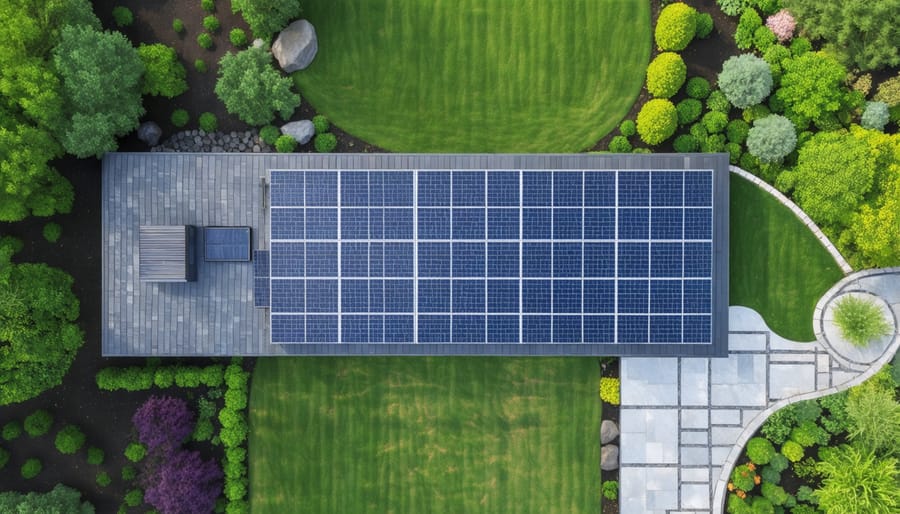
Many homeowners worry that solar installations might compromise their property’s curb appeal, but with thoughtful design, you can achieve both energy efficiency and aesthetic excellence. Consider mounting solar panels at optimal angles while incorporating them into existing architectural features. For instance, solar panels can be installed flush with your roof line or integrated into pergolas and carports for a seamless look.
Modern solar technology offers various design options, including sleek black panels and frameless models that blend naturally with your home’s exterior. You can also use solar landscape lighting strategically placed along pathways and garden borders to create ambient evening illumination while harvesting daylight energy.
Vertical gardens and climbing plants can soften the appearance of ground-mounted solar arrays while ensuring they remain unshaded. Select low-growing plants for areas near panels to prevent overhead growth that might reduce efficiency. Consider incorporating solar features into existing structures like garden walls or fences, where they can serve dual purposes without dominating the landscape.
Remember to maintain clear sight lines and create visual balance by spacing solar elements thoughtfully throughout your property. This approach ensures maximum energy generation while preserving your outdoor space’s natural beauty.
Solar-Powered Landscape Features That Make a Difference
Lighting Solutions
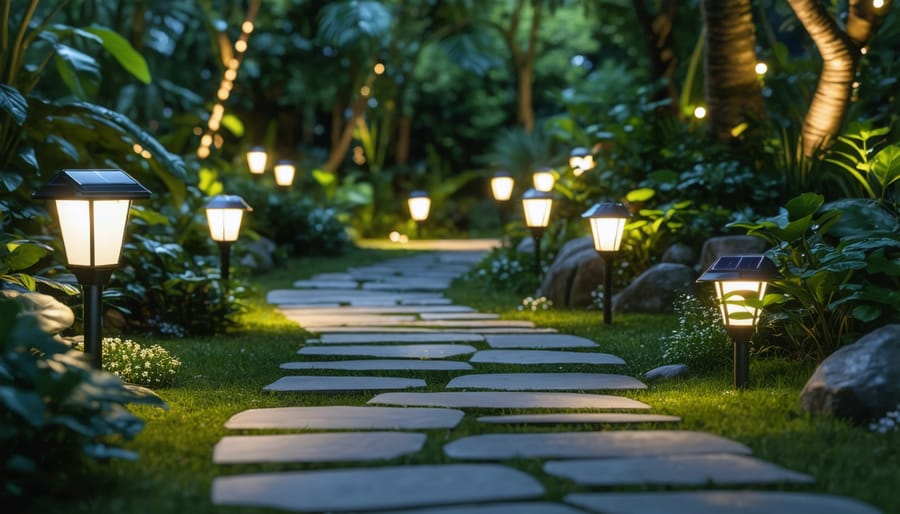
Modern solar-powered landscape lighting offers homeowners a variety of elegant and energy-efficient options to illuminate outdoor spaces. From path lights that guide visitors safely along walkways to accent lights that highlight garden features, these sustainable lighting solutions combine practicality with environmental responsibility.
Motion-sensor security lights powered by solar panels provide peace of mind while conserving energy, activating only when needed. Decorative string lights and lanterns create a magical atmosphere for evening entertainment, storing energy during the day to create beautiful illumination at night. For those seeking architectural highlights, solar spotlights can dramatically showcase trees, fountains, or building features without increasing electricity bills.
Solar lighting has evolved significantly, now offering adjustable brightness levels, automatic dusk-to-dawn operation, and weather-resistant construction. Many modern fixtures include backup battery storage, ensuring reliable performance even during cloudy periods. The latest designs range from sleek contemporary styles to classic traditional looks, making it easy to find options that complement any landscape design.
Installation is typically straightforward, requiring no electrical wiring or professional assistance. Simply place the lights in sunny locations, and they’ll automatically charge during daylight hours. This accessibility, combined with minimal maintenance needs and zero operating costs, makes solar lighting an attractive choice for sustainable landscape design.
Water Features and Irrigation
Water features and irrigation systems powered by solar energy offer an elegant solution for sustainable landscaping while creating serene outdoor spaces. Solar-powered fountains bring the soothing sound of flowing water to your garden without increasing your electricity bills. These eco-friendly features operate by converting sunlight into energy, storing it in batteries for consistent performance even on cloudy days.
Installing solar irrigation systems can revolutionize your garden maintenance routine. These systems use solar-powered pumps to distribute water efficiently throughout your landscape, ensuring your plants receive proper hydration while conserving water resources. Many modern systems come with smart controllers that adjust watering schedules based on weather conditions and soil moisture levels.
Solar-powered pond aerators and water features serve dual purposes: they maintain healthy aquatic environments while creating attractive focal points in your landscape. These systems are particularly beneficial in areas without easy access to electrical outlets, offering flexibility in garden design and placement.
The initial investment in solar water features typically pays for itself through reduced utility costs and lower maintenance requirements. Many homeowners report significant water savings after switching to solar-powered irrigation, some seeing reductions of up to 30% in their water consumption while maintaining healthier gardens.
Climate Control Elements
Solar-powered climate control elements offer innovative ways to maintain comfortable outdoor spaces while staying true to sustainable principles. Solar-powered fans provide gentle air circulation in covered patios and pergolas, making hot summer days more bearable without increasing your carbon footprint. These efficient devices operate automatically when the sun is shining, precisely when cooling is most needed.
For cooler seasons, solar-powered heaters can extend your outdoor living space usage well into autumn and early spring. These units store solar energy during the day and provide warmth during evening gatherings, offering an eco-friendly alternative to traditional patio heaters. Many models come with adjustable settings and timers for optimal comfort and energy efficiency.
Automated solar shade structures represent another smart climate control solution. These innovative installations track the sun’s position and adjust their angle automatically, providing shade when and where you need it most. Some systems even include rain sensors, automatically retracting during inclement weather to protect the mechanism.
Installation is straightforward for most homeowners, though professional installation is recommended for larger systems. The initial investment in solar climate control elements typically pays off through reduced energy costs and increased property value. Plus, many regions offer tax incentives for installing solar-powered outdoor amenities, making these sustainable improvements even more attractive.
Energy-Efficient Plant Selection and Placement
Shade-Providing Plants
Strategic placement of shade-providing plants can significantly reduce your home’s cooling needs while complementing your solar energy system. By carefully selecting and positioning trees and large shrubs, you can create a natural cooling system that works in harmony with your solar panels.
Deciduous trees are ideal for this purpose, as they provide shade during hot summer months and allow sunlight through during winter when their leaves fall. Plant these trees on the south and west sides of your home to block intense afternoon sun. Popular options include maple, oak, and elm varieties, which can reduce surrounding air temperatures by up to 6°F.
When planning your shade landscape, consider the mature height and spread of trees to ensure they won’t interfere with your solar panels’ efficiency. A good rule of thumb is to plant trees at a distance of 2.5 times their expected mature height from your solar array.
Large shrubs and climbing vines can also play a crucial role in your cooling strategy. Plant them near windows and walls to create cooling shade pockets. Options like Virginia creeper or Boston ivy can cover walls effectively, while tall shrubs like viburnum or holly provide excellent side-yard screening.
Remember to choose native species whenever possible, as they require less maintenance and water while supporting local wildlife. This creates a win-win situation where you’re reducing energy costs while contributing to local biodiversity.
Low-Maintenance Ground Cover
Selecting the right ground cover plants is essential for creating a sustainable, low-maintenance landscape that complements your solar installation. These hardy plants not only reduce water consumption but also minimize the time and effort needed for upkeep.
Sedums and creeping thyme are excellent choices, as they thrive in sunny areas and require minimal watering once established. These drought-resistant plants create dense coverage that naturally suppresses weed growth, reducing the need for chemical herbicides and frequent weeding sessions.
Native grasses like buffalo grass and blue grama offer another sustainable option. These species have evolved to survive in local conditions, making them naturally resistant to regional pests and weather patterns. Their deep root systems help prevent soil erosion and improve water retention.
For shaded areas under solar panels, consider plants like creeping jenny or sweet woodruff. These adaptable ground covers flourish in partial shade and help maintain soil moisture. Their spreading growth pattern creates a living mulch that keeps the soil cool and reduces water evaporation.
To maximize sustainability, group plants with similar water needs together. This practice, known as hydrozoning, ensures efficient water use and prevents overwatering. Consider installing a drip irrigation system with smart controls to deliver water precisely where needed, further reducing consumption while maintaining healthy ground cover.
Remember to prepare the soil properly before planting and add organic mulch to retain moisture and suppress weeds. With these low-maintenance ground covers in place, you’ll create an environmentally friendly landscape that enhances your solar installation’s efficiency.
Installation and Maintenance Tips
Installing and maintaining solar landscape features doesn’t have to be complicated. Start by conducting a site assessment to determine the best locations for solar elements. Look for areas that receive 6-8 hours of direct sunlight daily and are free from shade cast by buildings or large trees.
For solar pathway lights, installation is straightforward. Simply insert the stakes into soft ground, ensuring the solar panels face south in the Northern Hemisphere. Space lights evenly, typically 6-8 feet apart, for optimal illumination and aesthetic appeal.
When installing larger features like solar-powered fountains or irrigation systems, consider these key steps:
– Place the solar panel in a sunny location within cable reach of the water feature
– Ensure proper grounding and waterproof connections
– Install a battery backup system for cloudy days
– Use flexible tubing for easier maintenance access
Regular maintenance is crucial for optimal performance. Create a monthly checklist that includes:
1. Clean solar panels with water and a soft cloth to remove dust and debris
2. Check all electrical connections for signs of wear
3. Clear any blocked water lines or filters
4. Trim nearby vegetation that might create shade
5. Test backup batteries and replace as needed
During winter months, consider removing portable solar features for storage or using protective covers. For permanent installations, adjust panel angles seasonally to maximize sun exposure – steeper in winter, flatter in summer.
Troubleshooting tip: If your solar features aren’t performing well, first check for simple issues like dirty panels or loose connections before calling a professional. Most problems can be solved with basic maintenance.
Remember to keep installation manuals and warranty information in a safe place. Many manufacturers offer extended warranties when you register your products and follow recommended maintenance schedules.
As we’ve explored throughout this article, solar energy represents a powerful solution for creating a more sustainable future. The benefits are clear and compelling: significant reduction in electricity costs, decreased carbon footprint, and increased property value. By embracing solar technology, homeowners and businesses aren’t just making a smart financial decision – they’re investing in our planet’s future.
The time to act is now. With advancing technology making solar installations more efficient and affordable than ever, combined with generous tax incentives and rebates, the barriers to entry have never been lower. Many homeowners are seeing complete returns on their investment within 5-7 years, while enjoying decades of clean, renewable energy.
The success stories we’ve shared from fellow homeowners and businesses demonstrate that solar energy isn’t just a concept – it’s a practical, proven solution that’s working for millions of people worldwide. From reduced utility bills to increased energy independence, the positive impacts are tangible and immediate.
Whether you’re considering rooftop panels, solar landscape lighting, or a complete solar-powered irrigation system, remember that every step toward sustainable energy makes a difference. By joining the solar energy movement, you’re not only securing your energy future but also contributing to a cleaner, more sustainable world for future generations.
Take the first step today by consulting with local solar professionals and exploring the options that best suit your needs. The path to sustainable energy is clear, and the future is bright with solar power leading the way.


