Solar-Powered Urban Farms Are Transforming City Food Production
Transform your city rooftop, balcony, or backyard into a thriving food oasis with sustainable urban agriculture – a revolutionary approach that’s reshaping how we grow food in our increasingly urbanized world. By combining vertical growing systems, smart water management, and renewable energy, urban farmers now produce up to 20% of the world’s food supply while slashing their carbon footprint and grocery bills.
Modern sustainable urban farming goes beyond traditional container gardening. Today’s systems integrate hydroponic towers powered by solar panels, automated irrigation that reduces water usage by 90%, and companion planting techniques that maximize limited space while naturally deterring pests. These innovations make it possible to grow fresh, organic produce year-round, even in the heart of dense cities.
The benefits extend far beyond fresh tomatoes and herbs at your fingertips. Urban agriculture strengthens community bonds, reduces transportation emissions from long-distance food shipping, and creates vibrant green spaces that cool our cities. Whether you’re a complete beginner with a sunny windowsill or an experienced gardener ready to scale up, sustainable urban agriculture offers practical solutions for growing your own food while contributing to a more resilient, sustainable future.
How Solar Integration Revolutionizes Urban Farming
Energy Self-Sufficiency in Urban Farms
Solar power systems are revolutionizing urban farming by enabling true energy independence through sustainable power generation. By installing solar panels on rooftops or vertical surfaces, urban farms can generate their own electricity to power essential growing equipment like LED grow lights, irrigation systems, and climate control units.
A typical urban farm solar setup includes photovoltaic panels, battery storage systems for nighttime operation, and smart controllers to optimize energy usage. Many urban farmers start with a small system powering basic needs and gradually expand as their operations grow. The initial investment in solar equipment typically pays for itself within 3-5 years through reduced utility bills.
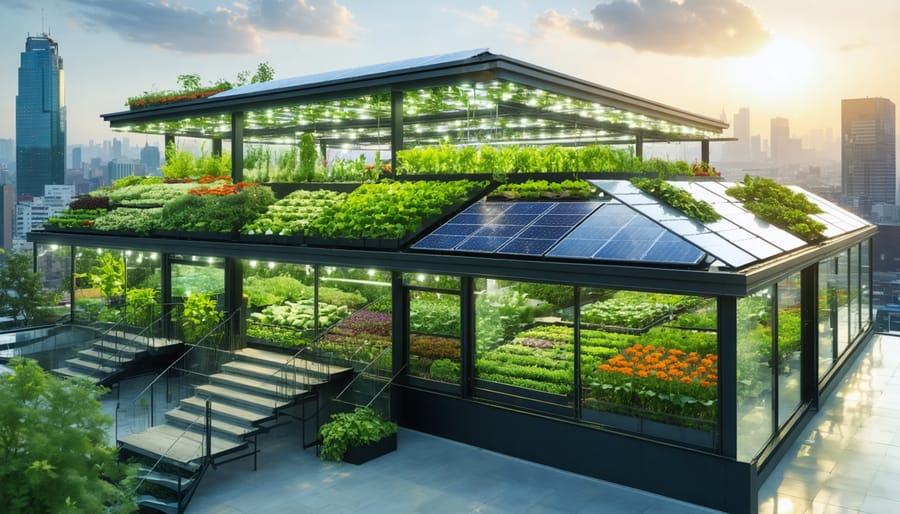
Modern solar solutions are particularly effective for greenhouse operations, where panels can be integrated into the structure itself. Some innovative urban farms even use semi-transparent solar panels that allow natural light to pass through while generating power, maximizing space efficiency. This dual-purpose approach exemplifies the creative solutions emerging in sustainable urban agriculture.
With government incentives and falling solar equipment costs, achieving energy self-sufficiency has never been more accessible for urban farmers.
Dual-Use Space Innovation
Combining solar panels with growing spaces is revolutionizing urban agriculture by maximizing limited space and resources. This innovative approach, known as agrivoltaics, creates a symbiotic relationship between food production and renewable energy generation.
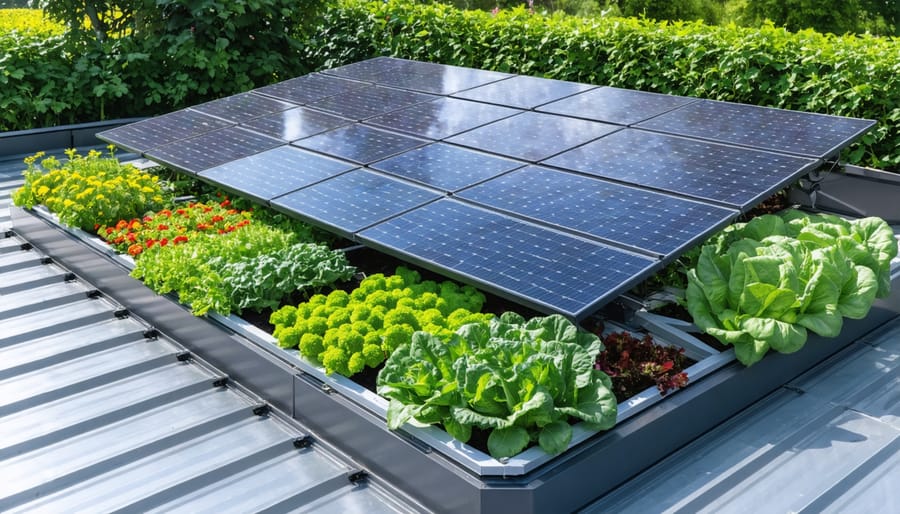
Rooftop gardens and greenhouses can be equipped with semi-transparent solar panels that allow sufficient light for plant growth while generating electricity. These dual-purpose installations typically achieve 80% of traditional solar panel efficiency while providing ideal growing conditions for many crops. Plants benefit from partial shade during intense summer heat, while the panels’ efficiency improves thanks to the cooling effect of plant transpiration.
Vertical farming systems can integrate solar panels on south-facing walls, powering LED grow lights and climate control systems. Some creative solutions include mobile growing racks that shift throughout the day to optimize sunlight exposure, ensuring plants receive adequate natural light while maximizing solar energy collection.
Property owners report 30-40% reductions in energy costs after implementing these systems, while producing fresh, local food year-round. The initial investment is often offset within 5-7 years through energy savings and increased crop yields.
Key Components of Solar-Powered Urban Agriculture
Solar Panel Configuration
Urban agriculture can be revolutionized through strategically planned solar panel installations that maximize energy capture while maintaining optimal growing conditions. For rooftop gardens and greenhouses, integrated photovoltaic systems can be configured in several ways to suit different space requirements and energy needs.
The most common configuration is the overhead array, where panels are mounted above growing areas on adjustable frames. This setup creates partial shade while generating power, perfect for plants that thrive in filtered sunlight. For maximum exposure, side-mounted panels can be installed on vertical surfaces, ideal for buildings with limited roof space but ample wall area.
Bifacial solar panels are gaining popularity in urban farming, as they can capture both direct sunlight and reflected light from light-colored surfaces, increasing energy yield by up to 30%. These panels work exceptionally well when mounted between rows of crops or on greenhouse roofs.
For smaller operations, portable solar arrays offer flexibility and can be repositioned seasonally to optimize sun exposure. These systems typically include lightweight panels with plug-and-play connections, making them perfect for balcony gardens or experimental growing spaces.
Whatever the configuration, it’s essential to consider factors like weight distribution, access for maintenance, and the specific light requirements of your crops when planning your solar integration strategy.
Smart Irrigation Systems
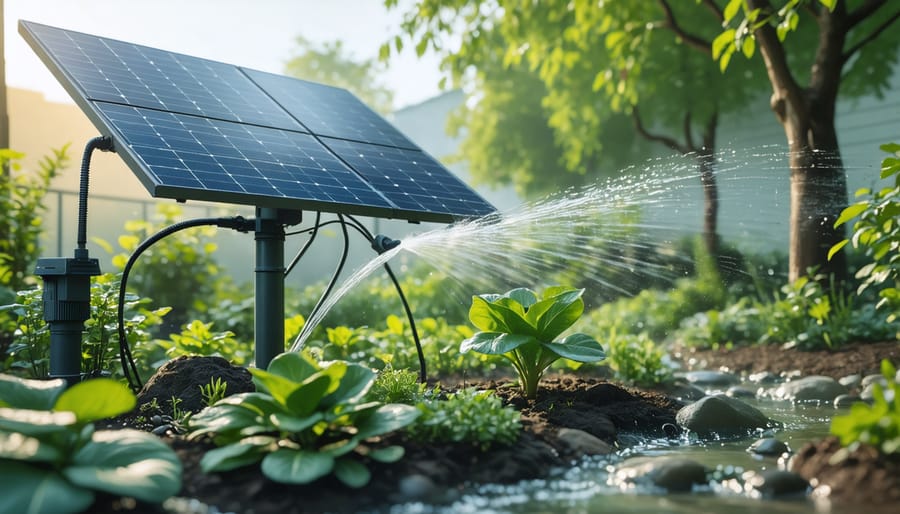
Smart irrigation systems powered by solar energy are revolutionizing urban agriculture by maximizing water efficiency while minimizing environmental impact. These innovative systems use solar panels to power sensors, pumps, and control units that deliver precise amounts of water to plants exactly when needed.
A typical smart irrigation setup includes moisture sensors placed in the soil, a central control unit, and solar-powered pumps. The sensors continuously monitor soil moisture levels and weather conditions, automatically adjusting watering schedules to prevent over or under-watering. This precision can reduce water consumption by up to 50% compared to traditional irrigation methods.
“Since installing our solar-powered irrigation system, we’ve cut our water bill in half while increasing our crop yield,” shares Sarah Chen, an urban farmer in Portland. “The system practically pays for itself within two years.”
Installation is straightforward: mount the solar panels in a sunny location, connect them to the control unit, place moisture sensors throughout your growing area, and set up the irrigation lines. Many systems now come with smartphone apps that allow you to monitor and adjust settings remotely.
For maximum efficiency, consider incorporating rainwater harvesting systems and drip irrigation. These additions can further reduce water consumption while ensuring your plants receive consistent moisture. The combination of solar power and smart technology makes sustainable urban agriculture more accessible and manageable than ever before.
Climate Control Technology
Modern urban agriculture relies heavily on efficient climate control systems powered by renewable energy. Solar-powered heating, cooling, and ventilation solutions have revolutionized how we maintain optimal growing conditions while minimizing environmental impact.
Solar-powered climate control starts with photovoltaic panels that convert sunlight into electricity, powering automated temperature management systems. These systems use smart sensors to monitor environmental conditions and adjust accordingly. When temperatures rise, solar-powered ventilation fans activate to circulate air and maintain ideal growing conditions. During colder months, stored solar energy powers heating elements that keep crops warm and protected.
“Since installing our solar climate control system, we’ve reduced energy costs by 70% while maintaining perfect growing conditions year-round,” shares Maria Chen, an urban farmer in Chicago.
The integration of these systems typically includes:
– Automated roof vents that open and close based on temperature
– Solar-powered circulation fans for air movement
– Temperature-controlled misting systems
– Energy-efficient LED grow lights for supplemental lighting
– Smart thermostats for precise climate management
For optimal performance, these components work together through a central control hub that monitors and adjusts conditions automatically. The initial investment in solar climate control technology typically pays for itself within 3-5 years through reduced energy costs and improved crop yields.
Best of all, these systems continue working during power outages, ensuring your urban farm remains productive regardless of external conditions.
Implementation Strategies for Home Gardeners
Starting Small: Balcony and Rooftop Solutions
Starting your sustainable urban agriculture journey doesn’t require acres of land or extensive resources. Even a modest balcony or rooftop space can become a thriving food garden with the right approach and planning.
For balcony gardeners, vertical gardening systems offer an excellent solution to space constraints. Try installing wall-mounted planters or stackable containers to maximize your growing area. Herbs like basil, mint, and parsley thrive in small spaces and provide fresh ingredients year-round. Cherry tomatoes, lettuce, and compact pepper varieties are also perfect for container growing.
Rooftop spaces present unique opportunities for larger-scale urban farming. Before starting, ensure your roof can handle the additional weight of containers, soil, and water. Consider installing raised beds with lightweight growing medium or implementing hydroponic systems that reduce the overall load while maximizing productivity.
Smart water management is crucial in these settings. Install a drip irrigation system with a timer to maintain consistent moisture levels while conserving water. Rain barrels can collect and store water for your plants, reducing reliance on municipal supplies.
For year-round growing, mini greenhouse structures or cold frames can extend your growing season. These protective environments are particularly useful for starting seedlings early in the spring or maintaining crops through fall.
Begin with easy-to-grow plants and gradually expand your garden as you gain confidence. Many urban gardeners start with a simple herb garden and progress to more challenging crops. Remember to choose plants suited to your specific light conditions – most vegetables need at least 6 hours of direct sunlight daily.
Success stories from fellow urban gardeners prove that even small spaces can yield impressive harvests with proper planning and care.
Scaling Up: Backyard Integration
After mastering basic urban farming techniques, many homeowners are ready to scale up their operations through backyard integration. This expansion process involves strategically combining different growing methods while maximizing available space and resources.
Start by conducting a thorough site assessment of your property, identifying areas that receive optimal sunlight and mapping out potential growing zones. Consider vertical spaces, walls, and even rooftop areas that could support additional growing systems. Many successful urban farmers begin by integrating raised beds with vertical growing structures, creating multi-level growing environments that significantly increase yield per square foot.
Water management becomes crucial when scaling up. Installing rainwater harvesting systems and efficient irrigation networks helps maintain sustainability while reducing costs. Consider connecting with community solar initiatives to power automated watering systems and climate control equipment, making your operation more energy-efficient.
Implementing companion planting strategies can maximize space utilization while promoting natural pest control and soil health. Create designated areas for composting and seed starting to ensure a continuous growing cycle throughout the seasons. Consider adding small greenhouse structures or hoop houses to extend the growing season and protect sensitive crops.
Remember to maintain proper documentation of your expansion process, tracking yields, resource usage, and successful growing combinations. This data helps optimize future planning and can be valuable when connecting with local urban farming networks. As your system grows, consider implementing smart monitoring tools to help manage multiple growing areas efficiently while maintaining sustainable practices.
Cost-Benefit Analysis and ROI
Initial Investment vs Long-term Savings
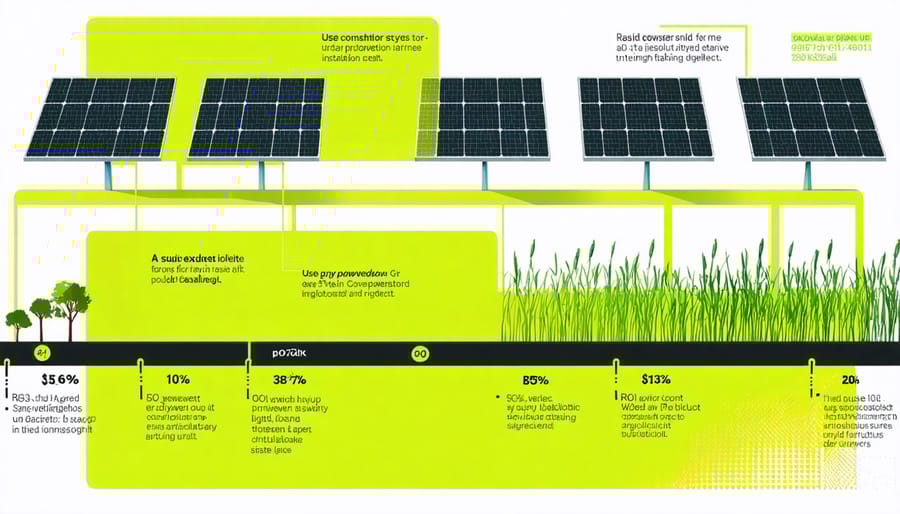
While the initial setup costs for sustainable urban agriculture systems might seem daunting, the long-term benefits far outweigh the investment. A basic hydroponic system with solar integration typically ranges from $2,000 to $5,000, depending on size and complexity. However, these systems can deliver significant cost savings through solar power and reduced water consumption.
Most urban farmers see a return on investment within 2-3 years through reduced grocery bills and potential income from surplus produce. A well-maintained system can save approximately $1,200 annually on produce costs for an average family of four. Additionally, solar-powered systems can reduce monthly utility bills by 30-40%.
The maintenance costs are surprisingly low, typically around $100-200 annually for basic supplies and system upkeep. Many components, such as solar panels and growing containers, have warranties extending 20-25 years, ensuring long-term reliability. Government incentives and tax breaks for sustainable agriculture initiatives can further offset initial costs, making the investment even more attractive for urban homeowners.
Available Incentives and Rebates
Urban farmers can access numerous financial incentives to support their sustainable agriculture projects. The USDA’s Urban Agriculture and Innovation Production (UAIP) grants offer up to $500,000 for establishing or expanding urban growing operations. Local utilities often provide energy-efficiency rebates for solar-powered irrigation systems and LED grow lights, typically covering 20-30% of equipment costs.
Many cities offer tax breaks and zoning incentives for converting vacant lots into productive growing spaces. For example, Seattle’s P-Patch program provides matching grants of up to $25,000 for community garden projects, while Chicago’s Green Development Fund offers reimbursements for sustainable agriculture installations.
State-level programs like California’s Healthy Soils Initiative provide funding for soil improvement practices and water conservation measures. Additionally, federal tax credits can offset up to 30% of solar installation costs for urban farming operations.
First-time urban farmers should check with their local extension offices, which often maintain updated databases of available grants and can assist with application processes. Many agricultural cooperatives also offer member discounts on equipment and supplies.
Solar-integrated urban agriculture represents a powerful solution for creating sustainable, resilient cities of tomorrow. By combining renewable energy with food production, we can transform unused urban spaces into productive green zones that benefit both people and the planet. The technology is ready, the benefits are clear, and the time to act is now.
Whether you’re a homeowner looking to start a rooftop garden or a property manager considering a large-scale installation, taking the first step toward solar-powered urban farming can make a real difference. Start small, learn from successful examples in your community, and gradually expand your system. Together, we can build a network of sustainable urban farms that provide fresh, local food while harnessing clean energy from the sun.
Join the growing movement of urban agricultural innovators and be part of the solution to creating greener, more sustainable cities.