How to Choose Volt Solar Lighting for Water Features: A Buying Guide
Choosing the right voltage for your pond or fountain solar lighting comes down to three options: low-voltage (12V), line-voltage (120V), or integrated solar systems with built-in batteries. For most residential water features, low-voltage solar lighting offers the safest, most flexible solution, combining easy DIY installation with enough power to create stunning nighttime displays without the shock hazard or permitting headaches of line-voltage alternatives.
The voltage question matters because it determines everything from how you’ll install your lights to how bright they’ll shine and how much energy they’ll actually save. Solar water feature lighting has evolved dramatically, and understanding voltage options helps you avoid the two most common pitfalls: buying underpowered lights that barely illuminate your fountain, or overspending on a professional-grade system when a simpler setup would work beautifully.
Most homeowners discover this topic after investing in a gorgeous pond or waterfall and realizing that darkness hides their investment every evening. You want to highlight the cascading water, create safe pathways around the feature, and extend your outdoor living hours without trenching cables across your yard or watching your electric bill climb.
This guide walks you through exactly how voltage affects brightness, runtime, and installation complexity for water feature lighting. You’ll learn which voltage works best for different pond sizes, how to match your lighting choice to your DIY comfort level, and what specifications actually matter when you’re comparing products online or in-store. Whether you’re illuminating a small bubbling fountain on your patio or a multi-tier waterfall in your backyard, you’ll finish with a clear action plan and the confidence to choose lighting that transforms your water feature into a nighttime focal point.
Understanding Volt Solar Lighting for Water Features
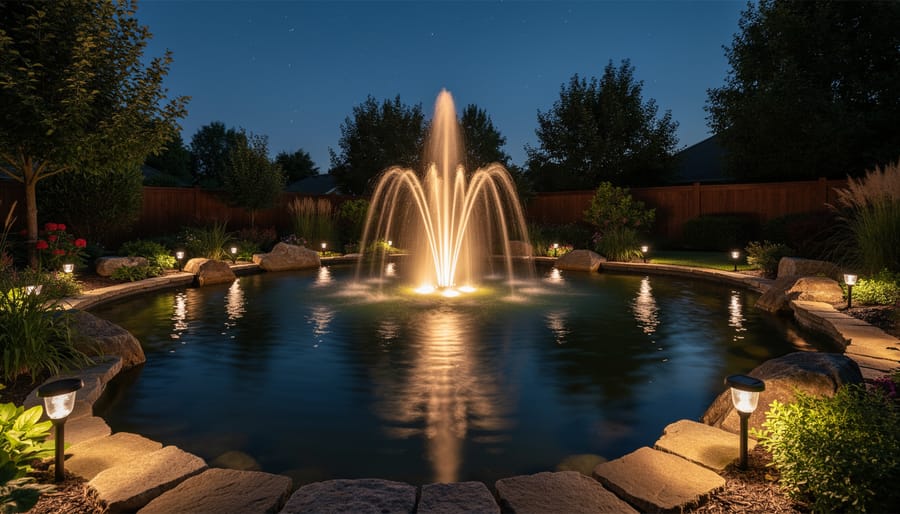
When you’re shopping for solar lighting to illuminate your pond, fountain, or waterfall, you’ll encounter voltage specifications that might seem confusing at first. The “volt” in volt solar lighting simply refers to the electrical potential, the force that pushes electricity through the system to power your lights. Most solar water feature lights operate on low-voltage systems, typically ranging from 1.2V to 12V, which is much safer than standard household current, especially around water.
Here’s how these systems work: during daylight hours, a solar panel collects sunlight and converts it into electricity, which charges a built-in battery. When darkness falls, the stored energy flows from the battery to LED bulbs positioned around or within your water feature. The entire process happens automatically through a light sensor, so you don’t need to flip switches or worry about timers.
The voltage you choose directly affects brightness and application. A 1.2V system produces gentle, ambient lighting that creates a soft glow around a small tabletop fountain. Step up to 3.7V, and you’ll get moderate brightness suitable for highlighting specific fountain features or illuminating a medium-sized pond perimeter. At 12V, you’re working with significantly brighter output that can spotlight dramatic waterfalls or provide functional visibility across larger water features.
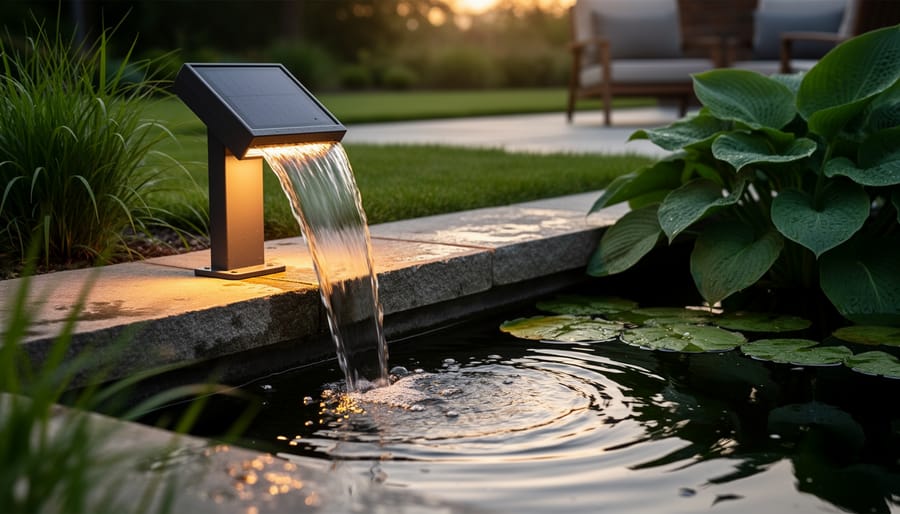
What makes this particularly relevant for water features is safety. These low-voltage solar systems pose minimal electrical hazard compared to traditional line-voltage lighting, making them ideal for wet environments where safety is paramount. The solar panel sits safely away from the water, connected by low-voltage wiring to lights positioned exactly where you need them.
Key Factors to Consider When Choosing Volt Solar Lighting
Voltage Requirements and Brightness Levels
Voltage directly determines how much power your solar lights can deliver, which translates to brightness around your water feature. Most solar water feature lights operate in three voltage ranges: 1.2V (ultra-low), 3.7V (low-volt standard), and 12V (higher output). Here’s what each does and when to use it.
1.2V lights produce gentle, ambient illumination, perfect for small tabletop fountains or birdbaths where you want subtle accent lighting. They typically emit 10-30 lumens per fixture, creating a soft glow rather than focused brightness. Think decorative mood lighting, not functional illumination.
3.7V systems hit the sweet spot for most residential water features. These lights deliver 50-200 lumens, enough to highlight medium-sized fountains, pond edges, or waterfall features after dark. They’ll make your water feature visible and attractive without overwhelming your garden’s nighttime atmosphere.
12V options bring serious brightness, 200-600 lumens or more, suitable for large ponds, commercial water displays, or situations where you want genuine security lighting that also showcases the feature. If your pond spans 500 square feet or you need to illuminate a multi-tier fountain from 20 feet away, this voltage range delivers.
For accent lighting that creates ambiance, aim for 50-100 lumens per fixture. Security applications where you want clear visibility need 200+ lumens. Match your voltage choice to these lumen targets, higher voltage gives you the brightness headroom larger installations demand.
Solar Panel Efficiency and Battery Capacity
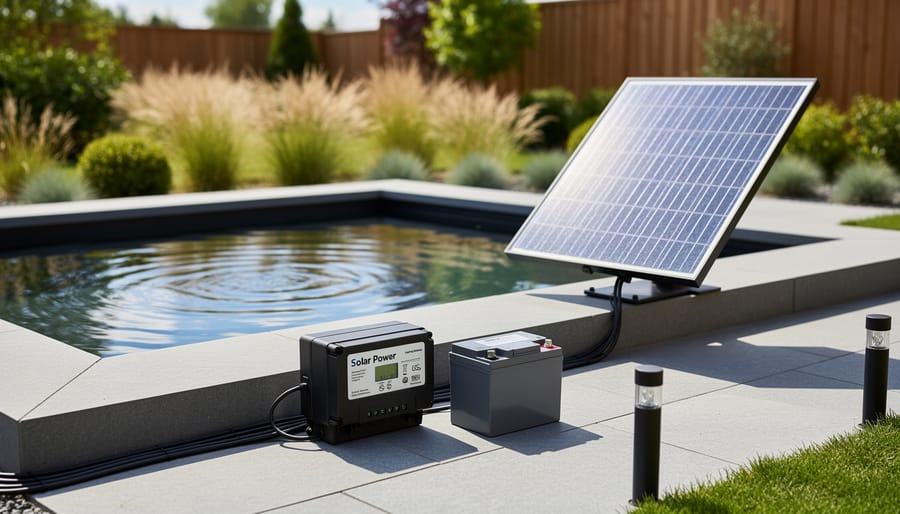
Solar panel efficiency directly impacts how quickly your water feature lights charge and how long they’ll shine after sunset. Panel wattage tells you how much solar energy converts to electrical power during daylight hours. For consistent all-night performance, look for panels rated at least 2-5 watts for small fountain setups, and 10-15 watts for larger pond installations.
Battery capacity, measured in amp-hours (Ah), determines your runtime. A 2000mAh battery stores enough energy to power typical LED water feature lights for 6-8 hours, while 3000-5000mAh batteries extend that to 10-12 hours. Match your battery capacity to your local sunset-to-sunrise duration, plus a buffer for cloudy days.
In 2026, monocrystalline solar panels remain the gold standard for water feature lighting. They convert sunlight more efficiently than polycrystalline panels (around 18-22% versus 15-17%), which means faster charging even in partial shade or overcast conditions. Yes, they cost slightly more, but the performance difference matters when your lights compete with trees or nearby structures for sun exposure.
Battery chemistry affects both longevity and cold-weather performance. Lithium-ion batteries outlast nickel-metal hydride (NiMH) options by two to three years and maintain voltage better in freezing temperatures. They’re lighter and hold charges longer between uses. NiMH batteries work fine for budget-conscious buyers in mild climates, but lithium-ion delivers superior reliability for year-round outdoor water feature illumination.
Choose systems that pair high-efficiency panels with adequate battery reserves. Your lights will perform consistently, even after shorter winter days.
Waterproof Ratings and Durability
When shopping for solar lights around your water feature, you’ll see codes like IP65, IP67, or IP68 on the packaging. The “IP” stands for Ingress Protection, and the two numbers tell you how well the fixture blocks out dust and water. The first digit rates dust protection (6 means completely sealed), while the second shows water resistance. IP65 handles water jets from any direction, making it suitable for lights placed near splashing fountains. IP67 can survive temporary submersion up to one meter deep for 30 minutes. IP68 offers the highest protection, these fixtures can stay underwater continuously, perfect for pond installations where lights need to work in water around the clock.
Beyond waterproofing, material quality determines longevity. Look for housings made from marine-grade stainless steel or high-impact ABS plastic with UV stabilizers. These materials resist corrosion from constant moisture exposure and won’t crack during temperature swings. Aluminum fixtures should have powder-coated or anodized finishes to prevent rust. Quality brands also seal electrical connections with silicone gaskets and use tempered glass lenses rather than cheap plastic that yellows over time.
Installation Flexibility and Placement Options
Installation flexibility directly impacts how well your volt solar lighting performs, regardless of your garden’s layout or sun exposure challenges. Understanding the mounting options helps you maximize both aesthetics and charging efficiency.
Stake-Mounted Lights offer the most versatility for perimeter placement around ponds and waterfalls. These fixtures push into soft ground or soil, allowing you to reposition them seasonally as trees leaf out or shadows shift. Most come with adjustable heads so you can aim light precisely where needed while angling the solar panel toward the sun, critical in partially shaded yards.
Floating Lights drift on water surfaces or tether to fountain elements, requiring no installation beyond placement. They work best in areas receiving at least six hours of direct sunlight since the panel floats with the fixture. Consider prevailing winds that might push them into shaded coves.
Submerged Fixtures typically mount with suction cups or weighted bases, ideal for underwater spotlighting. Since these stay stationary, verify the installation spot receives adequate overhead sun before committing.
Wall-Mounted Options attach to retaining walls, deck railings, or pergola posts near water features. These shine when you can position the separate solar panel on a sun-drenched surface while running the low-voltage wire to a shaded installation spot, separating collection from illumination gives you the best of both worlds.
Types of Volt Solar Lighting for Water Features Compared
Submersible Solar Spotlights
Submersible solar spotlights operate at low voltages between 1.2V and 3.7V, making them safe for underwater installation while delivering focused illumination that transforms fountain jets, statuary, and pond features into dramatic nighttime displays. These compact fixtures typically include separate solar panels connected by waterproof cables, allowing you to position the panel in full sun while placing lights beneath the water surface.
Look for models with IP68 waterproof ratings specifically designed for complete submersion. The best units feature adjustable heads that let you direct light beams precisely where you want them, upward through cascading water or angled toward decorative elements. Most submersible spotlights produce 50-200 lumens per fixture, sufficient for accent lighting but not overpowering.
Battery capacity matters significantly for all-night performance. Quality solar lights for fountains incorporate lithium-ion batteries rated for 3-8 hours of runtime after a full charge. Position them on stable surfaces rather than loose gravel to prevent shifting, and clean the lenses monthly to maintain brightness through algae buildup.
Solar Pond Lights and Floating Options
Floating solar lights bring magic to pond surfaces with drift-worthy designs that create shimmering reflections after dark. Most floating options operate at ultra-low voltages between 1.2V and 2.4V, making them inherently safe around water, even if they tip or take on moisture, there’s zero shock risk for people or pets.
These lights fall into two camps: free-floating globes that move with water currents, creating ever-changing light patterns, and anchored models that stay put using weighted bases or tethers. Free-floaters work beautifully in larger ponds where gentle movement adds visual interest, while anchored versions suit smaller features or spots where you want consistent illumination of specific pond plants or rock formations.
Battery capacity matters more than voltage here. Look for units with at least 600mAh lithium-ion batteries to ensure they glow through the night, cheaper models with smaller batteries often fade after just three to four hours. The best floating lights include removable solar panels that you can position on the pond edge for maximum sun exposure, since the light itself might drift into shade during charging hours.
Solar Accent and Landscape Lights
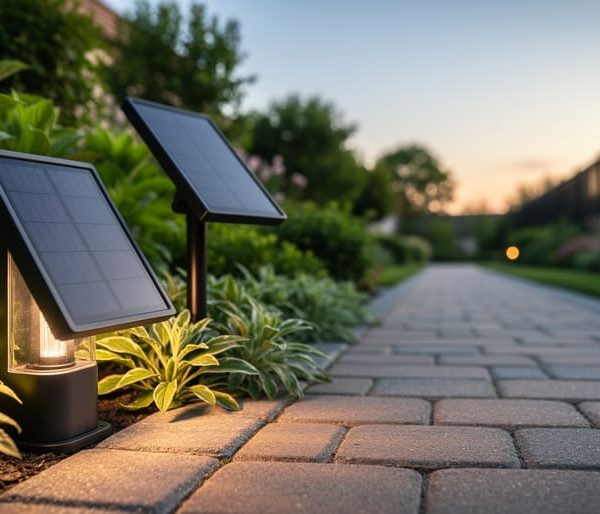
Solar accent and landscape lights in the 3.7-12V range create defined borders around your pond or fountain, extending the illumination beyond the water itself. These fixtures typically mount on ground stakes, letting you position them along pathways, among plantings, or behind decorative rocks to wash light across the scene. The higher voltage delivers brighter output than submersible options, making them ideal for guiding foot traffic safely while highlighting the water feature from multiple angles. Look for adjustable heads that let you aim beams precisely, upward to graze a waterfall wall, downward to mark a stepping-stone path, or across to silhouette ornamental grasses. Many homeowners combine solar path lights with in-water fixtures to layer brightness levels and create depth. Choose models with separate solar panels on extension cables if trees or overhangs shade the installation spot, ensuring the panel sits in full sun while lights nestle in shadowed garden zones.
Solar String and Decorative Lights
Solar string lights bring a magical, festive quality to water features that other lighting types can’t match. These low-voltage decorative options, typically running on 1.2V to 3.7V systems, drape along pond edges, wrap around pergola posts, or outline fountain perimeters to create enchanting evening atmospheres. The flexible installation possibilities make them perfect for homeowners who want to combine functional illumination with artistic expression.
Most solar string lights feature small LED bulbs spaced along weatherproof cables, powered by a separate solar panel that you position for maximum sun exposure. This arrangement lets you place lights in shaded areas around your water feature while keeping the panel in full sunlight. Consider warm white LEDs for classic elegance or color-changing options to match seasonal themes or special occasions.
Creative installations include stringing lights through nearby trees to create overhead canopy effects, outlining deck railings that surround your pond, or creating curtain-style backdrops behind waterfalls. Many systems offer 20 to 50 individual bulbs on 15 to 30-foot cables, giving you substantial coverage. When planning your design, explore various garden lighting ideas that complement your water feature’s style, from vintage Edison bulbs for rustic settings to delicate fairy lights for cottage gardens. These decorative accents work beautifully alongside your primary volt solar spotlights to build layered, dimensional lighting designs.
Top Recommendations for Different Water Feature Setups
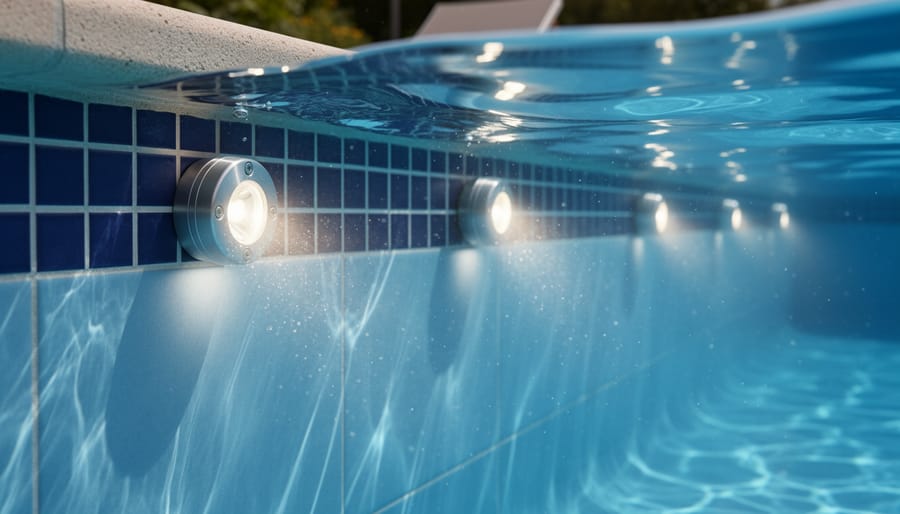
Choosing the right volt solar lighting becomes straightforward once you match your water feature’s characteristics to the appropriate voltage range and fixture types. Here’s what works best for different setups in 2026.
For small fountains and birdbaths (under 3 feet diameter), low-voltage 1.2V to 3.7V systems deliver the perfect accent lighting without overwhelming the space. A single submersible spotlight with a 3.7V battery creates a gentle upward glow that highlights water movement. Pair it with two or three stake-mounted 1.2V accent lights around the perimeter for a complete look. These compact setups typically need just 2-3 watts of solar panel capacity, making them ideal for partially shaded patios where larger panels won’t fit.
Medium-sized ponds (100-500 gallons) benefit from a mixed approach using 3.7V submersibles combined with 12V landscape lighting. Position two submersible spotlights underwater near plants or rocks to create focal points, then ring the pond with four to six 12V path lights spaced 3-4 feet apart. This voltage combination gives you brighter perimeter illumination while maintaining softer underwater accents. Look for systems with 10-15 watt solar panels and lithium-ion batteries rated for at least 8-hour runtime.
Large waterfalls and multi-tiered features need the punch of 12V systems throughout. Place submersible 12V spotlights at the base to illuminate falling water from below, creating a dramatic cascade effect. Add 12V directional spotlights on stakes at ground level, aimed upward to highlight the water’s movement from multiple angles. These installations work best with separate solar panels (15-20 watts each) positioned in full sun, connected via extension cables to lights in shaded areas.
- Small fountains (under 3 feet): 1.2-3.7V submersible spotlight plus 1.2V accent stakes
- Medium ponds (100-500 gallons): 3.7V submersibles paired with 12V perimeter path lights
- Large waterfalls: 12V spotlights throughout, with 15-20 watt solar panels in optimal sun exposure
- Formal water gardens: 3.7V floating lights with 12V decorative string lights, coordinated color temperature
Formal water gardens with structured layouts call for coordinated color temperatures rather than mixed voltages. Stick with 3.7V floating lights that create symmetrical patterns on the water surface, complemented by warm white 12V decorative string lights along architectural elements like pergolas or walls. This creates visual harmony that enhances the garden’s intentional design.
Your climate matters too. Homeowners in northern regions should prioritize larger battery capacity (6000mAh minimum) within their chosen voltage range to compensate for shorter winter days. Southern gardeners can opt for smaller batteries but should choose fixtures with higher IP ratings (IP68) to handle intense summer storms.
Common Mistakes to Avoid When Buying Volt Solar Lighting
Buying the wrong volt solar lighting for your water feature wastes money and creates frustration when the lights fail to deliver. Here are the most common pitfalls and how to sidestep them.
Choosing Insufficient Voltage for Your Brightness Goals
Many homeowners grab the cheapest low-voltage option without considering their lighting objectives. A 1.2V system might work for subtle accent lighting around a small birdbath, but it won’t provide the dramatic illumination a large pond fountain demands. Match your voltage selection to your vision, if you want neighbors to notice your water feature after dark, you need higher voltage and more lumens. Don’t assume all solar lights deliver the same performance just because they look similar in product photos.
Ignoring Solar Panel Placement Limitations
Your gorgeous water feature might sit in a shaded courtyard that receives only two hours of direct sun. No amount of wishful thinking will make a solar panel charge properly in those conditions. Before buying, honestly assess your sun exposure throughout the day and across seasons. If your installation site stays shaded, either choose a system with a separate panel on a long cable you can position in sunlight, or accept that smart solar lamps might not work well in that location. Some buyers learn this lesson only after their lights dim after 90 minutes each evening.
Underestimating Battery Capacity for All-Night Performance
A common complaint goes like this: “My lights look great for three hours, then they’re dead by midnight.” That’s a battery capacity problem. If you want illumination until dawn, look for systems with battery capacities of at least 2000mAh for small setups and 3000mAh or higher for larger installations. Cheaper units often skimp on battery size to hit lower price points.
Overlooking Seasonal Sunlight Variations
Your solar lights might perform beautifully in June and disappoint you completely in December. Shorter days and lower sun angles mean less charging time during winter months. Factor in your location’s seasonal patterns when setting expectations, and consider systems with larger panels that can capture more light during those challenging months.
Step-by-Step Installation Tutorial for Volt Solar Water Feature Lighting
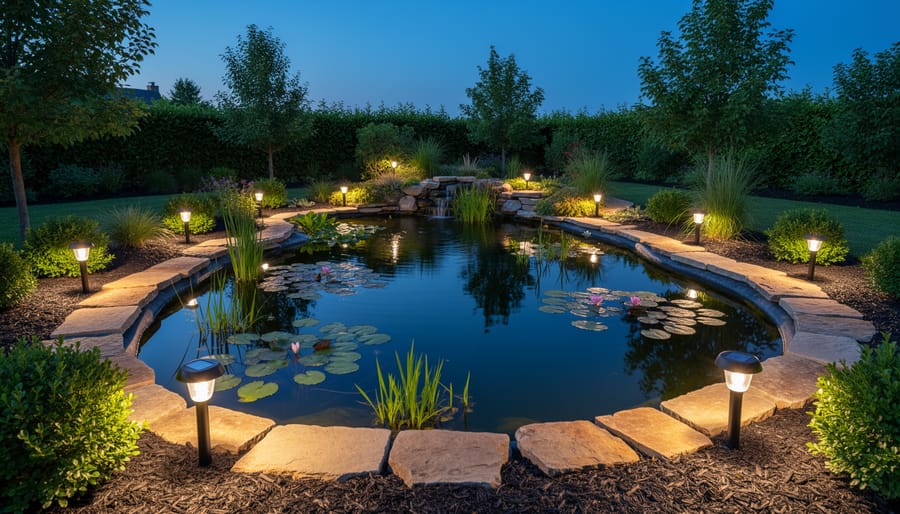
Installing volt solar lighting around your water feature is a straightforward weekend project that requires no electrical expertise. Follow this proven process to achieve professional results while ensuring safe, reliable operation.
Pre-Installation Planning (30 Minutes)
Walk around your water feature at different times of day to identify areas with at least six hours of direct sunlight for solar panel placement. Mark spots where you want lighting effects, underwater focal points, waterfall accents, or perimeter highlights. Measure distances between solar panels and lights to ensure included cables reach comfortably. Check that all fixtures have appropriate IP ratings for their intended locations (IP68 for submersible, IP65 minimum for perimeter).
Safety First
Turn off any existing electrical systems near the work area. Keep solar panels covered or facing down during setup to prevent premature activation. If installing submersible lights, temporarily lower water levels by two to three inches for easier access. Wear waterproof gloves when handling fixtures that will be submerged.
Solar Panel Positioning
Mount panels facing true south (in the Northern Hemisphere) at a 30-45 degree angle for optimal charging. Avoid placing panels under tree canopies or near structures that cast afternoon shadows. Use the included stakes for ground mounting or brackets for wall installation. Tighten all connections firmly but don’t overtighten plastic housings, hand-tight plus a quarter turn is sufficient.
Light Fixture Installation
For submersible spotlights, place them on stable surfaces like flat rocks rather than muddy pond bottoms. Angle lights upward at 30-60 degrees to highlight fountain sprays or cascading water. Stake perimeter lights 18-24 inches from the water’s edge, spacing them evenly for balanced illumination. Thread cables carefully around landscape features, securing them with UV-resistant clips every 12 inches to prevent tripping hazards.
System Activation and Testing
Connect all cables to their corresponding ports, listening for the click that confirms proper seating. Remove solar panel coverings and verify indicator lights show charging status. Wait until dusk to observe light output and make positioning adjustments. Most systems include brightness modes, test each setting to find your preferred ambiance level.
Ongoing Maintenance
Clean solar panels monthly with a soft cloth and water to maintain charging efficiency. Remove debris from light fixtures every two weeks, especially after storms. Before winter, check battery compartments for corrosion and apply dielectric grease to connections. Store removable components indoors in freezing climates or choose systems rated for year-round outdoor use.
Most installations complete in two to three hours, transforming your water feature into an enchanting nighttime destination.
Frequently Asked Questions
How long will volt solar lighting run each night around my water feature?
Most quality solar water feature lights provide 6-10 hours of illumination on a full charge, though this depends on battery capacity and solar panel exposure. A 3.7V system with a 2000mAh battery typically delivers 8 hours, while smaller 1.2V units may run 4-6 hours.
What IP rating do I need for lights near or in water?
Choose IP67 or IP68 for submerged lights, which prevents water ingress even when fully immersed. For lights positioned near but not in water, IP65 offers adequate protection against splashes and rain.
Will my solar lights work during winter months?
Solar lights function in winter but expect shorter runtimes due to reduced daylight hours and weaker sun angles. Position panels to capture maximum southern exposure, and consider systems with larger battery capacity (3000mAh or higher) to compensate for limited charging time.
How often should I replace the batteries in volt solar lighting?
Lithium-ion batteries typically last 2-3 years with regular use, while NiMH batteries may need replacement after 1-2 years. Performance degradation like dimming lights or reduced runtime signals it’s time for new batteries.
Beyond these core concerns, homeowners often wonder whether solar lights work with existing electrical water features. The answer is yes, and installation is actually simpler since solar systems operate independently without requiring connections to your fountain’s power supply or outdoor electrical circuits.
If your lights seem dim after installation, check three things first. Clean the solar panel surface with a damp cloth, as dust and pollen reduce charging efficiency by up to 30 percent. Verify the panel receives at least six hours of direct sunlight, not filtered through tree canopy or facing north. Finally, inspect battery contacts for corrosion, which creates resistance and limits power delivery to the LEDs.
Some shoppers ask whether higher voltage automatically means better performance. Not necessarily. A well-designed 3.7V system with efficient LEDs and quality optics often outperforms a poorly made 12V fixture. Focus on the complete package: voltage appropriate for your feature size, adequate battery capacity, high-grade solar cells, and proper waterproof ratings.
Can you mix different voltage systems around one water feature? You can, though keeping everything consistent simplifies battery replacement and troubleshooting. Mixing 1.2V floating lights with 12V perimeter spotlights works fine functionally since each operates independently on its own solar panel and battery.
Choosing the right volt solar lighting for your water feature comes down to matching your specific setup with the appropriate voltage, brightness, and durability requirements. Start by evaluating your water feature’s size and the atmosphere you want to create. A small fountain needs different lighting power than a sprawling koi pond, and your voltage choice should reflect that reality.
Remember the framework we’ve covered: assess your voltage needs based on desired brightness, verify waterproof ratings for your installation type, consider solar panel efficiency for your location’s sunlight conditions, and select lighting styles that complement your landscape design. These factors work together to ensure your investment delivers reliable performance year after year.
The beauty of volt solar lighting extends beyond the visual transformation it brings to your outdoor space. You’re creating stunning nighttime focal points while eliminating ongoing electricity costs and reducing your environmental footprint. Every evening, as your solar-powered lights automatically illuminate your fountain or pond, you’re harnessing clean energy that costs nothing to operate.
Sarah from Portland shared her experience: “I installed 3.7V solar spotlights around my backyard waterfall last spring, and the difference is incredible. The lights turn on automatically at dusk, creating this magical glow that makes our patio feel like a resort. My electric bill hasn’t budged, and I love knowing we’re using renewable energy. It was easier to set up than I expected, and guests always ask about the lighting.”
You’re not just upgrading your water feature, you’re joining a growing movement of homeowners who choose sustainable solutions for beautiful outdoor spaces. The solar technology available in 2026 makes it easier than ever to achieve professional-quality results with straightforward DIY installation. Your water feature is waiting for its transformation, and the sun provides all the power you need to make it happen.