What Is Solar Energy Harvesting (and How Does It Power Your Smart Lighting)?
Solar energy harvesting is the process of capturing sunlight and converting it into usable electrical power through photovoltaic technology, stored in batteries for on-demand use. This elegant cycle powers everything from garden path lights to commercial parking lot illumination without pulling a single watt from the grid.
The appeal goes beyond cutting your electricity bill to zero. As solar panel efficiency climbs past 22% in 2026 and battery technology extends reliable operation through multiple cloudy days, homeowners and property managers are discovering that solar lighting systems now deliver performance that rivals traditional wired installations. You’re not sacrificing brightness or reliability anymore.
What makes solar harvesting particularly exciting for outdoor lighting is its plug-and-play simplicity. No trenching for electrical lines. No permits for low-voltage wiring in most jurisdictions. No ongoing energy costs eating into your budget month after month. The sun does the work while you enjoy well-lit pathways, security lighting that activates at dusk, and landscape features that shine without guilt.
This article walks you through exactly how solar energy harvesting works, from the physics of photovoltaic cells to the smart charge controllers that maximize every ray of sunlight. You’ll learn which system types match different applications, what components matter most for longevity, and how to install your first solar lighting setup this weekend. Whether you’re lighting a small residential walkway or managing dozens of commercial fixtures, understanding the harvesting process helps you make smarter choices and get better results from your investment.
What Solar Energy Harvesting Means for Your Home
Solar energy harvesting is the process of capturing sunlight and transforming it into usable electricity that powers your lights without drawing from the grid. When photons in PV cells strike the semiconductor material in a solar panel, they knock electrons loose, creating an electrical current that flows through your lighting system. Think of it like nature’s battery charger, working silently on your roof or in your yard while the sun shines.
For homeowners, this technology means real independence from rising electricity costs and power outages. Your outdoor security lights, garden path illumination, and landscape features can operate entirely on captured sunshine, stored in batteries for use after dark. The electricity generated during the day gets banked for nighttime use, so your lights work reliably even when the sun goes down.
- Photovoltaic effect
- The physical process where light energy creates an electrical voltage in certain materials, forming the foundation of how solar panels generate power.
- Solar cells
- Individual semiconductor units that convert sunlight directly into electricity through the photovoltaic effect.
- Energy conversion efficiency
- The percentage of sunlight that gets successfully transformed into usable electrical power, typically ranging from 15% to 22% in residential solar panels.
- Power storage
- Battery systems that hold harvested solar energy for use during nighttime hours or cloudy periods when panels aren’t actively generating electricity.
The beauty of this solar light system revolution is its simplicity. You’re not just reducing your carbon footprint or lowering your electric bill, you’re creating a self-sustaining lighting ecosystem that works harder as technology improves. What once required expensive installations now comes in plug-and-play options that any homeowner can set up in an afternoon.
How Solar Energy Harvesting Works in Smart Lighting Systems
The Role of Photovoltaic Panels
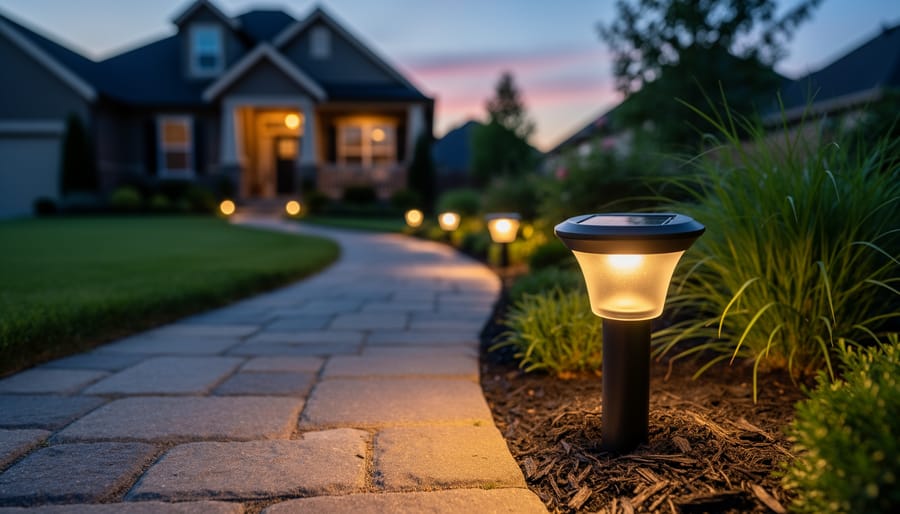
Photovoltaic panels designed for lighting systems are engineered differently than standard rooftop solar arrays. These specialized panels use monocrystalline or polycrystalline silicon cells optimized for the lower wattage needs of LED fixtures, typically ranging from 5 to 100 watts depending on the application. Throughout the day, these panels track the sun’s movement across the sky, not physically, but through their cell arrangement, to maximize energy capture from dawn to dusk.
What sets modern lighting panels apart is their improved low-light performance. Thanks to recent solar panel breakthroughs today’s panels can generate usable power even under overcast skies, producing 10-25% of their rated capacity on cloudy days. While they won’t match sunny-day output, this capability extends their practical use to regions with variable weather patterns.
For shade-drenched spaces performance drops significantly, a fully shaded panel produces minimal power. However, partial shade affects modern panels less dramatically than older models. Bypass diodes in quality panels prevent one shaded cell from shutting down the entire panel, allowing unshaded portions to continue generating electricity.
Smart Controllers and Energy Management
Smart controllers act as the brain of your solar lighting system, constantly making decisions to stretch every watt of harvested energy. These devices monitor battery levels in real time and adjust light output accordingly, if storage is running low after several cloudy days, the controller automatically dims fixtures or delays activation until motion is detected.
Motion sensors eliminate wasted illumination by triggering full brightness only when someone approaches, then returning to a lower standby mode. A typical pathway light might glow at 20% brightness all evening but jump to 100% when it detects movement, preserving 60-80% of battery charge compared to constant full output.
Time-based programming adds another layer of efficiency. You can schedule brighter lighting during peak evening hours (say 7-11 PM) when family activity is highest, then dial down intensity after midnight when security needs remain but foot traffic drops.
The most sophisticated controllers learn seasonal patterns, recognizing that December’s shorter days require more conservative energy budgets than July’s abundant sunshine. This adaptive intelligence means your lights perform reliably year-round without manual adjustment, automatically balancing brightness with available power to prevent those frustrating mid-night shutoffs.
Components That Make Energy Harvesting Possible
A complete solar energy harvesting lighting system relies on six core components working together. Each piece serves a specific function in capturing, storing, managing, and delivering solar power to your lights. Understanding these components helps you make informed decisions when selecting or upgrading your system.
At the foundation sits the photovoltaic (PV) modulethe solar panel itself. Unlike rooftop panels designed for whole-home power, lighting-specific PV modules are typically smaller and optimized for the modest energy demands of LED fixtures. Modern polycrystalline or monocrystalline panels convert 15 to 22 percent of sunlight into electricity, with higher-efficiency options justifying their cost in areas with limited sun exposure or space constraints.
Battery storage acts as your system’s reservoir, capturing daytime solar production for nighttime use. Lithium iron phosphate (LiFePO4) batteries have largely replaced older lead-acid options in quality systems because they deliver 3,000 to 5,000 charge cycles compared to 500 to 1,000 cycles, tolerate deeper discharge without damage, and maintain performance across wider temperature ranges. Proper battery sizing ensures your lights operate through multiple cloudy days without grid backup.
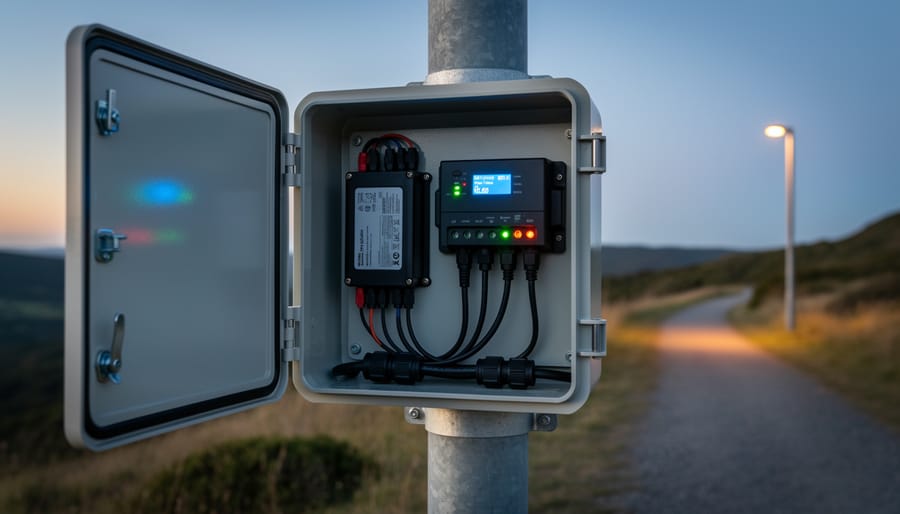
The charge controller serves as the system’s traffic cop, regulating power flow from panels to batteries and preventing overcharge damage. Maximum Power Point Tracking (MPPT) controllers extract 20 to 30 percent more energy from your panels compared to simpler PWM controllers by continuously adjusting voltage and current to match optimal operating conditions. This efficiency gain matters most during marginal light conditions, early morning, late afternoon, or overcast weather.
Here are the essential components that make solar harvesting lighting work:
- Solar panels that convert sunlight into direct current electricity
- Lithium-ion or LiFePO4 batteries that store energy for nighttime operation
- MPPT charge controllers that optimize panel output and protect batteries
- Dusk-to-dawn sensors that automatically activate lights at sunset
- Motion detectors that trigger full brightness only when needed
- LED drivers that regulate current to ensure consistent light output
- Weatherproof enclosures that protect electronics from moisture and temperature extremes
LED fixtures themselves represent a critical component, not just a light source. Quality LEDs convert 80 to 90 percent of electricity into visible light rather than heat, requiring dramatically less power than incandescent or halogen alternatives. This efficiency means smaller, less expensive solar panels and batteries can power brighter illumination.
Sensors and controllers add intelligence to your system. Photoresistors detect ambient light levels to switch fixtures on at dusk and off at dawn without manual intervention. Motion sensors conserve battery power by running lights at 20 to 30 percent brightness until movement triggers full output. Advanced systems integrate with smart light security features and mobile apps for scheduling, brightness adjustment, and performance monitoring.
Finally, inverters convert DC battery power to AC when needed, though most modern solar lighting systems eliminate this component entirely by running LEDs directly on DC power. This simplification reduces cost, eliminates conversion losses, and improves reliability by removing an additional failure point.
Different Types of Solar Energy Harvesting for Lighting
Standalone Off-Grid Systems
Self-contained solar lighting units pack everything needed into one fixture, panel, battery, LED, and controller all work together without any connection to your home’s wiring. You mount them where sunlight hits during the day, and they automatically illuminate at dusk using stored energy.
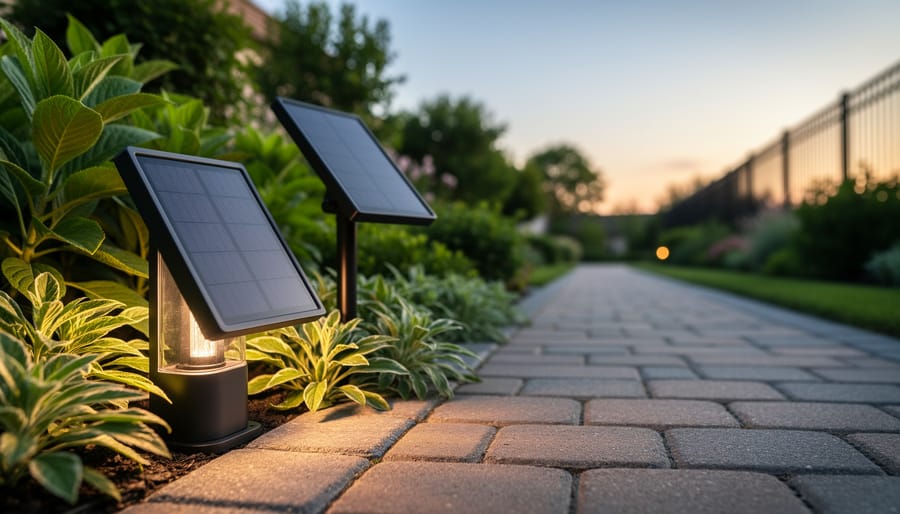
These systems shine in applications where running electrical wire is impractical or expensive: garden paths winding through landscaping, driveway markers, shed lighting, or remote mailbox illumination. Each unit operates independently, so if one fixture fails, the rest keep working. Installation takes minutes rather than hours, no trenching, no permits, no electrician fees.
The trade-off is location flexibility. You can’t just place them anywhere; each fixture needs direct sunlight for several hours daily to charge properly. Shaded spots under tree canopies or north-facing walls won’t get enough sun to power lights reliably through the night.
Grid-Tied Solar Lighting with Battery Backup
Grid-tied systems with battery backup give you the best of both worlds: clean solar power when the sun shines, with the grid as your safety net. Your lights draw from the solar-harvested energy stored in batteries first, which slashes your electricity bill while keeping everything running even during cloudy stretches. When the batteries run low, the system automatically switches to grid power, you’ll never notice the transition, but your outdoor security lights stay on.
This setup makes particular sense for larger installations like driveway lighting or patio systems where reliability matters. You’re not completely off-grid, so winter months or extended rainy periods won’t leave you in the dark. The charge controller manages everything: it prioritizes solar charging during the day, prevents battery overcharging, and seamlessly transitions to grid power only when needed. Most homeowners see 60-80% of their lighting energy come from the sun, with the grid covering the rest.
Hybrid Solar-Electric Systems
These intelligent systems offer the best of both worlds by automatically drawing from solar power when available and seamlessly switching to grid electricity when needed. A smart controller monitors battery charge levels and energy demand in real-time, prioritizing stored solar energy first, only tapping into grid power when batteries run low or during extended cloudy periods.
You can program these systems to match your priorities. Set them to maximize solar usage and minimize grid dependence, or configure conservative settings that preserve battery life by switching to grid power earlier. Some advanced models even monitor weather forecasts and adjust charging patterns accordingly.
The hybrid approach eliminates the anxiety of going completely off-grid while still delivering substantial electricity savings, typically 60-80% reduction in lighting costs for well-sized systems. Installation requires both solar components and grid connection, making professional setup advisable, but the flexibility and reliability make hybrid systems particularly attractive for security lighting and commercial applications where consistent illumination is non-negotiable.
Where and How Solar Harvesting Lighting Is Used
Solar energy harvesting has moved far beyond experimental projects, in 2026, these systems are lighting homes, businesses, and public spaces around the world. Homeowners rely on solar harvesting for outdoor security lighting that activates automatically when motion is detected, eliminating dark corners around the property without adding to the electric bill. Landscape lighting powered by harvested solar energy highlights garden features, trees, and architectural elements through the evening hours, while pathway lights guide visitors safely without trenching for electrical wires.
Common applications where solar energy harvesting delivers both practical and financial benefits include:
- Outdoor security lighting with motion sensors that deter intruders and improve visibility
- Garden and pathway illumination for safe navigation and aesthetic appeal
- Driveway and gate lights that welcome arrivals and mark property boundaries
- Patio and deck lighting for extended outdoor living after sunset
- Shed and garage lighting in structures far from the main electrical panel
- Parking area illumination for businesses reducing operational costs
- Signage lighting that maintains visibility 24/7 without utility expenses
- Emergency backup lighting that functions during power outages
Commercial properties see compelling returns on solar lighting investments. Parking lots equipped with solar-powered LED fixtures eliminate underground wiring costs during installation and drastically reduce ongoing electricity expenses, a typical commercial parking lot can save thousands annually while demonstrating environmental commitment to customers. Municipal projects increasingly choose solar street lighting for roads, parks, and transit stops, reducing taxpayer burden and improving energy resilience.
These smart ways to illuminate outdoor spaces deliver dual benefits: immediate cost savings through eliminated or reduced electricity consumption, and long-term environmental impact through decreased carbon emissions. A residential driveway lighting system typically pays for itself within three to five years, then provides free illumination for the remaining 20-plus year lifespan of the panels.
Installing Your Own Solar Energy Harvesting System
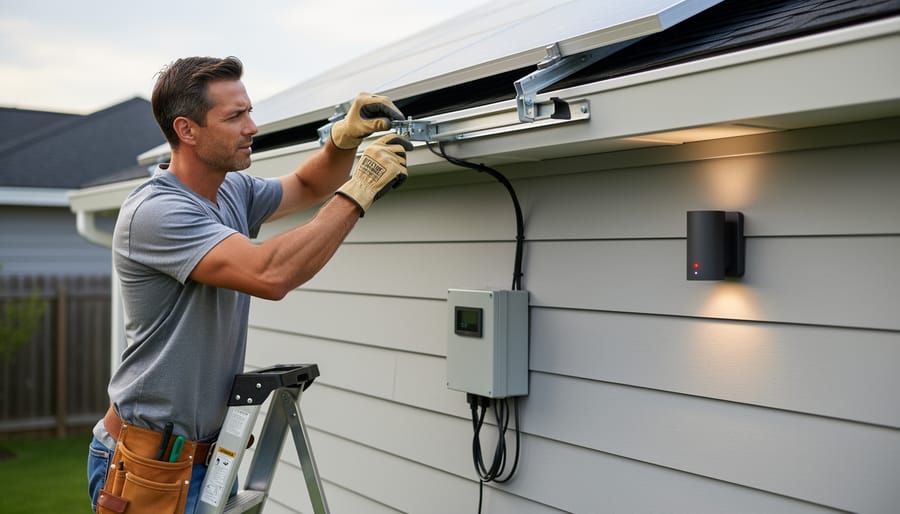
Installing a solar energy harvesting system for your outdoor lighting doesn’t require an engineering degree, but thoughtful planning makes the difference between a system that performs reliably and one that disappoints. The good news: most homeowners can successfully install standalone solar pathway lights or landscape fixtures themselves, while more complex grid-tied systems typically benefit from professional installation.
Start with a thorough site assessment. Walk your property at different times of day, noting which areas receive direct sunlight for at least six hours daily, preferably more. Check for obstructions that cast shadows: trees, buildings, roof overhangs, or structures that might block sun during peak hours. Even partial shading significantly reduces panel efficiency, so prioritize locations with unobstructed southern exposure if you’re in the northern hemisphere (or northern exposure in the southern hemisphere).
Battery sizing matters more than many first-timers realize. Calculate your lighting load, total wattage multiplied by hours of operation per night, then size your battery bank to provide three to five days of autonomy. This buffer ensures your lights continue functioning through several cloudy days without draining batteries to damaging levels. A pathway light drawing 5 watts for eight hours nightly needs 40 watt-hours per night, so a battery providing 120-200 watt-hours offers that three-to-five-day cushion.
Panel placement requires attention to angle and orientation. In the northern hemisphere, panels should face true south (not magnetic south, check with a compass app that accounts for declination). Tilt angle should roughly match your latitude: if you’re at 40 degrees north, a 40-degree tilt optimizes year-round performance, though 30-45 degrees works well for most locations. For standalone lights with integrated panels, simply ensure nothing blocks their view of the southern sky.
Start with straightforward installations. Standalone solar pathway lights or landscape spotlights require minimal tools, usually just a stake and a level. Position them where they’ll light your path while their panels catch maximum sun. Run them for a week, observing how long they stay bright each night. If performance falls short, relocate to sunnier spots before investing in larger systems.
Sarah Martinez from Austin, Texas shares her experience: “I installed six solar pathway lights along our front walkway last spring with zero electrical knowledge. Took about an hour total, and they’ve worked flawlessly through summer and winter. The hardest part was resisting the urge to place them where I wanted light instead of where they’d get the best sun, learning that distinction made all the difference.”
For more complex installations, grid-tied systems, integrated house lighting, or commercial applications, consult a licensed electrician or solar installer. These systems involve electrical codes, proper grounding, and integration with existing circuits that demand professional expertise and permitting.
Common Questions About Solar Energy Harvesting
People considering solar energy harvesting for their smart lighting systems naturally have questions about reliability, longevity, and real-world performance. Here are clear answers to the most common concerns homeowners raise.
Does solar lighting work during winter or in cloudy climates?
Yes, solar lights continue harvesting energy in winter and cloudy conditions, though at reduced capacity, typically 10-25% of peak performance on overcast days. Quality systems with properly sized battery storage compensate by storing excess energy from sunny periods, and smart controllers adjust brightness to extend runtime when stored power is limited.
How long do solar lighting batteries last?
Most lithium-ion batteries in solar lighting systems last 5-7 years before replacement, while lead-acid batteries typically need replacement every 3-4 years. Battery longevity depends heavily on depth of discharge, temperature extremes, and charge cycle management, factors that quality charge controllers help optimize.
What maintenance does a solar lighting system require?
Maintenance is minimal: clean solar panels every 2-3 months to remove dust and debris, inspect connections annually, and replace batteries when they no longer hold adequate charge. Most homeowners spend less than an hour per year on maintenance.
How much can solar harvesting reduce my electricity costs?
Standalone solar lights eliminate electricity costs for outdoor lighting entirely, while grid-tied systems typically reduce outdoor lighting expenses by 70-90% depending on sun exposure and usage patterns. The average homeowner recoups installation costs within 3-5 years through eliminated electricity bills.
Performance during extended cloudy periods deserves special attention. Most well-designed systems include battery capacity for 3-5 days of operation without sunlight, and intelligent controllers automatically dim lights or reduce operating hours to preserve power during prolonged overcast stretches. In practice, even climates with frequent cloud cover receive enough periodic sunlight for solar lighting to function reliably year-round.
The expandability question matters if you’re starting small. Nearly all solar lighting systems allow gradual expansion, you can add individual lights to standalone systems or additional panels and fixtures to grid-tied setups without replacing existing components. This flexibility lets you test the technology with a few pathway lights before investing in comprehensive outdoor illumination.
Solar energy harvesting represents more than just a smart choice for outdoor lighting, it’s your gateway to energy independence and meaningful environmental impact. The technology has matured dramatically, making 2026 an ideal time to embrace systems that pay for themselves while reducing your carbon footprint.
You don’t need to overhaul your entire property overnight. Start with a couple of pathway lights or a motion-sensor security fixture. Experience firsthand how reliable these systems have become, how little maintenance they require, and how satisfying it feels to power your home with free sunlight. Watch your electricity bill drop even slightly, and you’ll understand why homeowners across the country are expanding their solar harvesting installations year after year.
The barriers that once held people back, high costs, complicated installation, uncertain performance, have largely disappeared. Today’s solar lighting systems work in varied climates, store energy efficiently, and install with basic tools in an afternoon.
Every solar light you install represents one small step toward a more sustainable future and one giant leap in personal energy freedom. The sun rises tomorrow regardless. The only question is whether you’ll be ready to capture it.