How Israel’s Solar-Powered Desalination Plants Are Revolutionizing Water Access
Israel’s groundbreaking desalination technology has transformed a water-scarce nation into a global leader in sustainable water production, providing over 70% of its domestic water needs through advanced seawater purification. By pioneering reverse osmosis systems powered by solar energy, Israel has cut desalination costs by nearly 50% while reducing environmental impact.
From the sprawling Sorek desalination plant—the world’s largest of its kind—to innovative membrane technology that’s revolutionizing water filtration, Israeli engineers have created solutions that countries worldwide are now adopting. These achievements haven’t just solved Israel’s water crisis; they’ve created a $2 billion industry that’s making clean water accessible to millions globally.
As climate change intensifies water scarcity worldwide, Israel’s desalination expertise offers a promising blueprint for sustainable water management. The technology combines cutting-edge efficiency with environmental consciousness, producing drinking water at just 50 cents per cubic meter while minimizing energy consumption and marine ecosystem impact.
Israel’s Breakthrough in Solar Desalination
The Solar-Powered Revolution
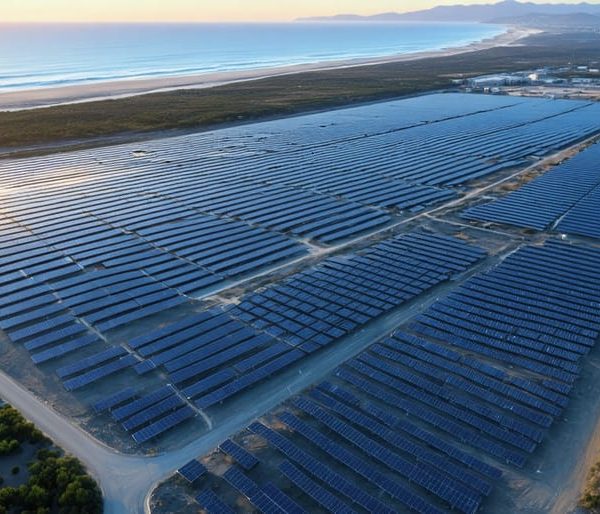
Israel’s cutting-edge solar power innovations have revolutionized the desalination industry by harnessing abundant sunlight to power massive water treatment facilities. The Sorek desalination plant, Israel’s largest facility, utilizes vast solar panel arrays that generate clean electricity to drive the reverse osmosis process. This sustainable approach has reduced operational costs by up to 40% while eliminating the environmental impact of traditional power sources.
The integration of smart energy management systems allows these plants to optimize power consumption during peak sunlight hours, storing excess energy in advanced battery systems for continuous operation. This breakthrough has made water desalination more accessible and environmentally friendly, serving as a model for other water-stressed regions worldwide.
By combining solar technology with efficient desalination processes, Israel has created a sustainable solution that produces fresh water while maintaining a minimal carbon footprint.
Cost-Effective Innovation
Israel’s innovative approach to combining solar power with desalination has revolutionized the economics of water purification. By integrating solar panels into desalination facilities, operational costs have dropped by up to 40% compared to traditional energy-powered plants. This cost reduction makes clean water production more accessible and sustainable.
The Sorek desalination plant, one of Israel’s largest facilities, showcases this smart integration by using solar arrays to power its operations during peak sunlight hours. This setup not only reduces electricity costs but also minimizes the facility’s carbon footprint. The plant now produces each cubic meter of clean water at nearly half the cost of conventional desalination methods.
Smart energy management systems further optimize the process by automatically switching between solar and grid power based on availability and demand. This hybrid approach ensures consistent operation while maximizing cost savings. The success of these solar-integrated facilities has inspired similar projects worldwide, proving that environmental responsibility and economic efficiency can go hand in hand.
Key Technologies Behind Solar Desalination
Reverse Osmosis Integration
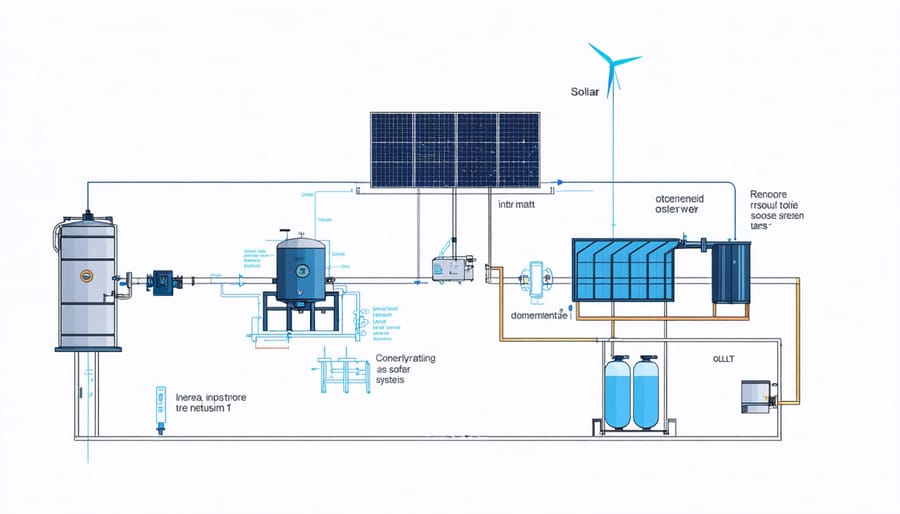
Israel’s innovative approach to desalination combines advanced reverse osmosis technology with cutting-edge renewable energy systems to create a sustainable water purification solution. The process begins when seawater enters the facility and passes through a series of specialized membranes, which filter out salt and impurities at the molecular level.
Solar power plays a crucial role in this integration by providing the substantial energy needed to push water through these membranes at high pressure. Modern Israeli facilities use smart energy management systems that automatically adjust power consumption based on solar availability, optimizing the entire process throughout the day.
What makes this combination particularly effective is the natural alignment between peak solar production hours and maximum water demand. During sunny afternoons, when water consumption typically reaches its highest levels, solar panels are operating at maximum efficiency, providing the necessary power for the reverse osmosis process.
The system’s modularity allows for easy scaling, making it suitable for both small community installations and large municipal facilities. Advanced monitoring technology ensures optimal performance by continuously adjusting pressure levels and flow rates based on real-time solar power availability, resulting in maximum efficiency and reduced operational costs.

Energy Recovery Systems
One of the most impressive features of Israeli desalination technology is its innovative energy recovery systems, which help make the process significantly more efficient and cost-effective. These systems capture and reuse energy that would otherwise be wasted during the desalination process, reducing overall power consumption by up to 60%.
The heart of these energy-saving solutions is the Pressure Exchanger Device (PED), which transfers pressure from the waste brine stream to incoming seawater. Think of it like a recycling system for pressure – instead of letting all that energy go to waste, it’s captured and put right back to work. This simple but ingenious approach has revolutionized how desalination plants operate worldwide.
Israeli engineers have also pioneered advanced energy recovery turbines that convert hydraulic energy from the concentrated brine stream into mechanical energy, which then powers other parts of the plant. Combined with smart monitoring systems that optimize operation timing and pressure levels, these innovations have helped bring down the energy cost of producing fresh water to record-low levels.
What makes these systems particularly impressive is their reliability and low maintenance requirements. Many facilities report that their energy recovery devices continue working efficiently for years with minimal upkeep, making them a practical solution for both large-scale plants and smaller operations.
Real-World Success Stories
Sorek Desalination Plant
Located on Israel’s Mediterranean coast, the Sorek Desalination Plant stands as a testament to innovation in sustainable water treatment. As the world’s largest solar-assisted desalination facility, it produces 627,000 cubic meters of water daily, providing drinking water to 1.5 million people.
The plant combines advanced reverse osmosis technology with solar power, significantly reducing its environmental impact and operational costs. Its unique design incorporates energy recovery systems and state-of-the-art membrane technology, making it 15% more energy-efficient than conventional desalination plants.
What sets Sorek apart is its innovative use of larger-diameter pressure vessels and 16-inch membranes, rather than the industry-standard 8-inch versions. This design choice reduces the number of required parts and connections, lowering maintenance needs and improving reliability.
The facility’s solar integration helps offset its substantial energy requirements, demonstrating how renewable energy can make water desalination more sustainable. Since its completion in 2013, Sorek has served as a model for future desalination projects worldwide, proving that large-scale water treatment can be both environmentally responsible and economically viable.
Small-Scale Applications
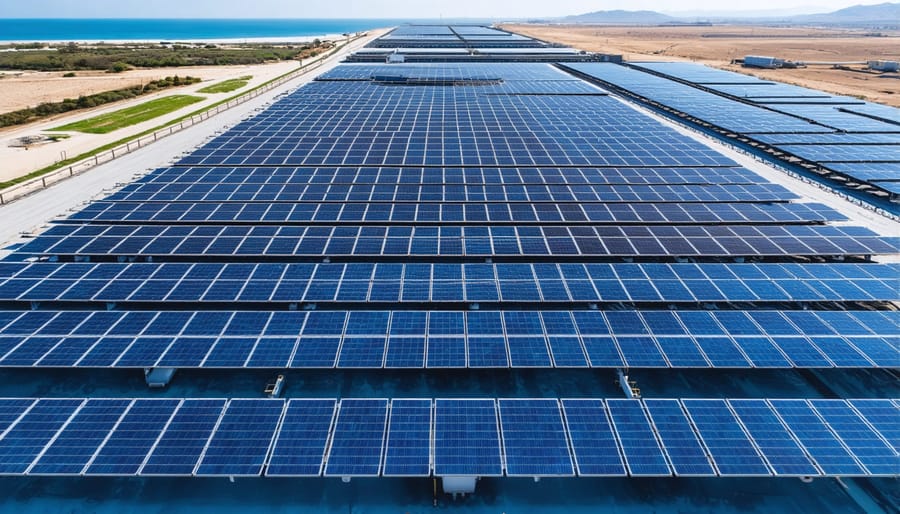
Israel’s innovative approach to desalination extends beyond large-scale facilities to smaller, community-based solutions. These compact systems serve remote communities, agricultural settlements, and individual neighborhoods effectively. One notable example is the Ashkelon Beach project, where a small-scale desalination unit provides fresh water to local businesses and beachfront facilities using solar power.
In the Arava Desert region, several kibbutzim have implemented modular desalination units that serve communities of 200-500 residents. These systems typically process 50-100 cubic meters of water daily, making them perfect for isolated settlements. The units run primarily on solar energy, with battery backup systems ensuring continuous operation.
Many Israeli schools have also embraced small-scale desalination technology as both educational tools and practical water sources. The “Water Wisdom” program, launched in 2018, has installed demonstration units in 15 schools across the Negev region, teaching students about water conservation while providing drinking water for the campus.
These smaller installations demonstrate how desalination technology can be scaled down effectively while maintaining efficiency and environmental responsibility. The success of these projects has inspired similar initiatives in other water-scarce regions globally.
Environmental Benefits
Israel’s innovative approach to solar-powered desalination showcases remarkable environmental benefits that extend far beyond just producing clean water. By harnessing the power of the sun, these facilities significantly reduce their carbon footprint compared to conventional desalination plants. This alignment with sustainable energy solutions has made Israel a global leader in eco-friendly water production.
One of the most striking advantages is the dramatic reduction in greenhouse gas emissions. Traditional desalination plants typically rely heavily on fossil fuels, but solar-powered facilities can cut carbon emissions by up to 90%. This remarkable achievement helps combat climate change while ensuring a steady supply of fresh water.
The technology also minimizes marine ecosystem impact through advanced intake systems and dilution methods for brine discharge. Unlike conventional plants that can harm marine life, these modern facilities incorporate fish-friendly screens and gradually release salt concentrates to protect ocean biodiversity.
Energy efficiency is another crucial benefit. Solar-powered desalination plants in Israel utilize advanced energy recovery systems that capture and reuse excess energy, making the entire process more sustainable. This efficiency translates to lower operational costs and reduced environmental impact.
Additionally, these facilities often incorporate green spaces and wildlife corridors in their design, creating mini-ecosystems that support local biodiversity. Some plants even use the excess heat generated during operation to warm greenhouses for agricultural purposes, demonstrating how smart design can transform potential waste into valuable resources.
The success of these environmentally conscious designs has inspired similar projects worldwide, proving that meeting water needs doesn’t have to come at the expense of environmental health.
Israel’s pioneering efforts in solar desalination technology have revolutionized how we approach water scarcity in arid regions. By combining renewable solar energy with advanced desalination processes, the country has created a sustainable model that’s both environmentally friendly and economically viable. Their innovative approach now provides more than 70% of the nation’s drinking water while significantly reducing energy costs and carbon emissions.
Looking ahead, Israel’s desalination technology shows tremendous promise for global adaptation. As climate change continues to affect water resources worldwide, these solutions offer hope for coastal communities facing water shortages. The technology’s scalability makes it suitable for both large municipal projects and smaller community installations, while ongoing improvements in efficiency and cost-effectiveness make it increasingly accessible to developing nations.
The success of Israel’s solar desalination projects demonstrates that sustainable water solutions are not just possible but practical. As other countries begin to adopt and adapt these technologies, we’re seeing the beginning of a global transformation in how we address water security challenges while maintaining environmental responsibility. This proven approach offers a bright blueprint for a future where clean water and clean energy work hand in hand.