

Smart Landscaping Tricks That Slash Your Solar Energy Bills
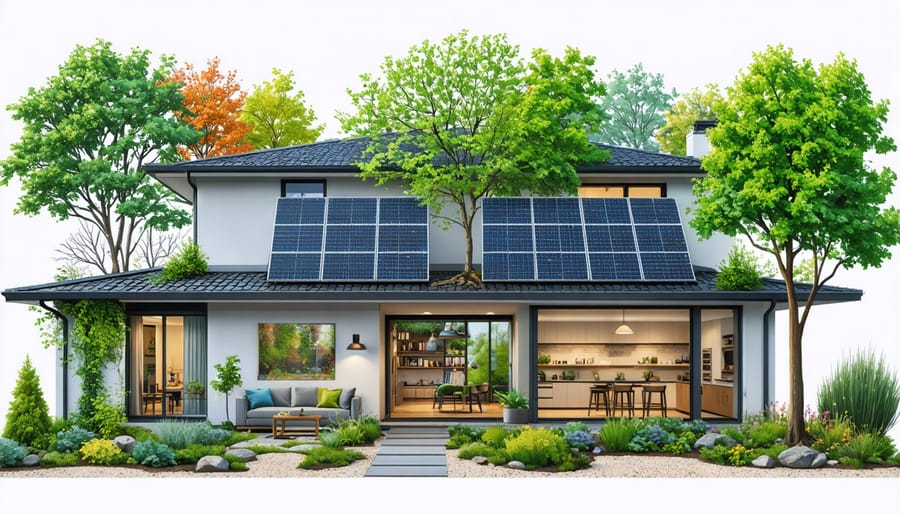
Transform your property into an energy-saving powerhouse by strategically positioning deciduous trees on the south and west sides, creating natural shade during summer while allowing vital sunlight through bare branches in winter. Incorporate dense evergreen windbreaks along northern exposures to block harsh winter winds, reducing heating costs by up to 30% and maximizing your solar energy investment. Install drought-resistant ground covers and native plants to minimize water consumption while naturally cooling surrounding air temperatures through evapotranspiration. Replace traditional lawns with permeable hardscaping materials that reflect sunlight and reduce heat absorption, creating cooler microclimates around your home’s foundation.
Smart landscaping isn’t just about curb appeal – it’s a powerful tool for slashing energy bills and enhancing property sustainability. By implementing these strategic design elements, homeowners can reduce cooling costs by up to 50% during summer months while creating a more resilient, environmentally conscious living space that works in harmony with natural energy flows.
Strategic Tree Placement for Maximum Solar Gain
Deciduous Trees: Nature’s Solar Controllers
Deciduous trees are nature’s perfect solution for year-round energy management. These seasonal champions shed their leaves in winter and regrow them in summer, providing automatic climate control for your home. During hot summer months, their full canopies create cooling shade that can reduce air conditioning costs by up to 35%. When winter arrives, the bare branches allow precious sunlight to warm your home naturally.
Strategic placement is key to maximizing these benefits. Plant deciduous trees on the south and west sides of your home, where the sun’s impact is strongest. Ideally, position large shade trees 20-25 feet from your house to create optimal coverage. For the best results, choose native species that thrive in your climate zone and consider their mature size when planning.
Popular choices include maples, oaks, and elms, which provide extensive shade coverage while adding natural beauty to your landscape. To enhance cooling effects, consider planting smaller ornamental trees or large shrubs beneath windows. This creates a multi-layered shade effect that maximizes energy savings.
Remember that patience is essential – while young trees take time to reach their full potential, the long-term energy savings make them an excellent investment. As your trees mature, they’ll not only reduce your energy bills but also increase your property value and create a more comfortable outdoor environment.

Optimal Distance and Height Calculations
Strategic tree placement is crucial for maximizing both shade benefits and solar panel installation requirements. For optimal results, plant deciduous trees on the south and west sides of your property, maintaining a distance of 2-2.5 times the tree’s mature height from your solar panels. This spacing prevents unwanted shading while still providing cooling benefits to your home.
When planning tree locations, consider their maximum growth height. For a 30-foot mature tree, maintain a minimum distance of 60-75 feet from solar arrays. This ensures year-round solar access while maximizing energy savings from natural shade. During winter months, when deciduous trees lose their leaves, sunlight can still reach your panels unobstructed.
For eastern exposures, keep trees at least 20 feet from your home’s foundation. This allows morning sun to warm your house naturally during cooler months. On western exposures, you can plant trees closer – about 15-20 feet from the building – to provide afternoon shade when cooling needs are highest.
Remember to account for the sun’s seasonal angles when calculating placement. A good rule of thumb is to ensure trees won’t cast shadows on solar panels between 9 AM and 3 PM, when solar generation is most crucial. Consider using sun path calculators or consulting with a landscape professional to determine exact positioning for your specific latitude.
Energy-Efficient Ground Cover Solutions
Heat-Reflecting vs. Heat-Absorbing Materials
The materials you choose for your landscaping can significantly impact your home’s energy efficiency. Light-colored materials like white gravel, light concrete, and pale stone pavers naturally reflect sunlight, helping keep your property cooler during hot months. These heat-reflecting surfaces can reduce ambient temperature by up to 10 degrees Fahrenheit compared to darker alternatives.
On the flip side, dark-colored materials like black mulch, dark stone, and asphalt tend to absorb and retain heat. While this might seem disadvantageous, strategic placement of heat-absorbing materials can work in your favor during colder months, particularly in areas where you want to maintain warmth.
For optimal energy efficiency, consider using reflective materials in areas close to your home’s southern and western exposures. This approach helps minimize heat gain during summer afternoons. Install light-colored pavers or gravel around your outdoor air conditioning unit to improve its efficiency by reducing the surrounding air temperature.
In garden beds, organic mulch offers a balanced approach. While darker in color, its natural insulating properties help regulate soil temperature year-round. For pathways and patios, consider using permeable pavers in lighter shades, which combine heat-reflecting properties with improved water management.
Remember to factor in your local climate when selecting materials. In cooler regions, you might want more heat-absorbing surfaces, while warmer areas benefit from maximizing reflective materials.
Living Ground Covers for Temperature Control
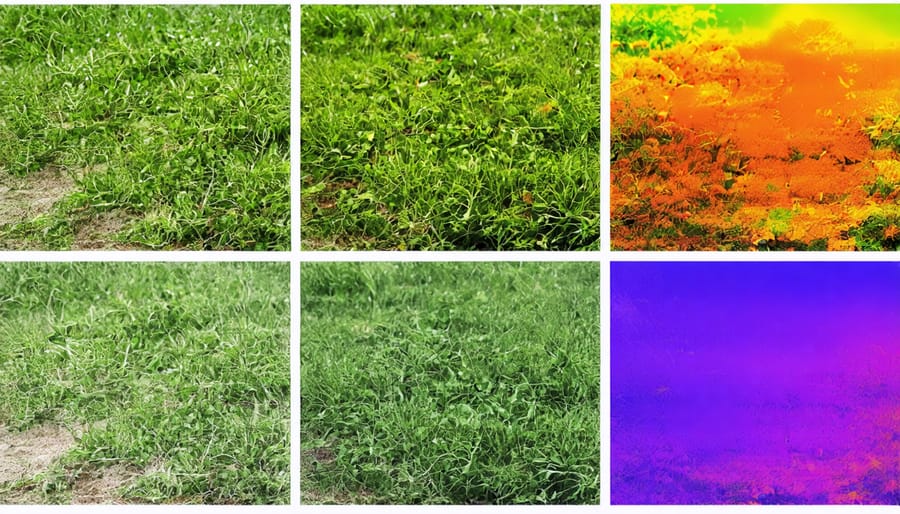
Living ground covers offer a natural way to regulate your property’s temperature and boost energy efficiency. These low-growing plants create an insulating layer that keeps the soil cool in summer and warmer in winter, directly impacting your home’s energy consumption.
For sunny areas, consider drought-resistant sedums and creeping thyme. These hardy plants create dense mats that prevent heat absorption and reduce ground temperature by up to 15 degrees compared to bare soil. In shadier spots, pachysandra and vinca minor thrive while providing excellent coverage and temperature control.
Native grass varieties like buffalo grass and blue grama are particularly effective for larger areas. These deep-rooted plants naturally regulate soil temperature and require minimal watering once established. For steep slopes or areas prone to erosion, try creeping juniper or wooly thyme, which offer both temperature control and soil stabilization.
Consider mixing different ground covers for optimal performance. For example, combine low-growing sedums with native grasses to create a layered effect that maximizes cooling benefits. Remember to group plants with similar water needs together for efficient irrigation.
Smart ground cover selection can reduce air conditioning needs in summer and help retain warmth in winter. When planning your layout, focus on areas around your home’s foundation and sunny spots where heat tends to build up. This strategic approach ensures maximum energy-saving benefits while creating an attractive, low-maintenance landscape.
Water-Smart Landscaping for Energy Conservation
Drought-Resistant Plants That Keep Things Cool
Drought-resistant plants offer a smart solution for maintaining cool temperatures while reducing water consumption. Succulents like sedum and agave create natural insulation and require minimal watering, making them perfect for sunny areas near your home. Consider planting lavender and sage, which not only survive dry conditions but also provide attractive groundcover that helps prevent heat absorption.
For larger spaces, ornamental grasses like blue fescue and fountain grass create cooling effects through evapotranspiration while thriving with limited water. These plants also provide natural movement that can help direct airflow around your property. Russian sage and yarrow add height and texture while requiring little maintenance and offering excellent heat resistance.
Near walkways and patios, try drought-tolerant ice plants or creeping thyme. These low-growing options help reduce ground temperature and prevent heat reflection toward your home. For shaded areas, consider Japanese forest grass or bergenia, which maintain cool conditions without demanding frequent watering.
Remember to group plants with similar water needs together and apply a layer of mulch to retain moisture and keep root systems cool. This strategy maximizes water efficiency while maintaining your landscape’s cooling benefits throughout hot seasons.
Solar-Powered Irrigation Solutions
Modern solar-powered irrigation systems are revolutionizing how we maintain our landscapes while minimizing energy consumption. These smart systems harness the sun’s power to operate water pumps and automated controls, eliminating the need for grid electricity.
Installing a solar irrigation system starts with positioning solar panels in an unshaded area, typically mounted on poles or your roof. These panels power a controller that manages water flow based on moisture sensors placed throughout your garden. The system can be programmed to water different zones at optimal times, ensuring each plant gets exactly what it needs.
The benefits are substantial: reduced water waste through precise targeting, lower utility bills, and the ability to maintain your landscape even during power outages. Many systems now include smartphone connectivity, allowing you to monitor and adjust watering schedules remotely.
Property owners report up to 50% reduction in water usage after switching to solar irrigation. The initial investment typically pays for itself within 2-3 years through reduced energy and water costs. Plus, many regions offer rebates for installing water-efficient irrigation systems, making the transition even more attractive.
Remember to position moisture sensors strategically and adjust seasonal settings to maximize efficiency. Regular maintenance is minimal, usually requiring only occasional panel cleaning and system checks.
Maintenance Tips for Energy-Efficient Landscapes
Seasonal Pruning Schedule
Proper pruning throughout the year helps maximize your landscape’s energy-saving potential while maintaining healthy plant growth. During late winter, focus on removing dead branches and shaping deciduous trees before new growth begins. This ensures optimal shade patterns during summer months when you need it most.
In spring, trim early-flowering shrubs after blooms fade and shape evergreens to control their growth direction. Pay special attention to branches that might interfere with solar panels or create unwanted shade patterns. Summer calls for light maintenance pruning, removing water sprouts and crossing branches that could create dense shade pockets.
Fall is ideal for major structural pruning of shade trees. Remove lower branches that block winter sunlight and thin out dense canopies to allow better air circulation. For trees near your home’s south side, maintain a higher canopy to allow winter sun penetration while preserving summer shade benefits.
Remember the 70/30 rule: prune deciduous trees to maintain approximately 70% of their canopy on the upper third of the tree. This creates ideal shade patterns for energy efficiency without compromising the tree’s health. For evergreens serving as windbreaks, maintain a dense growth pattern from ground to crown through regular trimming of new growth.
Always cut at proper angles and avoid removing more than 25% of a tree’s live branches in a single season. This balanced approach ensures your landscape continues providing energy benefits while staying healthy year-round.
Solar Panel and Plant Integration
Integrating solar panels with your landscape requires careful planning to maximize energy production while maintaining an attractive outdoor space. The key is finding the perfect balance between your cost-effective solar solutions and surrounding vegetation.
Start by evaluating your property’s sun exposure patterns. Trim or remove trees that cast shadows on your panels during peak sunlight hours, typically between 9 AM and 3 PM. However, don’t eliminate all vegetation – strategic placement of low-growing plants can actually benefit your solar setup.
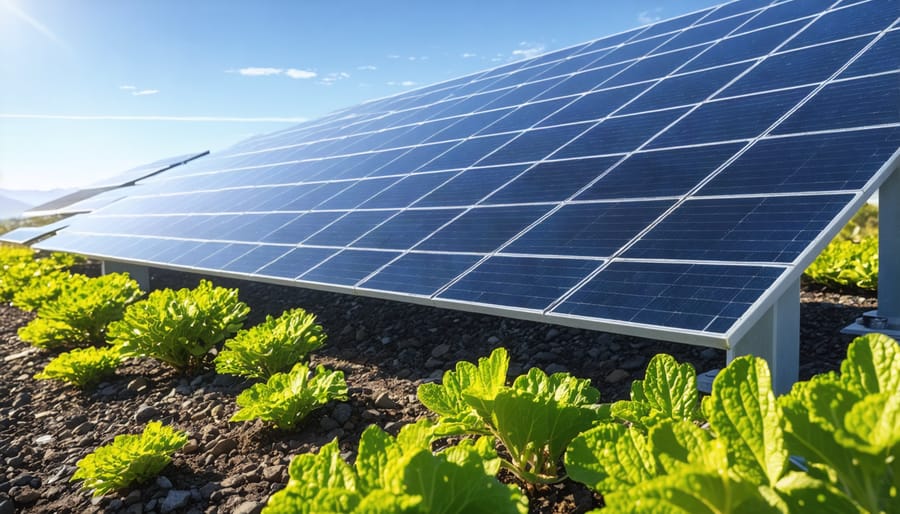
Ground cover plants like sedum, creeping thyme, or native grasses help prevent soil erosion around ground-mounted panels and reduce dust that could decrease panel efficiency. These plants also keep the surrounding area cooler, which helps maintain optimal panel performance.
For rooftop installations, consider installing rain gardens beneath your downspouts to manage water runoff from panels. This approach not only protects your landscape but also puts excess water to good use.
Maintain a clear zone of at least 3 feet around your panels to prevent vegetation from interfering with the system’s operation. Regular pruning and maintenance schedules ensure your plants won’t compromise solar efficiency over time.
Remember to choose drought-resistant plants that won’t require excessive watering, as this aligns with the overall goal of sustainability. With proper planning, your solar installation can become a seamless part of your landscape while maximizing energy production.
By implementing energy-efficient landscaping strategies, you’re not just creating a beautiful outdoor space – you’re making a smart investment in your property’s future. The thoughtful placement of trees, shrubs, and ground cover can significantly reduce your energy consumption while enhancing your home’s natural beauty and value.
Remember that successful energy-efficient landscaping is about making informed choices that work with your local climate and property layout. Whether it’s positioning deciduous trees to provide summer shade and winter warmth, installing living walls to insulate your building, or selecting drought-resistant plants to minimize water usage, every decision contributes to your overall energy savings.
Start small and expand your energy-efficient landscape gradually. Begin with simple projects like strategic tree planting or installing a rain garden, then progress to more complex features as you become comfortable with the concepts. Monitor your energy bills to track the impact of your changes, and don’t hesitate to consult with local landscaping professionals for guidance.
By embracing these landscaping principles, you’re not just reducing your carbon footprint and energy bills – you’re creating a sustainable outdoor environment that benefits both your property and the planet. Take that first step today, and watch as your landscape transforms into an energy-efficient ecosystem that works for you year-round.


