

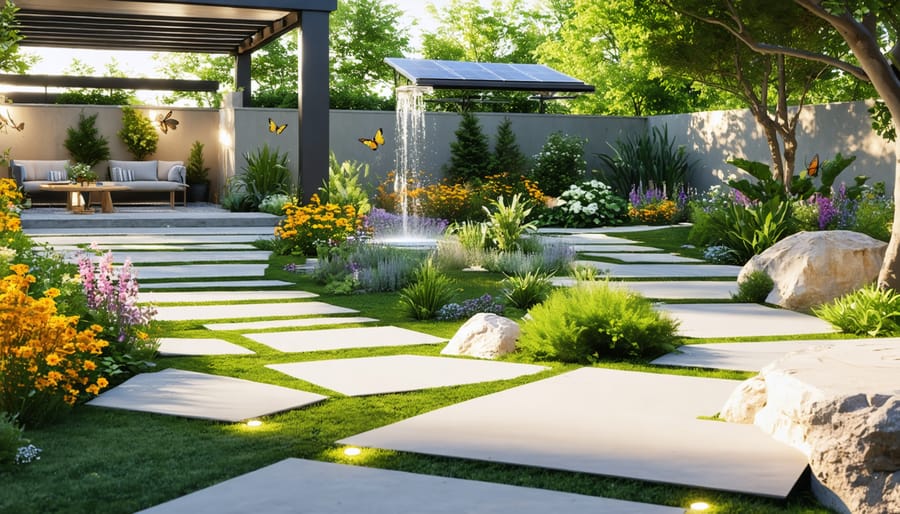
Solar-Powered Paradise: Beautiful Sustainable Landscaping That Pays for Itself
Transform ordinary landscapes into thriving eco-havens by integrating native plants, smart irrigation systems, and renewable energy solutions. Today’s sustainable landscaping revolutionizes outdoor spaces through innovative design principles that dramatically reduce water consumption while maximizing energy efficiency. Discover how a solar-powered backyard transformation can slash utility bills by up to 30% while creating a self-sustaining ecosystem that enhances property value and supports local wildlife.
Modern sustainable landscapes blend advanced solar technology with traditional gardening wisdom, incorporating rain gardens, permeable pavements, and drought-resistant vegetation. These solutions not only minimize environmental impact but also create stunning outdoor spaces that require minimal maintenance. From solar-powered lighting systems to automated drip irrigation, sustainable landscaping proves that environmental responsibility and aesthetic beauty can coexist seamlessly in your backyard sanctuary.
Whether you’re a homeowner seeking to reduce your carbon footprint or a property manager looking to cut operational costs, sustainable landscaping offers practical, scalable solutions that deliver immediate and long-term benefits for both the environment and your wallet.
Smart Solar Integration in Garden Design
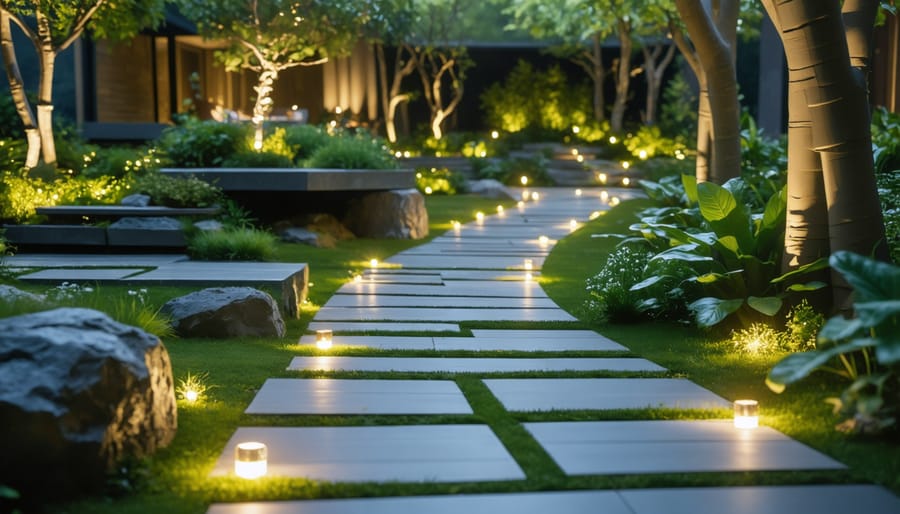
Solar Path Lighting Solutions
Transform your pathways into enchanting nighttime features with modern solar-powered landscape lighting. These eco-friendly fixtures harness daylight to create beautiful illumination without increasing your energy bills.
Popular options include stake lights, which easily push into soft ground along walkways, creating an inviting glow that guides visitors safely. Mounted bollard lights offer a more substantial presence, perfect for driveways and formal garden paths. For a whimsical touch, consider string lights wrapped around trees or pergolas, providing ambient lighting for evening gatherings.
Installation is straightforward: ensure lights receive 6-8 hours of direct sunlight daily for optimal charging. Space fixtures 6-8 feet apart for consistent illumination, and avoid placing them where shadows from buildings or large plants might block sunlight. Clean the solar panels monthly with a soft cloth to maintain peak efficiency.
For best results, choose warm white LEDs rated for outdoor use, and look for models with dusk-to-dawn sensors. These automatically activate when darkness falls, ensuring your paths remain safely lit throughout the night while conserving energy.
Solar-Powered Water Features
Solar-powered water features offer a perfect blend of sustainability and tranquility in any landscape. These eco-friendly additions range from simple floating fountains to elaborate multi-tiered systems, all powered by the sun’s energy. A popular choice among homeowners is the solar bubble fountain, which creates a gentle water display without requiring any electrical hookup.
Installation is straightforward: simply position the solar panel in a sunny spot and connect it to the water pump. Many systems come with backup batteries, ensuring your feature continues running even when clouds roll in. For larger spaces, solar-powered pond aerators keep water moving and healthy while providing a stunning visual display.
“Since installing our solar fountain, we’ve saved significantly on energy costs while adding a beautiful focal point to our garden,” shares Maria Chen, a homeowner in California. “The sound of flowing water attracts birds and creates a peaceful atmosphere.”
Commercial properties are also embracing this technology, with many incorporating solar-powered cascading water walls and reflection pools. These features not only demonstrate environmental commitment but also create inviting outdoor spaces for visitors and employees alike.
Dual-Purpose Solar Structures
Solar Pergolas and Gazebos
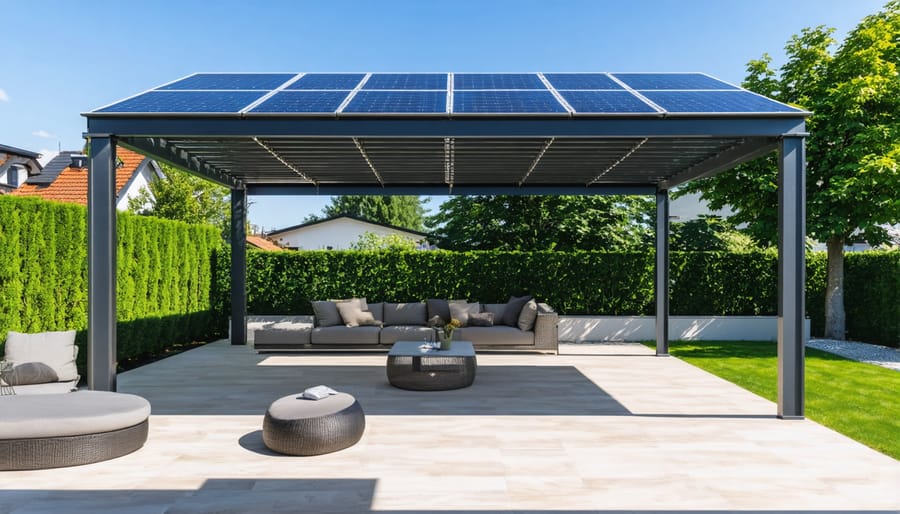
Solar pergolas and gazebos offer a brilliant way to blend functionality with sustainable design in your outdoor space. These structures not only provide comfortable shade but also generate clean electricity for your home. By installing solar panels on the roof of your pergola or gazebo, you can create an eco-friendly outdoor living area that pays for itself over time.
The installation process typically begins with designing a sturdy structure that can support the weight of solar panels. Most homeowners opt for weather-resistant materials like cedar or aluminum for the frame. The roof is usually angled at 30-40 degrees to maximize sun exposure, while still maintaining an aesthetically pleasing appearance.
“We installed our solar pergola last summer,” shares Sarah Martinez, a homeowner in California. “It generates enough power to run our outdoor kitchen and landscape lighting, plus we love spending time under it during hot afternoons.”
These solar structures can be customized to suit your space and energy needs. Popular features include:
– Adjustable panels that track the sun’s movement
– Built-in USB charging stations
– LED lighting systems powered by stored solar energy
– Rain sensors that can trigger automatic panel adjustment
For optimal performance, position your solar pergola or gazebo where it receives maximum sunlight during peak hours. Consider surrounding vegetation and potential shade from nearby buildings when choosing the location. Many homeowners integrate these structures into their existing patio designs or create dedicated outdoor living spaces around them.
Solar Panel Garden Borders
Transform your garden’s boundaries into power-generating features with ground-mounted solar panels. This innovative approach combines functionality with sustainable design, creating a unique border that produces clean energy while defining your outdoor spaces.
Installing solar panel garden borders starts with positioning the panels at a 30-45 degree angle facing south for optimal sun exposure. The panels can be mounted on sturdy posts or frames, typically standing 3-4 feet high, creating an attractive modern fence line. Consider incorporating climbing plants like jasmine or morning glories to soften the industrial look and create a living wall effect.
“We installed solar borders around our vegetable garden last year,” shares Sarah Martinez, a homeowner in Colorado. “Not only do they power our irrigation system, but they also provide partial shade for sensitive plants during peak summer hours.”
These solar boundaries serve multiple purposes: they generate electricity for garden lighting, water features, or tool shed power; create wind breaks for delicate plants; and provide partial shade for shade-loving species. You can enhance their effectiveness by installing small rain gutters along the top edge to collect rainwater for garden use.
For maintenance, simply clean the panels quarterly with water and a soft brush, and ensure surrounding vegetation doesn’t block sunlight. Most installations can power garden equipment like LED lights, fountain pumps, and small automated systems while adding a distinctive architectural element to your landscape.
Water-Smart Solar Landscaping
Solar-Powered Irrigation Systems
Modern smart solar irrigation solutions are revolutionizing how we maintain our gardens while minimizing environmental impact. These systems use solar panels to power water pumps and smart controllers, delivering precise amounts of water exactly when your plants need it.
A typical setup includes solar panels, a controller unit, moisture sensors, and efficient drip irrigation lines. The panels capture sunlight during the day, converting it into electricity to power the pump system. Any excess energy is stored in batteries for cloudy days or evening watering cycles.
What makes these systems truly remarkable is their intelligent water management. Built-in moisture sensors monitor soil conditions in real-time, triggering irrigation only when necessary. This targeted approach can reduce water consumption by up to 70% compared to traditional sprinkler systems.
Installation is surprisingly straightforward. Many homeowners start with a small system for their vegetable garden or flower beds, then expand as they see the benefits. The initial investment typically pays for itself within two years through reduced water bills and increased plant health.
Best of all, these systems work silently and automatically, freeing up your time while ensuring your landscape stays lush and sustainable year-round.

Drought-Resistant Plant Selection
When selecting plants to complement your solar installation, drought-resistant varieties are ideal as they require minimal water and maintenance while thriving in sunny conditions. Succulents like sedum and agave make excellent choices, as their compact growth patterns prevent unwanted shade on your solar panels. Desert-adapted ornamental grasses, such as blue fescue and fountain grass, add movement and texture while staying low to the ground.
Consider incorporating native wildflowers like black-eyed susans and purple coneflowers, which attract pollinators and create a vibrant landscape without competing with your solar setup. Lavender and sage not only survive with little water but also release pleasant aromas when brushed against.
For ground cover, creeping thyme and ice plant work wonderfully, spreading to prevent soil erosion while requiring minimal resources. Australian rosemary and butterfly bush can serve as attractive border plants that won’t interfere with solar production.
Remember to group plants with similar water needs together and maintain proper spacing to prevent overgrowth. These drought-resistant selections not only complement your solar installation but also contribute to a more sustainable, low-maintenance landscape that looks beautiful year-round.
Maintenance and Cost Benefits
Sustainable landscaping isn’t just about looking good – it’s a smart investment that pays off in both maintenance time and cost savings. Take Sarah Thompson’s desert-inspired xeriscape in Arizona, for example. After replacing her traditional lawn with native plants and smart irrigation, she cut her water bills by 60% and reduced maintenance hours from 12 to just 2 hours monthly.
Commercial properties are seeing similar benefits. The Green Valley Business Park in Colorado integrated rain gardens and permeable pavements into their landscape design, reducing their stormwater management costs by 45% annually. Their native plant selection has eliminated the need for chemical fertilizers and cut maintenance costs by thousands.
Smart plant placement can help reduce your energy costs significantly. The Riverside Community Center saved $3,200 annually on cooling costs by strategically placing deciduous trees to shade their building during summer while allowing winter sun through.
Living walls and green roofs, while requiring initial investment, typically pay for themselves within 5-7 years through reduced heating and cooling costs. The Metro Office Complex in Seattle reports 30% lower HVAC costs since installing their living wall system.
Automated irrigation systems with moisture sensors have proven particularly cost-effective. The Henderson family in Texas cut their water usage by 40% and their maintenance time in half by installing a smart irrigation system that waters only when needed.
These real-world examples show that sustainable landscaping isn’t just environmentally responsible – it’s financially smart. Initial investments in native plants, smart irrigation, and strategic design typically pay for themselves within 2-3 years through reduced water bills, lower maintenance costs, and decreased energy consumption.
Sustainable landscaping offers a powerful way to create beautiful outdoor spaces while protecting our environment and reducing costs. By implementing these eco-friendly practices, you’re not just enhancing your property’s appeal – you’re contributing to a healthier planet. From water-wise plants to solar-powered lighting, each sustainable choice makes a real difference. The benefits are clear: lower maintenance costs, reduced water consumption, and increased property value, all while supporting local wildlife and ecosystems. Whether you start small with a rain garden or go all-in with a complete sustainable landscape transformation, every step matters. Take inspiration from these examples and begin your journey toward a more sustainable outdoor space today. Your yard can become a showcase of environmental stewardship while remaining a beautiful, functional space for years to come.


