


Solar Backup Power That Works When The Grid Fails
When disaster strikes, a reliable solar power system can mean the difference between staying connected and being left in the dark. As a proven sustainable energy solution, emergency solar panels provide critical backup power for essential devices and appliances during grid failures, natural disasters, and unexpected outages.
Modern portable solar systems combine high-efficiency panels, advanced batteries, and user-friendly interfaces to deliver immediate power when conventional sources fail. These systems can power everything from medical devices and refrigerators to communication equipment and emergency lighting, ensuring your family stays safe and comfortable during challenging times.
Unlike traditional generators, emergency solar setups operate silently, require minimal maintenance, and produce no harmful emissions. They can be quickly deployed, easily stored, and provide reliable power for days or weeks, depending on system capacity. With prices becoming increasingly affordable and technology continuously improving, solar emergency power systems represent a smart investment in household resilience and peace of mind.
By choosing the right combination of panels, batteries, and inverters, you can create a robust backup power solution that meets your specific emergency needs while contributing to a more sustainable future.
Why Solar Panels Make Perfect Emergency Backup Systems
Silent, Clean, and Maintenance-Free Operation
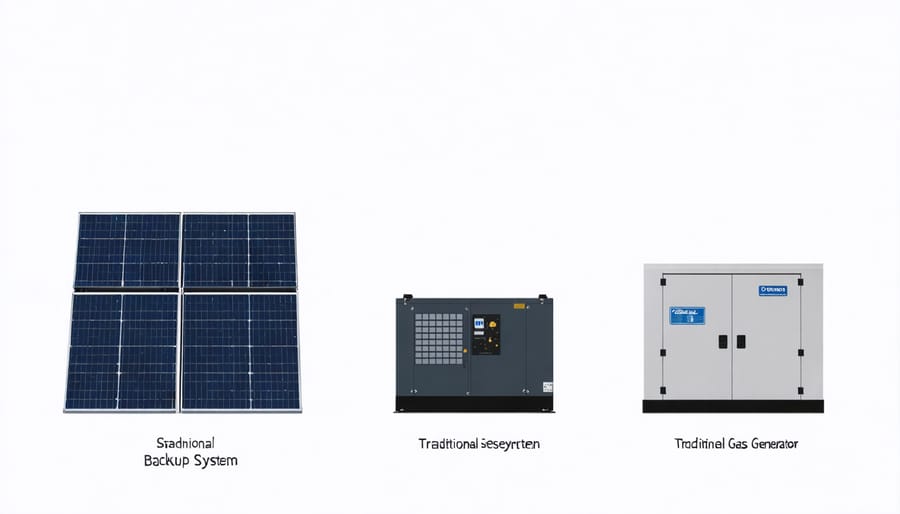
One of the most compelling advantages of solar panels for emergency power is their whisper-quiet operation – a stark contrast to the constant rumble of gas generators. This silent performance means you can maintain peace and quiet while keeping your essential devices running during power outages. Unlike gas generators, solar panels have no moving parts, eliminating mechanical wear and tear while delivering long-term cost benefits through minimal maintenance requirements.
You won’t need to worry about fuel storage, regular oil changes, or engine maintenance. Solar panels simply need occasional cleaning to remove dust and debris, which you can easily do yourself. There’s also no risk of fuel spoilage or the safety concerns associated with storing gasoline. Without exhaust fumes or carbon monoxide emissions, solar panels are safe to operate near your home and contribute to cleaner air quality during emergencies.
This maintenance-free nature makes solar panels particularly reliable when you need them most, ensuring your backup power system is ready to perform at a moment’s notice.
Day and Night Power Availability
Solar panels alone can’t provide power around the clock, which is why battery storage systems are essential for emergency setups. When the sun is shining, your panels generate electricity that not only powers your immediate needs but also charges the backup batteries. These stored reserves become your lifeline during nighttime or cloudy conditions.
Modern battery systems, particularly lithium-ion batteries, offer excellent storage capacity and reliability. They automatically kick in when solar production drops, ensuring a seamless power transition. Most emergency solar setups include a charge controller that manages the flow of electricity between panels, batteries, and your home’s devices, preventing overcharging and extending battery life.
To maximize day and night coverage, consider sizing your battery bank to store 1-2 days’ worth of essential power needs. This provides a reliable buffer during extended periods of limited sunlight. Smart power management systems can help you monitor battery levels and adjust consumption patterns, ensuring you always have power when you need it most.
Remember to regularly maintain your batteries and keep them in a temperature-controlled environment for optimal performance and longevity during emergencies.
Essential Components for an Emergency Solar System
Panel Selection and Sizing
When selecting solar panels for emergency use, it’s essential to balance your power needs with practical considerations like storage space and portability. Start by calculating your essential power requirements during an emergency – typically including lighting, communication devices, and basic appliances. For most households, a system between 100-400 watts provides adequate emergency backup power.
Portable solar panels are ideal for emergency scenarios, with foldable or lightweight options offering excellent flexibility. Look for panels with high efficiency ratings (15-20%) and durability features like weather resistance and reinforced corners. While premium panels cost more initially, they offer better reliability when you need them most – an important factor in solar power investment considerations.
Consider panels with built-in charge controllers and multiple output options (USB, 12V DC, etc.) for maximum versatility. Monocrystalline panels typically offer the best power output per square foot, making them ideal for limited storage spaces. For backup power systems, we recommend having at least two panels to ensure redundancy and increased charging capability during cloudy conditions.
Battery Storage Options
When it comes to storing solar energy for emergencies, you have several reliable battery options to choose from. Lead-acid batteries are the most budget-friendly choice, offering decent performance for basic backup needs. However, lithium-ion batteries have become increasingly popular due to their longer lifespan, smaller footprint, and better efficiency.
To determine the right battery capacity for your emergency setup, start by listing your essential appliances and their power requirements. A typical emergency backup system should support your refrigerator, essential lighting, communication devices, and medical equipment. For most households, a battery bank ranging from 5kWh to 15kWh provides adequate emergency coverage for 1-3 days.
Consider deep-cycle batteries specifically designed for solar systems, as they handle repeated charging and discharging better than standard batteries. For maximum reliability, opt for maintenance-free batteries with built-in battery management systems. Remember to store your batteries in a temperature-controlled environment to extend their lifespan and maintain optimal performance during emergencies.
Smart battery monitoring systems can help you track your storage capacity and receive alerts when maintenance is needed, ensuring your backup power is always ready when you need it most.
Charge Controllers and Inverters
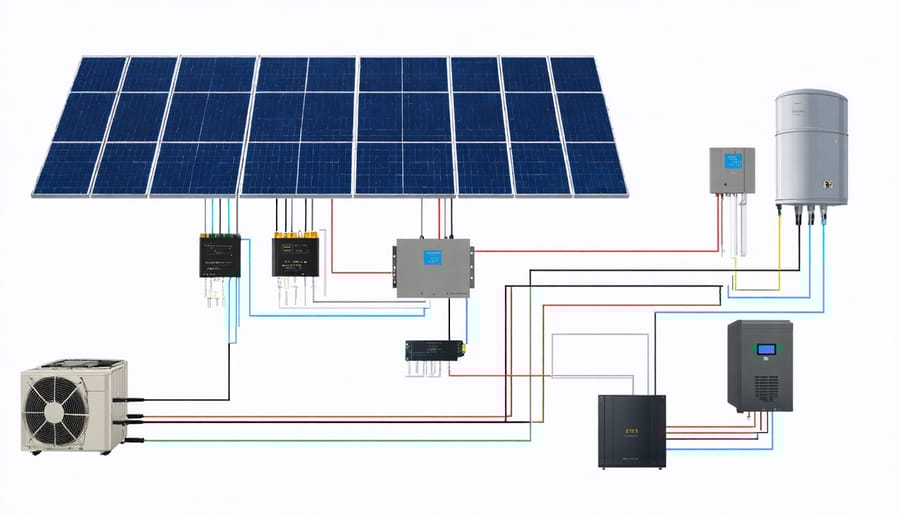
Charge controllers and inverters are the brains of your emergency solar setup. The charge controller manages power flow between your panels and batteries, preventing overcharging and extending battery life. Think of it as a traffic officer directing energy safely to where it needs to go.
Your inverter transforms the stored DC power from batteries into AC power that your household appliances can use. For emergency preparedness, look for pure sine wave inverters, which provide the cleanest power for sensitive electronics. Make sure to choose components rated for your system’s size – a good rule of thumb is selecting a charge controller that can handle 20% more than your panel’s maximum output.
Consider MPPT (Maximum Power Point Tracking) charge controllers for better efficiency, especially in cloudy conditions. While they cost more upfront, they can increase energy harvest by up to 30% compared to simpler PWM controllers.
Installation and Setup Guidelines
Mounting Options for Quick Deployment
When time is of the essence during emergencies, having versatile optimal mounting solutions for your solar panels can make all the difference. Ground-mounted portable frames offer the quickest deployment option, featuring adjustable legs and pre-assembled components that can be set up in minutes. These frames typically fold flat for storage and come with built-in carrying handles.
For temporary roof installations, non-penetrating ballast mounts use weighted bases that sit securely on flat surfaces without requiring permanent attachments. These systems can be particularly useful for emergency shelters or temporary command centers.
Quick-release wall brackets provide another rapid deployment option, allowing panels to be mounted vertically on exterior walls or fences. These brackets can be pre-installed at strategic locations, enabling swift panel placement when needed.
Many emergency solar kits now come with innovative pop-up stands, similar to camping equipment, that can be deployed in seconds. These stands often include built-in angle adjustments to optimize solar exposure throughout the day.
For vehicle-based emergency response, magnetic mounts offer a secure yet temporary solution for attaching panels to metal surfaces. These specialized mounts include protective padding to prevent vehicle damage while maintaining stability during transport.
Remember to practice setting up your chosen mounting system before an actual emergency to ensure smooth deployment when it matters most.
Wiring and Connection Safety
When connecting solar panels for emergency use, safety should always be your top priority. Start by ensuring your hands and work area are completely dry, and wear rubber-soled shoes for additional protection. Use properly rated cables that can handle your system’s voltage and current requirements, and always check for any signs of wear or damage before making connections.
Double-check all polarities before connecting – mixing up positive and negative terminals can damage your equipment or create safety hazards. Install appropriate fuses or circuit breakers between your panels and battery bank to prevent overload situations. Keep all connections weatherproof using proper outdoor-rated junction boxes and waterproof connectors.
Never attempt to modify or repair solar equipment while it’s actively generating power. If you’re unsure about any connections, consult a qualified electrician. Remember to label all wires clearly and maintain a detailed wiring diagram for future reference. For battery connections, ensure proper ventilation in the storage area and keep spark-producing activities away from the battery bank.
Store all tools with insulated handles separately and keep a Class C fire extinguisher nearby for electrical fire safety. Regular inspection of all connections helps prevent potential issues before they become dangerous.
Testing and Maintenance
Regular maintenance of your emergency solar panel system is crucial for ensuring reliable performance when you need it most. Start with monthly visual inspections of your panels, checking for dust, debris, or any physical damage. Clean the panels using plain water and a soft brush or sponge – avoid harsh chemicals that might damage the protective coating.
Test your system quarterly by simulating a power outage. This helps verify that all components are working correctly and familiarizes you with the emergency power activation process. Pay special attention to your batteries, checking their charge levels and looking for signs of corrosion or damage.
Keep a maintenance log to track inspection dates, cleaning sessions, and any issues you discover. This record helps identify patterns and predict potential problems before they become serious. During the rainy season, check your waterproof connections and ensure all protective covers are secure.
Remember to test your inverter’s functionality and verify that your backup loads are properly connected. If you notice any significant decrease in system performance or unusual behavior, consult a qualified solar technician for professional assessment and repairs.
Real-World Emergency Applications
Power Outage Success Stories
During Hurricane Sandy in 2012, the Thompson family of New Jersey kept their essential appliances running for five days straight while their neighborhood was completely dark. Their 5kW solar system with battery backup proved invaluable, allowing them to maintain refrigeration for medications and run their well pump for water access.
In California’s 2019 wildfire season, Sarah Chen’s solar backup system helped her family stay connected and comfortable during multiple planned power shutoffs. “We could charge our phones, keep our food fresh, and even help neighbors charge their devices,” Chen recalls. Her 8kW system with two Tesla Powerwall batteries provided reliable power for nearly two weeks.
A remarkable success story comes from a small business in Texas during the 2021 winter storm. When the grid failed, Mike’s Hardware Store continued operating critical systems thanks to their rooftop solar array and battery storage. They became a community hub, offering phone charging stations and a warm space for locals.
The Martinez family in Florida weathered Hurricane Ian in 2022 with their solar backup system keeping their medical equipment operational. “It was a game-changer,” says Elena Martinez. “While others evacuated, we could safely stay home because our oxygen concentrator never lost power.”
These real-world examples demonstrate how solar backup systems provide crucial resilience during emergencies, offering peace of mind and practical support when traditional power sources fail.
Disaster Response Applications
When disaster strikes, solar panels become invaluable tools for emergency response teams and affected communities. In the aftermath of natural disasters like hurricanes, earthquakes, or floods, traditional power grids often fail, leaving essential services without electricity. Solar panels have proven their worth in numerous disaster scenarios, providing crucial power for medical facilities, emergency shelters, and communication systems.
During Hurricane Maria in Puerto Rico, portable solar systems helped power medical equipment and water purification systems when the main grid was down for months. Similarly, after the 2011 earthquake in Japan, solar-powered charging stations enabled survivors to contact loved ones and access emergency information.
Emergency response teams now regularly deploy solar-powered mobile units equipped with panels, batteries, and essential outlets. These units can power everything from emergency lighting to medical refrigerators, ensuring critical supplies and medications stay viable. Many disaster relief organizations have integrated solar technology into their standard equipment, recognizing its reliability and independence from fuel supply chains.
Communities are also learning from past experiences. Following major disasters, many hospitals and emergency centers have installed permanent solar systems with battery backup, creating resilient power sources for future emergencies. These installations serve double duty – providing sustainable energy during normal operations while standing ready as reliable backup power when disasters occur.
Solar panels have emerged as a game-changing solution for emergency preparedness, offering reliable power when traditional systems fail. Throughout this guide, we’ve explored how these sustainable energy systems can provide crucial backup power during natural disasters, grid failures, and other unexpected events.
Remember that a well-designed emergency solar setup doesn’t have to be complicated or expensive. By starting with essential components like portable panels, proper batteries, and basic inverters, you can build a system that meets your critical power needs. The key is to assess your emergency power requirements carefully and choose components that align with those needs.
The benefits of solar emergency power extend beyond just having backup electricity. You’re also contributing to a cleaner environment, potentially reducing your regular energy bills, and gaining independence from the grid. Many users report feeling more secure knowing they have a reliable power source that doesn’t depend on fuel supplies or utility companies.
Take action today to prepare for tomorrow. Start small if needed, but don’t delay in establishing your emergency solar power system. The peace of mind that comes from knowing you can keep essential devices running during an emergency is invaluable. Whether it’s maintaining communication devices, preserving food, or powering medical equipment, solar power can be your reliable partner in emergency preparedness.


