Solar-Powered Hydroponics: Transform Your Urban Space into a High-Tech Garden
Transform unused urban spaces into thriving hydroponic gardens, revolutionizing urban agriculture while producing up to 30% more yield than traditional farming methods. Hydroponic systems in cities now represent a powerful solution to food security, sustainability, and local economic growth – all while using 90% less water than conventional agriculture.
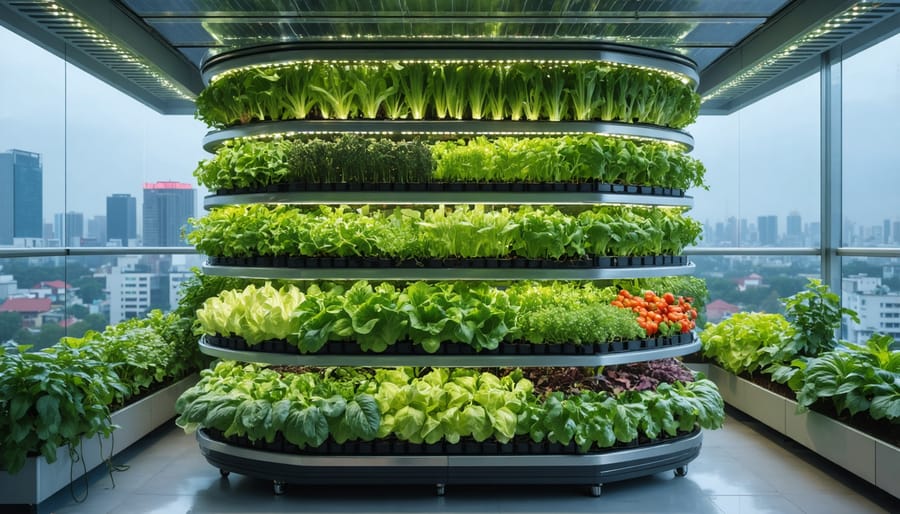
By combining vertical farming techniques with controlled environment agriculture (CEA), modern urban hydroponic farms can produce fresh, pesticide-free vegetables year-round in spaces as small as 500 square feet. These systems are particularly effective in repurposed warehouses, rooftops, and abandoned industrial spaces, where traditional soil-based farming would be impossible.
Leading cities like Singapore, New York, and London are already embracing this technology, with hydroponic farms supplying fresh produce to local restaurants and markets within hours of harvest. The integration of smart monitoring systems and renewable energy sources makes these operations increasingly efficient and environmentally sustainable, marking a significant shift in how we think about urban food production.
For entrepreneurs and community leaders, urban hydroponics represents an opportunity to build resilient local food systems while creating green jobs and reducing carbon emissions from long-distance food transportation.
Why Solar-Powered Hydroponics Makes Perfect Sense
Energy Requirements of Hydroponic Systems
A typical hydroponic system requires careful consideration of its energy needs, with power consumption varying based on system size and complexity. The main power-hungry components are water pumps, which typically use between 20-50 watts per hour, running about 12-16 hours daily. LED grow lights, essential for indoor setups, consume anywhere from 100-600 watts depending on your growing area and crop requirements.
Monitoring systems and environmental controls generally use minimal power, averaging 5-15 watts continuously. For a small home setup, you can expect a total daily consumption of 1-3 kWh, while commercial systems might require 10-30 kWh or more.
To optimize energy usage, consider using timer controls for pumps and lights, selecting energy-efficient LED grow lights, and implementing smart monitoring systems. Many urban farmers are now integrating solar panels to offset these power requirements, making their systems more sustainable and cost-effective in the long run. Modern hydroponic equipment often comes with energy-saving features like adjustable lighting intensity and smart pump cycling, helping to reduce overall power consumption while maintaining optimal growing conditions.
Solar Solutions for Urban Farmers
Modern hydroponic systems rely heavily on electricity to power pumps, lights, and climate control systems. Fortunately, solar power for homes has become more accessible and affordable than ever, making it an ideal energy solution for urban farmers.
A typical hydroponic setup can be fully powered by a modest solar array of 2-4 kW, depending on the system’s size and complexity. Solar panels can be installed on rooftops or vertical walls, maximizing limited urban space while generating clean energy. Many urban farmers report reducing their energy costs by 60-80% after switching to solar power.
The initial investment in solar equipment is often offset within 3-5 years through energy savings. Plus, many cities offer tax incentives and rebates for installing solar panels, making the transition even more attractive. Smart power management systems can help optimize energy usage by automatically adjusting lighting schedules and pump operations based on available solar power.
For year-round reliability, consider a hybrid system that combines solar panels with battery storage, ensuring your crops continue thriving even during cloudy days or nighttime hours.
Setting Up Your Solar Hydroponic Garden

Essential Components and Layout
Setting up a successful hydroponic urban farm requires careful planning and the right equipment. At its core, you’ll need a reliable growing system, which typically includes growing trays or channels, a water reservoir, and a circulation pump. The nutrient solution delivery system is crucial, consisting of tubing, drippers, or spray nozzles depending on your chosen method.
For optimal plant growth, energy-efficient LED lighting systems are essential, especially for indoor setups. These should be positioned 12-18 inches above your plants for best results. Temperature and humidity control systems help maintain the ideal growing environment, typically including fans, heaters, and possibly dehumidifiers.
The growing medium is another vital component – options include rockwool, coconut coir, or clay pellets. You’ll also need a pH testing kit and nutrients specifically formulated for hydroponic systems. For monitoring, consider installing basic sensors for water level, temperature, and pH.
Layout-wise, arrange your system in tiers to maximize vertical space. Keep the reservoir at the lowest point for easy maintenance, and ensure all plants receive adequate light exposure. Create dedicated areas for seedling preparation and system maintenance. Remember to leave enough walking space between growing zones for comfortable access during harvest and maintenance.
Solar Panel Installation and Connection
Installing solar panels for your hydroponic system is a game-changing step toward sustainable urban farming. Start by calculating your system’s power requirements – typically, a small indoor setup needs between 500-1000 watts of solar capacity.
Choose a location that receives maximum sunlight, ideally south-facing with no shade. Mount your solar panels at a 30-45 degree angle for optimal sun exposure. For roof installations, use sturdy mounting brackets and ensure your roof can support the additional weight. Ground-mounting is an excellent alternative if roof space is limited.
Connect your panels to a charge controller to regulate power flow and protect your batteries. Deep-cycle batteries are essential for storing excess energy for nighttime or cloudy days. For most hydroponic systems, a 24V battery bank provides reliable power storage.
Install an inverter to convert DC power from the panels into AC power for your pumps and grow lights. Use weather-resistant cables and connectors, and ensure all connections are properly sealed against moisture.
“My energy bills dropped by 70% after installing solar panels for my hydroponic setup,” shares urban farmer Sarah Chen. “The initial investment paid off within two years.”
Remember to check local regulations and obtain necessary permits before installation. Consider working with a certified solar installer for complex setups, especially if you’re new to electrical work.
Water and Nutrient Management
Successful hydroponic farming relies heavily on precise water and nutrient management. Your plants need a carefully balanced solution of essential nutrients, maintained at the right pH level – typically between 5.5 and 6.5. Start with a quality hydroponic nutrient solution that includes both macro and micronutrients, and monitor its concentration using an EC (electrical conductivity) meter.
Keep your water temperature between 65-75°F (18-24°C) for optimal nutrient absorption. Warmer temperatures can reduce oxygen levels and promote algae growth, while cooler temperatures slow down nutrient uptake. Install a water chiller or heater if needed to maintain consistent temperatures.
Regular testing is crucial – check pH levels daily and nutrient levels weekly. Adjust pH using pH up/down solutions, and top off nutrient solutions as needed. Change your nutrient solution completely every 2-3 weeks to prevent mineral buildup and maintain proper nutrient ratios.
Consider installing an automated dosing system for precise nutrient management, especially in larger setups. These systems can monitor and adjust nutrient levels automatically, saving time and reducing human error. Remember to clean your reservoir monthly and maintain proper circulation to prevent dead zones where nutrients might concentrate.
For water conservation, implement a recirculating system that captures and reuses water. This not only saves resources but also helps maintain consistent nutrient levels throughout your growing cycle.
Maximizing Your System’s Efficiency
Energy Storage Solutions
Ensuring continuous power supply for your hydroponic system is crucial, and modern energy storage solutions make this easier than ever. While affordable solar solutions help generate clean energy during daylight hours, proper storage systems keep your farm running 24/7.
The most popular storage option is lithium-ion battery banks, which offer excellent efficiency and longevity. These systems can store excess solar power generated during peak sunlight hours and release it when needed, especially during nighttime or cloudy days. A typical setup for a small hydroponic farm might include 2-3 deep-cycle batteries, providing 24-48 hours of backup power.
Smart battery management systems (BMS) help optimize your storage capacity by monitoring power levels and automatically switching between solar and stored power. These systems can be controlled through user-friendly apps, allowing you to track energy usage and receive alerts when maintenance is needed.
For those seeking more sustainable options, saltwater batteries are emerging as an eco-friendly alternative. While they may cost more initially, they last longer and have minimal environmental impact. Some urban farmers are also exploring hybrid systems that combine different storage technologies to maximize efficiency.
“My 400-square-foot hydroponic setup runs entirely on stored solar energy,” shares Sarah Chen, an urban farmer in Seattle. “The initial investment in storage paid for itself within two years through reduced utility bills.”
Remember to size your storage system based on your farm’s specific needs, considering factors like operating hours, equipment power requirements, and local weather patterns. Regular maintenance and proper ventilation of your battery storage area will help extend the system’s lifespan.
Smart Monitoring Systems
Modern hydroponics systems take the guesswork out of growing with smart monitoring technologies that keep a watchful eye on your plants 24/7. These intelligent systems use sensors and automated controls to track essential parameters like nutrient levels, pH, temperature, and humidity in real-time.
The heart of any smart monitoring setup is a central control hub that collects data from various sensors placed throughout your growing system. Water quality sensors measure EC (electrical conductivity) and pH levels, while environmental sensors monitor air temperature, humidity, and CO2 levels. Some advanced systems even use cameras with AI technology to detect early signs of plant stress or disease.
What makes these systems truly “smart” is their ability to alert you when something needs attention. Most come with smartphone apps that send notifications when parameters drift outside optimal ranges. For example, you’ll get an alert if nutrient levels drop too low or if temperatures spike during a heat wave.
Many systems also feature automated responses. If pH levels drift, the system can trigger automatic adjusters to bring them back into balance. Similarly, nutrient dosing pumps can activate when EC readings fall below target levels. This automation not only saves time but also prevents costly mistakes that could damage your crops.
For urban farmers looking to scale up, these systems offer valuable data analytics. By tracking patterns over time, you can optimize growing conditions and predict maintenance needs before problems arise. Some platforms even allow you to compare performance across multiple growing systems, helping you refine your techniques for better yields.

Real Success Stories
The Green Loop Project in downtown Seattle stands as a shining example of urban farming success. Starting in 2019, this rooftop hydroponic garden transformed 3,000 square feet of unused space into a thriving agricultural hub, producing over 4,000 pounds of fresh vegetables annually while running entirely on solar power. The project now supplies five local restaurants and a weekly farmers’ market, creating three full-time jobs and significantly reducing the building’s carbon footprint.
In Brooklyn, New York, Sarah Chen’s “Vertical Roots” initiative converted an abandoned warehouse into a four-story hydroponic facility. Using a combination of solar panels and LED growing lights, Chen’s operation produces leafy greens year-round, serving over 2,000 local families through a community-supported agriculture program. The system’s efficient design reduces water usage by 95% compared to traditional farming while generating zero emissions.
The “Future Fresh” project in Austin, Texas, demonstrates the scalability of solar hydroponics. What began as a small community garden has expanded into a network of six urban farms, all powered by renewable energy. The initiative now produces 20,000 pounds of tomatoes, cucumbers, and herbs annually, while serving as an educational hub for local schools.
Perhaps most inspiring is the story of Miguel Rodriguez in Chicago, who transformed his 600-square-foot garage into a productive hydroponic garden. Running on just eight solar panels, his setup generates enough produce to supply his family year-round with excess for local food banks. Rodriguez’s system paid for itself within two years through energy savings and produce sales.
These success stories share common elements: careful planning, community engagement, and a commitment to sustainable practices. They prove that solar-powered hydroponics isn’t just environmentally responsible – it’s economically viable and socially transformative.
Urban hydroponic farming represents an exciting frontier in sustainable agriculture, combining innovation with environmental responsibility. By harnessing solar power and water-efficient growing techniques, you can create a productive growing space virtually anywhere. Whether you’re interested in growing fresh herbs on your balcony or establishing a rooftop garden, hydroponics offers a practical solution for modern urban farming. Start small, experiment with different crops, and gradually expand your system as you gain confidence. Remember that every hydroponic garden contributes to a greener future by reducing water consumption, eliminating the need for soil, and maximizing space efficiency. Take the first step today by setting up a simple system, and join the growing community of urban farmers who are revolutionizing how we grow food in cities.