Solar-Powered LED Lights Transform Homes While Slashing Energy Bills
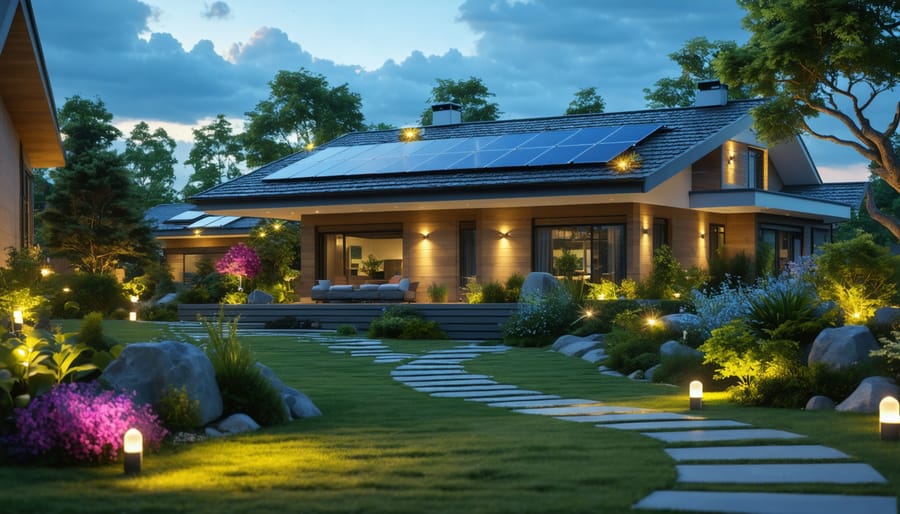
Harness the sun’s boundless energy with solar-powered LED lights – the sustainable solution that revolutionizes home illumination while eliminating electricity bills. These innovative fixtures transform your home with solar power, converting sunlight into brilliant, efficient lighting that lasts up to 25 years. Unlike traditional lighting systems, solar LEDs operate independently of the power grid, providing reliable illumination during outages and reducing your carbon footprint by up to 90%.
Modern solar LED technology delivers impressive brightness levels while storing excess energy for nighttime use, making them perfect for security lighting, garden pathways, and outdoor entertainment areas. With advances in photovoltaic cells and energy storage, today’s systems maintain consistent performance even during cloudy weather, ensuring year-round reliability. The combination of zero operating costs, minimal maintenance requirements, and environmental benefits makes solar-powered LED lights an intelligent investment for both residential and commercial properties.
Whether you’re looking to enhance your home’s security, reduce energy costs, or embrace sustainable living, solar LED lighting offers a practical, powerful solution that pays for itself through years of reliable, cost-free operation.
How Solar-Powered LED Lights Actually Work
The Solar Panel Connection
The heart of any solar-powered LED lighting system lies in its solar panel connection. If you’re new to solar energy basics, understanding how these panels work is crucial for maximizing your lighting system’s efficiency.
Solar panels contain photovoltaic cells that convert sunlight into electricity throughout the day. These cells are typically made from silicon and work by absorbing photons from sunlight, which creates an electric current. This current flows through the panel’s internal wiring to a charge controller, which regulates the power flow to prevent overcharging the battery.
Most residential solar LED lights use compact panels that can be easily mounted on roofs, walls, or poles. The panel’s size directly affects how much energy it can collect – larger panels generally mean more power for your lights. For optimal performance, panels should be installed at a 30-45 degree angle, facing south in the Northern Hemisphere, and kept clear of shade from trees or buildings.
The connection between the panel and LED lights includes weatherproof wiring and connectors to ensure reliable operation in all conditions. Many modern systems come with plug-and-play connections, making installation straightforward for homeowners.
Battery Storage Systems
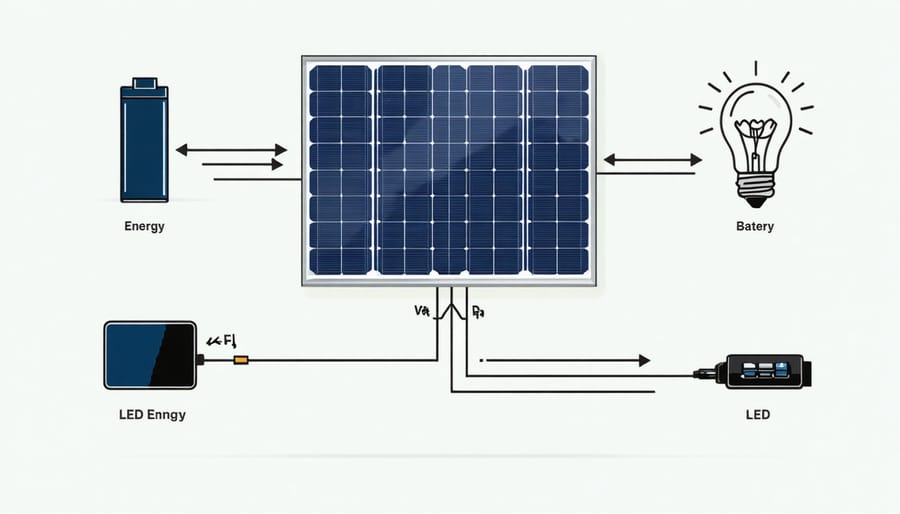
Battery storage systems are the unsung heroes of solar-powered LED lights, ensuring your lighting stays bright even after sunset. These systems typically use lithium-ion or lead-acid batteries to store energy collected during daylight hours, making it available for nighttime illumination.
Most modern solar LED lights come with smart charging controllers that protect the batteries from overcharging and deep discharge, extending their lifespan. The stored energy can typically power your lights for 8-12 hours, depending on the battery capacity and light settings.
When selecting a solar LED system, consider the battery capacity based on your lighting needs. A larger battery bank will provide longer running times but may require more solar panels to charge effectively. For residential applications, a 12-volt system with 100-200 amp-hour capacity usually provides sufficient storage for evening lighting.
To maximize battery performance, position your solar panels where they receive optimal sunlight during peak hours. Regular maintenance, including cleaning the panels and checking battery connections, helps ensure reliable nighttime operation. Most quality batteries last 3-5 years before needing replacement, making them a cost-effective solution for sustainable lighting.
Smart Applications Around Your Home
Outdoor Security Lighting
Solar-powered LED security lights offer an eco-friendly way to protect your home while keeping energy costs down. These fixtures combine motion sensors with bright, energy-efficient LEDs to create an effective deterrent against intruders. When movement is detected, the lights automatically illuminate your property’s vulnerable areas, such as entryways, driveways, and dark corners.
Most outdoor solar security lights come with adjustable settings for sensitivity and duration, allowing you to customize the lighting to your specific needs. The best placement is typically 6-10 feet high, with the solar panel positioned to receive maximum sunlight during the day. For optimal performance, ensure the motion sensor has a clear line of sight to high-traffic areas.
Many homeowners appreciate that these lights require no electrical wiring, making installation straightforward and safe. A single unit can illuminate up to 800 square feet, depending on the model. The latest designs feature weatherproof construction and can store enough energy to provide reliable lighting even after several cloudy days.
Consider installing multiple units to create overlapping zones of protection, ensuring comprehensive coverage of your property’s perimeter. This strategic approach to security lighting not only enhances safety but also adds value to your home while remaining environmentally responsible.
Garden and Landscape Lighting
Transform your outdoor spaces into enchanting retreats with solar-powered LED lights designed specifically for gardens and landscapes. These versatile exterior lighting solutions offer both beauty and functionality without increasing your energy bills.
Perfect for illuminating pathways, highlighting garden features, and creating ambient lighting around patios, solar LED lights harness daylight to power your evening garden display. Place them strategically along walkways for safety, use them to accent trees and shrubs, or create magical dining areas for outdoor entertaining.
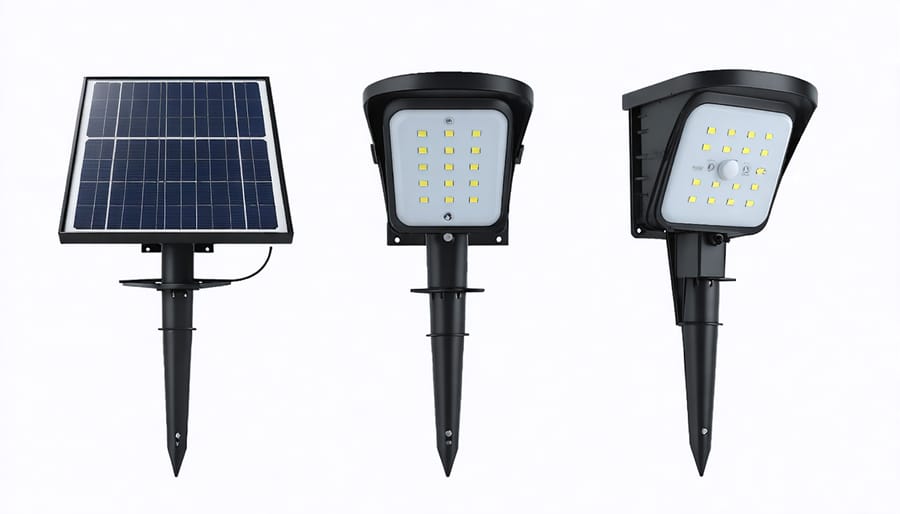
Modern solar garden lights come with various features like motion sensors, adjustable brightness levels, and color-changing capabilities. Many models include ground stakes for easy installation and weatherproof housing to withstand the elements. The best part? There’s no complicated wiring needed – simply position them where they’ll receive adequate sunlight during the day.
For maximum impact, consider mixing different types of solar lights: use spotlights for trees, bollard lights for paths, and string lights for pergolas or fencing. This layered approach creates depth and interest while maintaining energy efficiency.
Pathway and Driveway Illumination
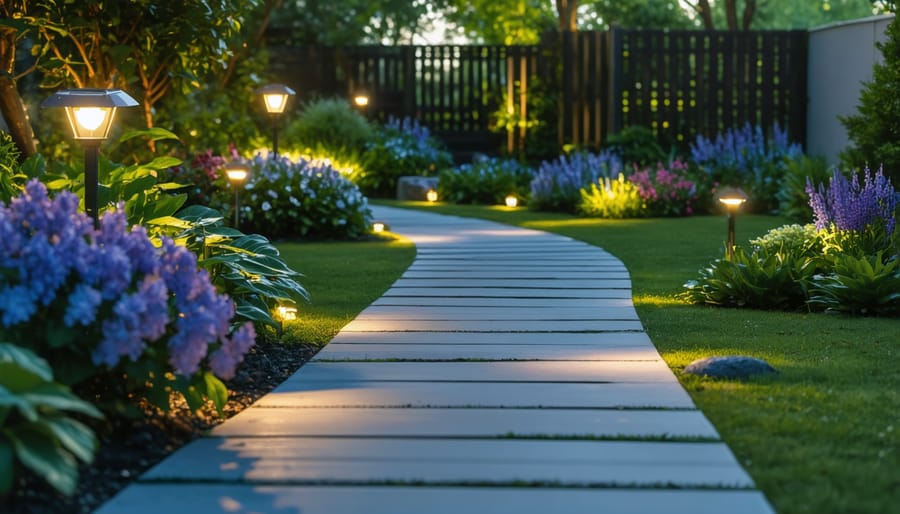
Illuminate your outdoor pathways and driveways with solar-powered LED lights to create a safer, more welcoming environment around your home. These lights automatically activate at dusk, providing reliable illumination throughout the night without adding to your electricity bill.
Strategic placement along walkways and driveways not only enhances safety by preventing trips and falls but also adds a touch of sophistication to your property’s exterior. Install lights every 6-8 feet for optimal coverage, focusing on corners, steps, and transitions between surfaces.
“Since installing solar LED path lights, I feel much more secure walking from my car to the front door at night,” shares homeowner Sarah Martinez. “Plus, my guests always comment on how inviting the entrance looks.”
Most pathway lights feature stakes for easy installation – simply push them into soft ground alongside your walkway. For driveways, consider using mounted options that can be secured to posts or walls. Many models now include motion sensors, increasing light intensity when movement is detected for additional security.
Choose lights with frosted or reflective covers to minimize glare while maximizing illumination spread. During winter months, ensure solar panels remain clear of snow and debris for consistent performance.
Deck and Patio Lighting
Transform your deck and patio into an enchanting outdoor retreat with strategically placed solar-powered LED lights. These versatile fixtures can illuminate walkways, highlight architectural features, and create a warm, inviting ambiance for evening entertainment.
Start by installing solar string lights along pergolas or railings to provide gentle overhead lighting. These create a magical canopy effect and are perfect for dining areas. For added safety and visual appeal, consider placing solar deck post caps on railings – they serve both as decorative elements and practical lighting solutions.
Solar-powered LED path lights work wonderfully around the perimeter of your patio, guiding guests safely while adding a sophisticated touch to your landscape. For dramatic effect, use solar spotlights to showcase potted plants, water features, or architectural elements.
To maximize effectiveness, position solar panels where they receive direct sunlight during peak hours. Most units need 6-8 hours of sunlight to provide optimal evening illumination. Consider seasonal sun patterns when planning your layout, and remember that some high-quality solar lights include adjustable panels that can be positioned independently from the light fixture.
For entertaining spaces, layer different types of solar lighting to create depth and functionality. This approach ensures both practical illumination and aesthetic appeal, making your outdoor space usable well into the evening hours.
Installation Made Simple
Tools and Materials Needed
To get started with your solar-powered LED light project, gather these essential tools and materials:
Essential Materials:
– Solar LED light units (according to your coverage needs)
– Mounting brackets and hardware (typically included with lights)
– Weather-resistant screws and anchors
– Electrical tape
– Cable ties or clips for wire management
– Sealant or caulk for weatherproofing
Basic Tools:
– Drill with various bits
– Screwdriver set (Phillips and flathead)
– Level
– Measuring tape
– Pencil for marking
– Wire strippers (if customizing connections)
– Safety glasses
– Work gloves
– Ladder or step stool
Optional but Recommended:
– Voltage tester
– Compass (for optimal solar panel positioning)
– Clean rags
– Light meter (for testing existing light levels)
– Silicon lubricant (for weather protection)
Before Installation Preparation:
1. Survey your installation area during different times of day
2. Check local building codes and regulations
3. Map out your lighting layout on paper
4. Calculate total power requirements
5. Test all equipment before mounting
6. Ensure you have proper safety equipment
Keep all materials organized and easily accessible during installation. Having everything prepared beforehand will make the installation process smoother and more efficient.
Installation Steps
Installing solar-powered LED lights is a straightforward process that you can complete in just a few hours. Before starting, gather your tools: a drill, screwdriver, level, measuring tape, and safety equipment like gloves and safety glasses.
Begin by identifying the ideal location for your solar panels. Choose spots that receive 6-8 hours of direct sunlight daily, typically south-facing areas in the Northern Hemisphere. Avoid areas shaded by trees, buildings, or other structures that could reduce solar efficiency.
Next, mount the solar panel bracket according to the manufacturer’s instructions. Ensure it’s level and securely fastened to your mounting surface. If installing on a roof, consider using weatherproof sealant around mounting points to prevent water damage.
Position your LED lights strategically. For pathway lighting, space fixtures 6-8 feet apart. For security lighting, focus on entry points and dark corners. Mount the light fixtures securely, making sure they’re level and properly sealed against moisture.
Connect the wiring between the solar panel and LED lights, following the color-coding in your installation manual. Most modern systems use plug-and-play connections, making this step virtually foolproof. Store any excess wiring neatly and protect it from the elements.
Finally, test your system by covering the solar panel to simulate darkness. The lights should activate automatically. Adjust the positioning and sensitivity settings as needed for optimal performance. Remember to clean the solar panels periodically to maintain maximum efficiency.
Pro tip: Consider installing a backup battery system for cloudy days, ensuring consistent lighting performance year-round.
Maintenance and Troubleshooting
Regular Maintenance Tips
Regular cleaning is essential for maintaining optimal performance of your solar LED lights. Every few months, gently wipe the solar panels with a soft, damp cloth to remove dust, dirt, and bird droppings that can reduce charging efficiency. Avoid using harsh chemicals or abrasive materials that might scratch the panel surface.
Check the positioning of your lights seasonally. As the sun’s path changes throughout the year, you may need to adjust the angle of your solar panels to maximize sun exposure. Ensure there’s no new plant growth, debris, or structural changes casting shadows on the panels.
Keep an eye on the battery compartment seals to prevent moisture damage. If you notice any deterioration, replace the seals promptly. For areas with heavy snowfall, brush off snow accumulation from panels during winter months. Most solar LED lights use replaceable batteries that typically last 1-2 years – mark your calendar to check battery performance annually.
During extended periods of disuse, store your lights indoors after a full charge, and remember to clean the light fixtures occasionally to maintain maximum brightness.
Common Problems and Solutions
Even the best solar-powered LED lights can sometimes encounter issues, but most problems have simple solutions. If your lights aren’t performing as expected, first check that the solar panel is clean and free from debris, as dust and dirt can significantly reduce charging efficiency. Simply wipe the panel with a soft, damp cloth to restore optimal performance.
When lights appear dim or don’t last through the night, try repositioning the solar panel to receive more direct sunlight. Remember that shorter winter days and cloudy weather can affect charging capacity. In these conditions, consider adjusting the light settings to a lower brightness level to extend battery life.
If lights fail to turn on automatically at dusk, verify that the photosensor isn’t being affected by nearby light sources like street lamps. Sometimes, a quick reset by turning the unit off for 24 hours and then back on can resolve sensor issues.
For lights that stop working entirely, check the battery connections for corrosion and ensure the batteries are properly seated. Most units use rechargeable batteries that typically need replacement every 1-2 years, even with regular use.
As we’ve explored throughout this article, solar-powered LED lights represent a remarkable fusion of energy efficiency and sustainable technology. These innovative lighting solutions offer multiple benefits that make them an increasingly attractive choice for both homeowners and businesses. From significant energy cost savings and reduced carbon footprints to reliable illumination and minimal maintenance requirements, solar LED lights are transforming how we think about outdoor lighting.
The accessibility of affordable solar solutions has made it easier than ever to embrace this eco-friendly technology. With advancing technology driving down costs and improving efficiency, there’s never been a better time to make the switch to solar LED lighting.
By choosing solar-powered LED lights, you’re not just investing in better lighting – you’re contributing to a more sustainable future. The combination of zero electricity costs, long-term durability, and environmental benefits makes these systems a smart choice for any property owner. Whether you’re lighting up a garden path, securing your property, or illuminating a commercial space, solar LED lights offer a practical and sustainable solution.
Take the first step toward sustainable lighting today. With proper planning, installation, and maintenance, your solar LED lighting system will provide years of reliable, cost-effective illumination while helping protect our environment for future generations.